
During the week of the spring concert, intensity rises as the countdown to opening night looms. As students prepared for performances lasting April 30-May 2, rehearsals extended, coordination grew more demanding and musicians shifted their focus from individual practice to full-ensemble performance.
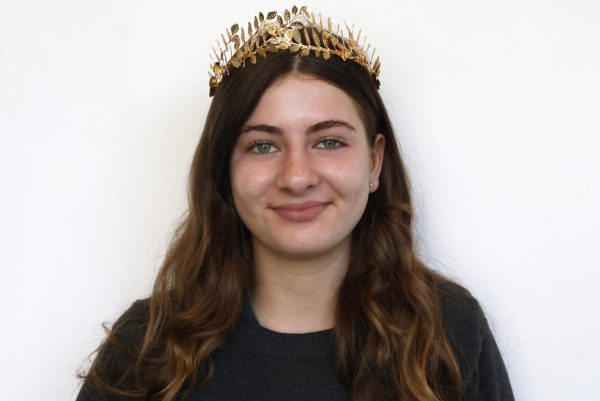
Assistant Orchestra Director Skylar Roberts (’26) has been part of Archer’s orchestra program since sixth grade. Now in her final year, she played a key role, not only as a performer but also as a leader, in helping ensure the concert ran smoothly. The Oracle sat down with Roberts the day before the first show to discuss the rehearsal process, challenges and behind-the-scenes work that audiences don’t always see.
What has the rehearsal process looked like over the past few weeks?
Skylar Roberts [SR]: Our normal practice schedule for upper school orchestra is one day of FLX per rotation and then after school on Wednesdays, so that’s the majority of the semester, and then this week and last week, we’ve had tech week, so we’ve been staying late to do full run-throughs of the show. We’ve added extra time and stayed past when the bus normally departs to have more rehearsal time on the stage and to work with the lights and practice with the different groups.
What has been the most challenging piece to rehearse and why?
[SR]: I’d say the most challenging piece in upper school orchestra would be the arrangement of the “Carmen Fantasy” suite. You have to play in a style; it’s a French opera, but it’s about Spain, and playing an opera piece on an instrument is difficult because you have to mimic singers. It’s a little bit easier for me as a flute player than for strings, but capturing that style is still difficult. I think the hardest piece overall, though, is a flute duet I’m playing. It’s very technically difficult, with a lot of high notes connected together, not many places to breathe and a lot of technical scales.
What does being the assistant orchestra director involve?
[SR]: We have meetings all year, but during the concert, I’m kind of just picking up whatever tasks need to be done, no matter how small. Dr. Murray is very busy conducting, so I’m helping keep track of everyone and making sure things stay organized. I’m also available to help fix instruments, mostly flutes, and just help anyone who needs it.
What is something people might not realize about the work behind the scenes?
[SR]: I think people might not realize how difficult it is to play in an ensemble. You can practice your own part as much as you want and get your notes down really well, but that doesn’t mean anything unless you can play it within the group. A lot of the work goes into making everything sound good together rather than just individually.
What happens backstage right before a performance starts?
[SR]: We have a lot of different ensembles, middle school and upper school choir, a cappella groups and orchestras, so there’s a lot going on backstage. Before each group goes on, we make sure the next group is ready and waiting backstage. It can be a lot to manage because there are so many performers, and we also have to stay quiet since you can hear things through the doors.
Have you faced any unexpected challenges during rehearsals?
[SR]: Not really unexpected — most of the challenges are things that normally come up when putting on a concert: Making sure everyone has their instruments, their music and is in the right place at the right time. One less common challenge this time is that we have electric bass and guitar in the finale, so balancing that with the rest of the orchestra and microphones has taken extra work.
What do you hope the audience takes away from this performance?
[SR]: I think we have a really fun program with a good balance of happy and more bittersweet songs. I hope the audience can appreciate the talent across all the different groups and take away a sense of comfort and enjoyment from the music.