
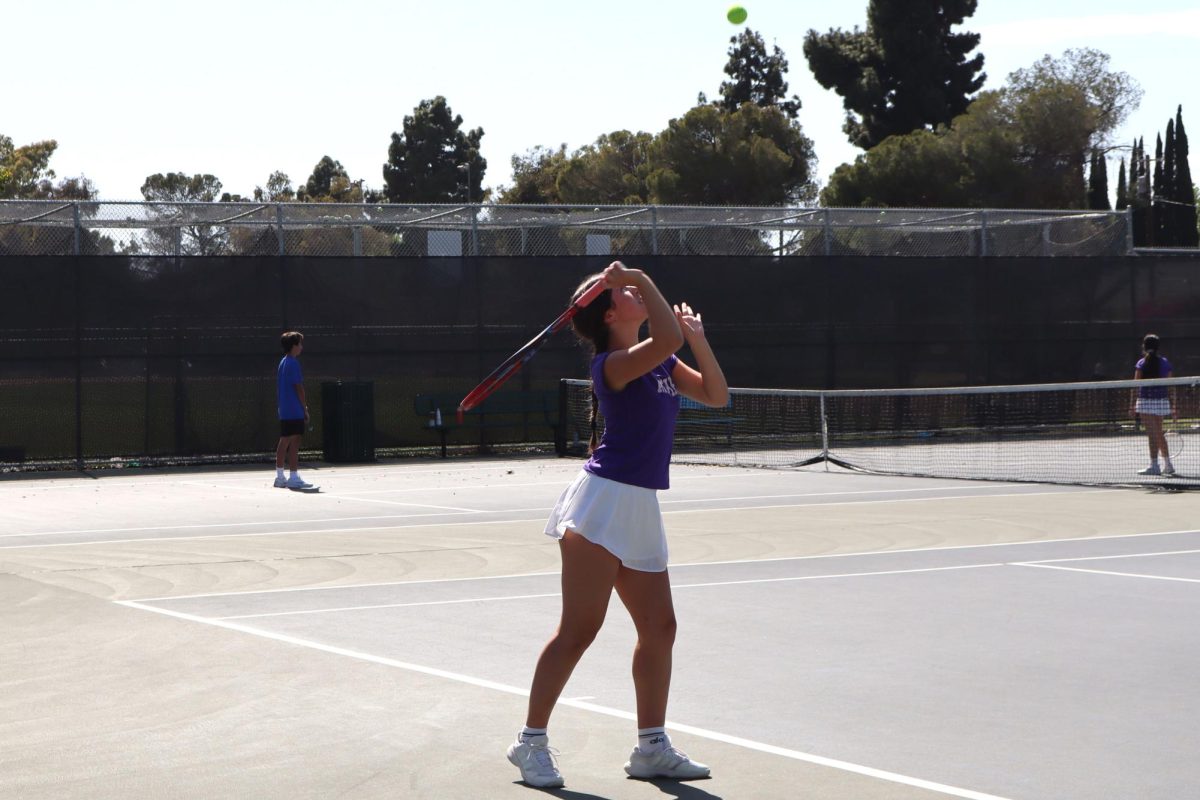
Tennis is often thought of as a physical sport, but what happens in a player’s mind can be just as important as athletic ability. At Archer, the tennis season starts after tryouts at the beginning of August and runs through the end of October. In middle school, there are two teams: the green team and the gold team.
Allie Berry (’30) is on the middle school tennis gold team and plays doubles. Berry was on the green team in seventh grade and said growth in her mental game helped her get on the gold team in eighth grade.
This year was Ava Gabor’s (’32) first year on the team, and she is a doubles player on the gold team. She said a strong mindset has helped her improve and learn a lot.
“I tend to get really nervous, but I just tell myself that it will be okay and it is completely natural to get nervous,” Gabor said. “I just have to play shot by shot. I just try my best and not let myself get in my own head.”
Berry said, when two players are evenly matched, the difference usually comes down to focus, confidence and how well they handle pressure. Success on the court requires staying focused point after point, controlling nerves and quickly recovering from mistakes, Berry said.
Players who can maintain their composure and manage stress are much more likely to perform at their best in key moments, Berry said. She said that mental strength in tennis shows up in several important ways, including intense concentration to read their opponent and hit shots under pressure while also controlling their emotions to avoid frustration after losing points.
“There is always room for improvement and better days because it is not the end of the world. Next time, I’ll just remember some of the things that I could improve on, and I’ll practice them for the next match,” Berry said. “I feel like the mental part of the sport is just as important as the physical aspect because you could be playing well one minute and then your mental game gets thrown off, so you miss the next shot.”
Confidence and resilience are crucial, especially when a match isn’t going the way players want it to, Gabor said. At the same time, tennis is highly strategic, she said. Players must constantly think ahead, adjust their game plan and exploit their opponent’s weaknesses. Together, these mental skills shape how players compete and often decide who wins, Gabor said.
“Tennis depends just as much on the mind as on the racket,” Gabor said. “The players who stay confident, work well under pressure and think one step ahead are often the ones who come out on top.”
Berry said that it is important to calm yourself down when you are anxious, but also to play smarter, not harder. Similar to Gabor, she said she often watches how her opponent plays and finds their strengths and weaknesses to use to her advantage.
“If I’m not playing my best, I’ll try to rearrange how I’m playing and try to see how the opposing players are choosing to play,” Berry said. “Then, I will try to learn from the mistakes they make.”
Gabor said the strategies she uses to calm herself down during a stressful match and the encouraging mindset she tries to have after losing a point are both important.
“I usually like to drink water if I’m stressed and practice breathing because it’s not the end of the world if you lose. Celia, the coach, says, ‘You don’t lose, you learn,'” Gabor said. “If you win every time, you’re not going to get better. But if you lose, you’ll be okay because you will know what to improve for next time.”
Charlie Wilson (’30) said giving herself affirmations before and during a match helps if she is feeling anxious or overwhelmed. Once she does that, she said she can be strategic and mindful about what she does with the ball, taking advantage of her power and control when she has it.
“It doesn’t mean anything in the real world because, ultimately, what happens doesn’t really impact your life. When I am stressed out, I just move my feet and get my head in the right place,” Wilson said. “If I’m not ready to serve, then I just won’t serve. I will wait a second and just start with a clean slate, and then I will wait till it’s the right time.”
There are definitely helpful techniques to keep your head in the game during a match, but a negative mindset can still create challenges and barriers, Gabor said. Most of the time, the players always have someone cheering them on during their match, whether it’s their coach, teammate or doubles partner. However, Gabor said that sometimes during singles matches, it can get a little lonely and unsupported.
“I think the toughest mental challenge is when you’re alone on the court, and you have no one else cheering,” Gabor said. “It’s really hard to get in a headspace where it’s like, ‘It’s okay. I’m alone. I can do this all by myself. I don’t need anyone.’ But when you’re down, it’s really hard to climb back up.”
Wilson said that maintaining a consistently strong positive mindset will always get you through the match. She said that even if your hits aren’t always good, it is the effort and care you put into them that matter most.
“Everything will come together eventually because you can always pick it up and do better another time. Or, just changing your mindset can help you a lot. Just be yourself and try your best,” Wilson said. “Do not doubt yourself, even if it’s not your best day of playing, because that will happen sometimes, but you will be okay.”