

After 65 years of living with parents, siblings, friends, spouses and children, an older person may decide to move to an assisted living facility. As people transition into this new and unique stage of life, there may be concerns about losing what once felt so familiar. A study by the Canadian Institute for Health Information found in a sample of 50,000 seniors living in residential care facilities across five Canadian jurisdictions, 44% had been diagnosed with or showed symptoms of depression.
To combat depression and isolation, senior living facilities and volunteers offer activities like art, music, games and exercise to promote residents’ mental and physical health. They also focus on creating opportunities for residents to be social and stay connected throughout the day.
Encino Terrace, a senior living facility in Los Angeles, personal website says their goal is to give residents a warm and unique space to live in as they receive short-term recovery or full-time care. Activities director Anna Ali was interviewed via email. She wrote that she became interested in working at Encino Terrace because she loves helping people and seeing someone improve their daily life.
“As an activity director, one of the key aspects to keeping our residents thriving physically and mentally is through engagement. Classes are designed to stimulate the mind and body daily,” Ali wrote in an email. “Residents may participate in yoga class or painting. Each activity helps improve their cognitive function and wellness.”
Junior Oona Seppala performs music to residents in assisted living facilities as part of her nonprofit, Rhythms for Residents. Seeing her grandparents move into assisted living started her passion for service work.
“My mom’s parents moved into an assisted living home right before the pandemic, and it wasn’t a sad thing at all. It was definitely the right thing for them to have care and community in their life,” Seppala said. “However, I was really sad about the idea of their life changing — not having a house with a yard and those other traditional ideas we think about. So I was really inspired by them and their journey to discover how to bring a bit of joy and how to connect students with the aging population, specifically in Los Angeles.”
According to Human Good, the transition into a retirement home can be a positive, appropriate change. Long-term care can foster community, activities and safety residents may not find alone at home. Many residents are diagnosed with depression, so unique activities allow them to be social and learn new skills.
The McKendree senior living offers memory care and assisted living. They report that engaging with music can improve cognitive abilities in seniors. Music therapy stimulates various brain areas, improving memory, attention, concentration, problem-solving skills, creativity and language abilities. Seppala’s service supports this study by performing live music for residents.
“I’ve learned that [music] creates and fosters brain plasticity and forges new LTP pathways in the brain while strengthening existing ones, so it’s great for dementia patients,” Seppala said. “What I’ve observed in my own work is that there is a barrier between me and my audience in the beginning — and then, by the end, through both conversation and music, we’ve forged this connection. Together, me and my audience find that, although there’s many generations in between us, we’re actually all very similar, and there’s a lot we can learn from one another.”
Sadie G Mays is a health and rehabilitation center offering short term and long term care, along with rehabilitative services. They say that social connection plays a crucial role in senior care by significantly improving emotional well-being, enhancing physical health and maintaining cognitive function. Ali emphasized how important it is to create a fun environment for seniors to meet friends and bond with one another.
“Activities, like exercise and learning a new skill, really help make a difference with seniors. Having a social environment for them to meet friends and share common interests really helps too,” Ali wrote. “My favorite part of my job is going on fun excursions like the museum and historical parks. Watching them engage with other people and taking a quick selfie is really rewarding to watch.”
Although a lack of exercise and games are a large part of depression, Seppala looks for what she thinks is the real root of loneliness and isolation: lack of connection.
“The biggest thing I’ve taken away is that there’s a real fear of being forgotten in these assisted living homes. It’s heartbreaking, but I think it’s also incredibly human to fear losing the love and care from your community and feel forgotten by the outside world,” Seppala said., “and, so, making sure these people remember that they are cared for and that there is a whole world of people who are thinking about them is, not only important, but rewarding.”
According to the National Library of Medicine, the arts play a major role in promoting health across the lifespan, as they prevent ill health, promotion of health and management and treatment of illness across the lifespan. Sophomore Edie Wyles volunteers at assisted living facilities and teaches art to seniors. Wyles inherited the program Arts for Ages from Archer alumni, Jordanna Boxer Wachler (’24). Wyles said she loves volunteering because it brings joy to makes residents feel “seen.”
“I think it’s good to interact with them because it’s an outside community, and they often don’t get young people working with them. It brings them joy, and it helps them just be connected with everybody now,” Wyles said. “And just because you get older doesn’t mean that you have to live your life far from people who are a different age than you.”
Overall, socializing and communicating with others is key to staying mentally active and healthy, Ali wrote. She said encouraging new residents to get active and involved with staff makes for a smoother transition.
“Loneliness does occur as we age, but the great thing is, our program allows our residents to have numerous hobbies and visitors from loved ones. Simple interaction and communication, also self-care is a really great way to combat loneliness,” Ali wrote. “We always welcome local volunteers and young adults to engage with our residents. They love that more than anything. Bridging the gap between different generations is so fascinating! Children and seniors share a lot of similarities. All of us are looking for connection and a sense of purpose.”
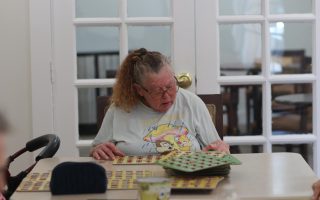
In the video below, residents at Encino Terrace playing bingo is shown while talking about the different activities to keep residents minds healthy and active.