
When I look up at the night sky, I see nothing. The bright lights of Los Angeles block the beauty of starry nights. Camping, however, provides me with a rare opportunity to stargaze. I stare at the dots in the sky and begin to connect them to each other. My mind starts to wander, and I realize that although each star is a solitary ball of fire, the human imagination has turned them into constellations with relationships and meaning. Constellations are often connected to mythical stories, imagined by ancient civilizations, that live on to modern day. These universal stories have played a critical role in human history, passing down culture, wisdom and hope.
As a little girl, the first story that kept me up at night was that of my grandmother:
Forty years ago, on the terrace of her joint family home in Pune, India, a young mother crafts her weekly column for the local newspaper.
Newly widowed, she is ostracized by society. She is expected to disappear from public life and live out her days concealed at home. She is to wear white—the color of mourning. Being single mother, she is a source of shame for her family, and her life and her children’s lives are forever altered.
To provide for her children, she works as a school administrator, columnist and interviewer at a Marathi radio station. Still, she is not paid enough money to support her family. So, with one friend, she develops a catering business. Simultaneously, with another friend, she builds a beauty salon. Under impossible circumstances, she thrives and dares to dream of a brighter future.
She quickly realizes her children, especially her daughter, would never have the life she envisioned for them in India. They would not be respected or have equal opportunities because of her widowed status. Eventually, she saves up enough money and acquires visas to the U.S. In moving to San Jose, California, Pune’s sister city, she creates a new life for herself and her children, in a land abundant with opportunity.
My grandmother’s incredible story lights a fire in me every day, and she inspired the core values that motivate me to do something extraordinary with my life. I take advantage of every opportunity. I appreciate small moments of joy. I listen to people’s stories.
As I grew older, I continued searching for stories around me. Approaching everyone I knew with questions, I interviewed them about anything and everything. My uncle expanded this curiosity as he began sharing news articles from The Atlantic for us to discuss each Sunday. Our conversations kept me constantly investigating questions about the world, helping me connect the dots between the stories I read and my lived experience. I started to realize my true passion: uncovering the unknown, while discovering aspects of myself — my values, my dreams and my capacity for understanding.
In high school, I joined the introduction to journalism course, transitioning from consuming stories to telling them. I instantly fell in love with the journalistic process, learning how to interview community members and ethical reporting skills.
My first big feature article, inspired by the Tokyo Olympics, detailed Simone Biles’ testimony about her mental health struggles. After watching video after video of elite athletes speaking out on mental health, I knew I had to tell a story about the benefits of sports psychology, a fairly unknown field at the time. As a tennis player, I understood the pressures athletes face, which made me especially interested in the subject. For the article, I interviewed high school athletes, coaches and sports psychologists. The end result was a narrative that exposed the detrimental implications of mental health stigma in sports and its direct impact on my school community. My goal was not simply to inform — it was to connect, to reveal that behind every athlete’s triumphs and setbacks lies a deeper, untold story.
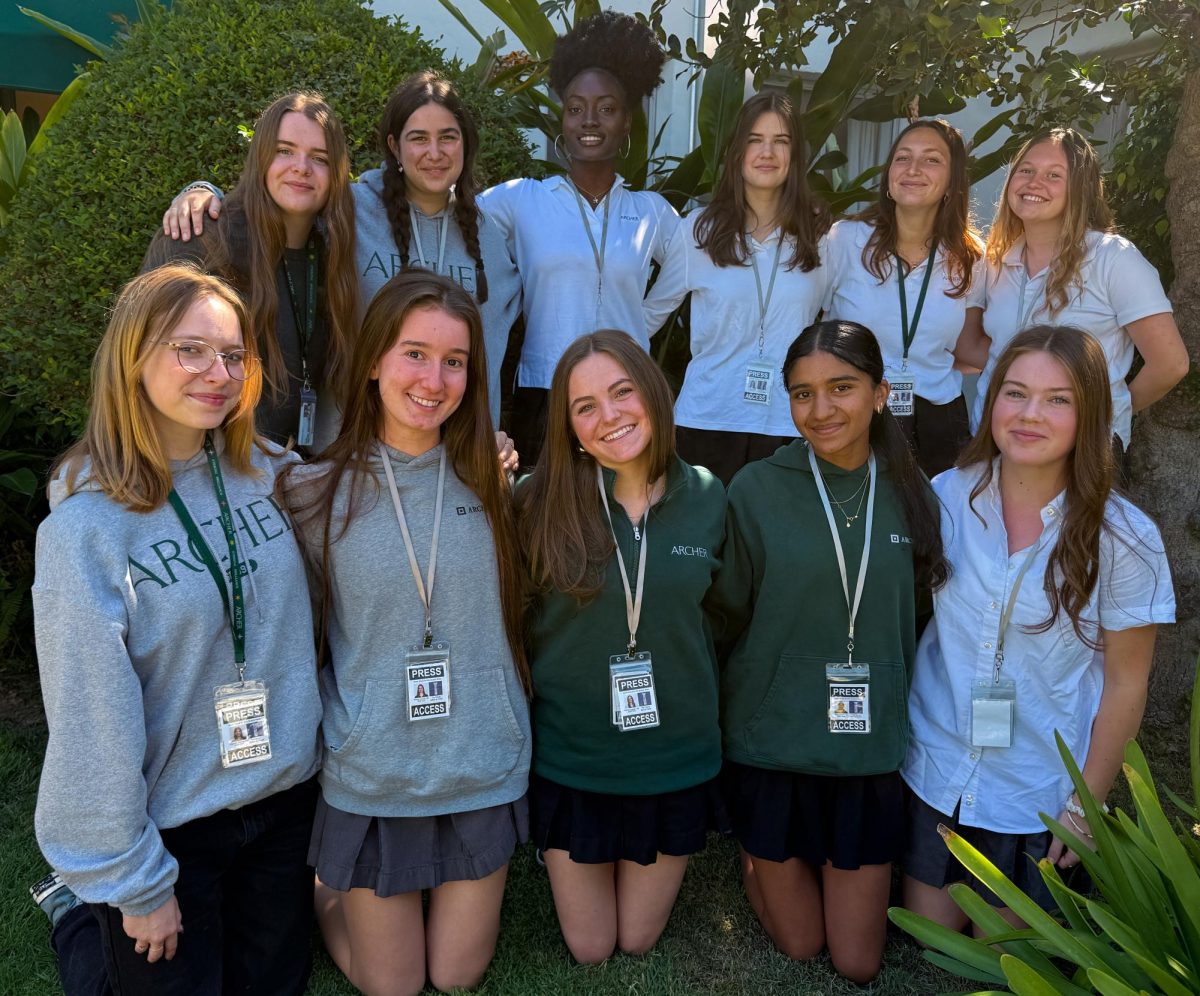
Over the past four years, The Oracle has allowed me to localize national issues, amplify student voices and foster discourse. From the Syrian refugee crisis to child marriage banning initiatives to desensitization to gun violence, I’ve tackled a myriad of topics. My primary goal as Editor-in-Chief was to encourage my reporters to cover the underrepresented voices in our community waiting to be heard, just like my grandmother’s.
Storytelling inspires empathy for people different from ourselves, highlighting the underlying similarities of the human experience, rather than superficial differences. Although stars in the sky burn miles apart, constellations often overlap; our stories may seem disparate, but by highlighting our shared experience, we see our constellations intertwine. Now, when I look up at the sky, I don’t see each star individually. I connect the dots, and a story is born.