



I’ve never really considered myself a Sabrina Carpenter fan. Sure, I’d hear “Espresso” on the radio almost every day, and while I couldn’t help but sing along to its catchy chorus, it wasn’t the kind of song I would go out of my way to play on my own. But many of my friends would constantly rave about how talented Sabrina Carpenter is and how much they love her music. Their enthusiasm eventually made me curious, so I decided to give her latest album, “Man’s Best Friend,” a try.
From her hit album, “Short n’ Sweet,” Carpenter made a name for herself and showed the world that she’s more than our favorite Disney star. With hit songs like “Espresso” and “Please Please Please,“Carpenter built a fanbase of 66,844,680 listeners on Spotify.
On Aug. 29, Carpenter dropped her seventh studio album, “Man’s Best Friend,” a few months after releasing “Manchild” as the lead single in early June. Fans had been eagerly waiting, since “Manchild” became a summer anthem. In an Instagram post, Carpenter wrote that “Manchild” is “the song embodiment of a loving eye roll” and feels like “a never-ending road trip in the summer.”
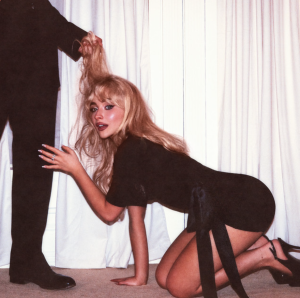
In the album cover, Carpenter is shown bent forward as a male figure grips her hair, her hand resting lightly on his knee. She meets the camera with a calm, almost unsettling serenity that contrasts sharply with the tension of the scene around her. This image depicting Carpenter as a doll — or even a “slave” — to a man, made me expect the album to explore themes of power and control.
The album cover was extremely controversial and sparked widespread backlash from media. A Fox News critic asked, “Am I the only one who thinks this is dehumanizing for women?” Another user echoed the sentiment, writing, “This cover makes me uncomfortable… especially in times like these. Absolutely tone deaf.”
Carpenter defended the cover in a CNN interview, stating that it “was not made for the pearl clutchers” and dismissing the backlash by saying people were being “too sensitive.”
After “Manchild,” the second track, “Tears,” plays. Written by Carpenter and collaborators John Ryan and Amy Allen, the song opens with a slow, disco-inspired groove that carries throughout. It has a ’90s vibe, and although the title might suggest saddness, the lyrics are actually centered on sexual desire. While this was definitely surprising, I still enjoyed the song’s playful, lighthearted vibe. At the same time, I wasn’t sure how it fit with my original expectations for the album, which I thought would be more emotional and serious.
Next on the album is “My Man On Willpower,” which also has a fun and catchy vibe to it. Power dynamics definitely played a role in how I interpreted this song. In the lyric video, Carpenter presses her hands over the mouth of a blindfolded man, making him look both blindsided and captivated by her. She’s flipping the usual script: men often hold the power in relationships, but here, he’s powerless against her, showing that she is the one in control.
While the previous song focuses on a man unable to resist her appeal, “We Almost Broke Up Again Last Night” explores the opposite: being unable to walk away because she fears no other man could treat her better. This was one of the few songs that connected to the album cover, suggesting that even when a relationship is messy, she endures it for the sake of having a man in her life. The lyric video of this song shows Carpenter repeatedly holding hands with a man, suggesting that she feels forever bound to him despite his wrongdoings.
My favorite song on the album was definitely “Nobody’s Son.” It was slower and less catchy than the other tracks, which I loved. The song gave me a chance to really focus on and appreciate the lyrics. The song explores her concerns that there is no man in the world for her, and it expresses her desire to reach a point in life where she can be happy on her own. I found this message incredibly powerful, and it also resonated with the album cover, reflecting her desire to be liberated from feeling like a “slave” to a man. Compared to the other songs on the album, like “House Tour,” “Go Go Juice,” “When Did You Get Hot” and “Never Getting Laid,” which focused more on sexual themes, “Nobody’s Son” felt more meaningful and captured a side of the album that deserved more attention.
While the album was undeniably catchy, it didn’t change my overall opinion of Sabrina Carpenter. I felt she missed an opportunity to fully explore power dynamics in relationships, instead leaning heavily on sexual themes. By the end, “Goodbye” perfectly captured how I felt — almost like a farewell to the album I had hoped would dig deeper.
-
Lyrics
-
Sound Quality
-
Enjoyment
-
Impact
Summary
Sabrina Carpenter’s “Man’s Best Friend” was released Aug. 29, following the early summer release of the single “Manchild.” While the album is undeniably catchy, it leans heavily on sexual themes and misses opportunities to explore deeper ideas about power and relationships, leaving me with mixed feelings about the album.


