










In early May of 2023, the Writers Guild of America went on strike. Seventy three days later, on July 14, the SAG-AFTRA actors strike began, too. Both the WGA and SAG-AFTRA are labor unions representing 180,000 film industry employees combined. The WGA went on strike for several reasons, including earning more residuals from streaming services, preventing the future of artificial intelligence writing and ensuring a writer’s room is established in each show. The SAG-AFTRA strike began for similar reasons, including a desire for restraint on AI, salary increases and better working conditions.
When film and television industry production came to a halt due to COVID-19 and the strikes, streaming services re-aired popular TV shows and movies in order to keep consumers satisfied. This led streaming services to reassess how much content they already had and conclude that the surge in production following COVID-19 was no longer necessary. As a result, they slowed global production by 20%, leading to a record loss of 42,000 jobs over two years.
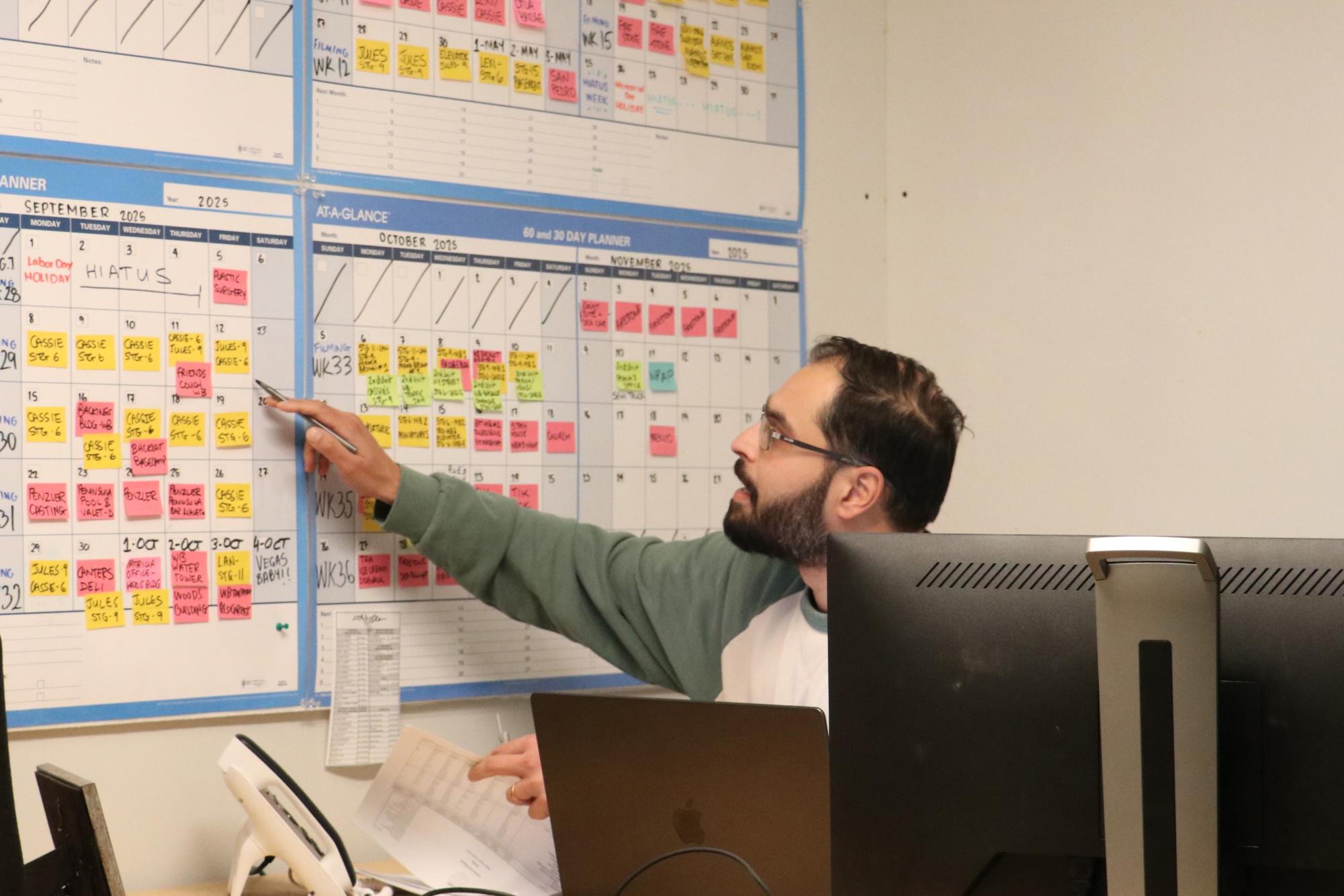
With jobs being cut, current employees are questioning whether their position will be next. Production supervisor Saad Mansoor said he thinks about this regularly. He wrapped a show in November of 2025 but was unemployed for five months after the strikes ended, a particularly stressful period as both his and his wife’s jobs were affected by the production slowdown.
“I think budgets are getting tighter and tighter day by day, and even sometimes my job is in question. Do they need me? Do they need these people?” Mansoor said. “Those are the kind of things that scare me that I have seen [throughout] these last three years now, in this three-year span since COVID and everything that followed. I’ve seen shows and movies leave LA because it’s just not sustainable.”
Though the strikes and pandemic were a period of production slowdown, they were not the only factors in reducing film jobs in Los Angeles. From 2015 to 2025, California-based productions were granted 20-25% tax incentives on each production to encourage the film and television community to stay in LA. Since LA is already expensive, the rather average tax incentives did not fulfill the hope to keep production in LA, and promoted jobs to move to other states and countries that are more affordable.
Arts Teacher Brooke Sebold lost their job with a production company after it lost funding in 2022. A Columbia Film School graduate, Sebold has worked in the film industry for 23 years. Since moving to Los Angeles, they have worked as a writer, director and editor. Sebold said the industry remains in a state of “shambles,” a reality that has been “heartbreaking” for their own personal trajectory.
“There is the piece where I try to remind myself not to internalize it. It’s easy to be like, ‘Oh my God, am I not good at what I do anymore?’ But then you look around at the community, and you’re just like, ‘We are all struggling in this together,'” Sebold said. “The strikes are one component of it. The landscape is shifting in different ways, and the AI component of it, too — all of these different factors are breeding a sense of insecurity and uncertainty.”
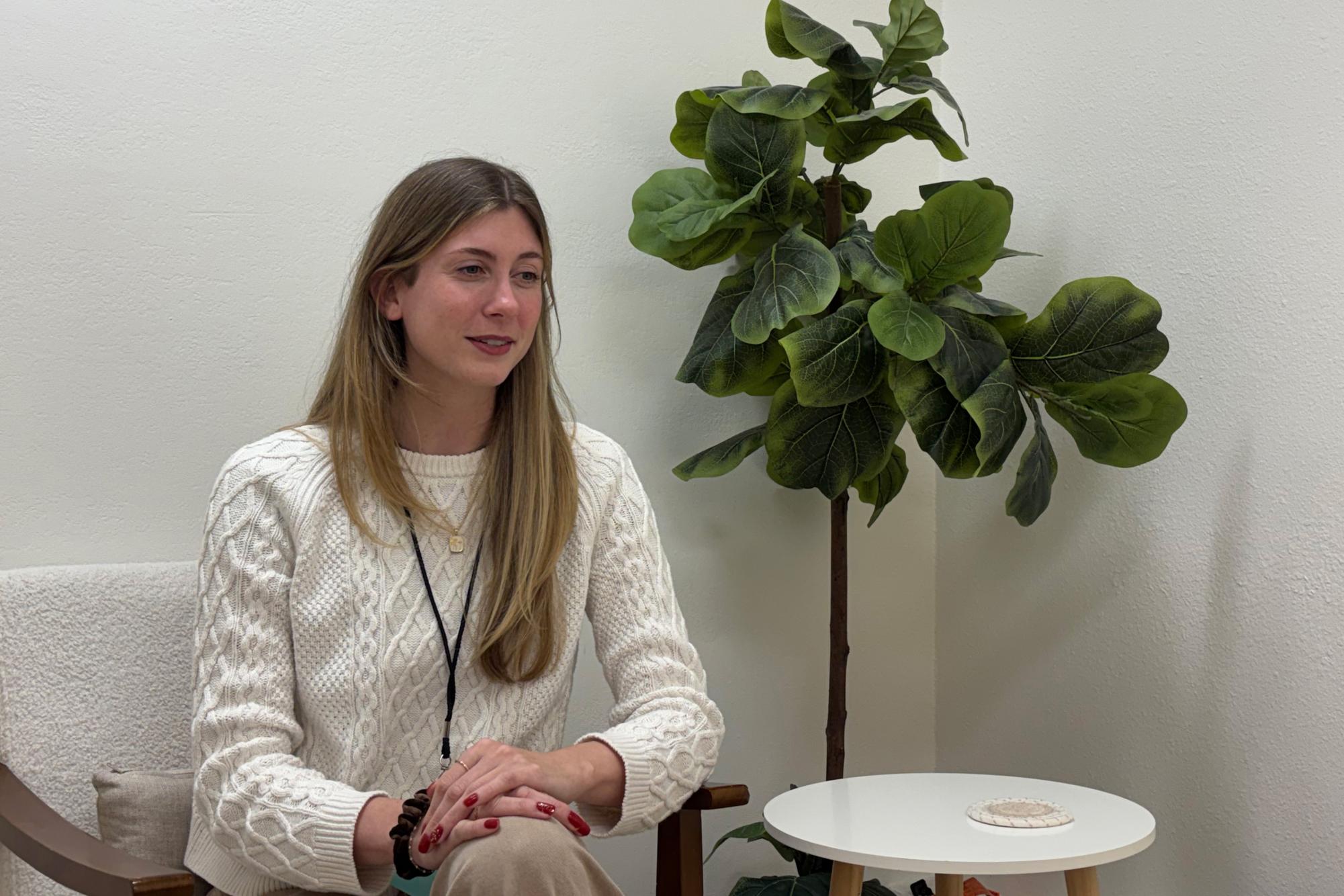
The 2023 Minimum Basic Agreement Provision is a policy guideline for the WGA regarding artificial intelligence restrictions. This states that neither traditional AI nor generative AI qualifies as a literary writer, while allowing writers to use AI as an assistant only if permitted by their company, alongside other strict restrictions. Production assistant Jessie Henry, who worked as both a writer and production assistant on a television show shortly after the strikes, faced eight months of unemployment in the film industry. She said that AI, like the internet, is a revolution we must adapt to.
“Some parts of writing take a really long time, especially the detail-oriented stuff, no comma in the wrong place, that type of stuff. AI can step in for things like that. And if we can learn to harness AI and make our jobs quicker and easier without losing the creative integrity, that is a way forward,” Henry said. “But I do feel like the amount of jobs available in the writers’ room is going to be more limited, which is unfortunate. And it doesn’t allow for a lot of new people to enter — which is me. I’m not necessarily rooting for that or hoping for that, but I think that given all of our options on the table right now, it could be like somewhat of a best-case scenario.”
Sebold decided to pivot careers momentarily after months of unemployment and their own scripts not being pursued. Like many others in the industry, Sebold found themselves seeking stability while remaining connected to film. Becoming the film teacher at Archer felt like a “side-step,” since they can still work in film, rather than switching to an entirely different field, Sebold said.
“[Archer has] been a really, thankfully, wonderful landing place for me, but it was very much catalyzed by the industry that I’ve worked in fruitfully for so many years, contracting in a really serious way,” Sebold said. “And I don’t know if that’s a permanent thing or how that will shift, or maybe it will be elsewhere, just not in LA, that it thrives.”
Like Sebold, Henry, too, pivoted — not out of necessity, but rather out of access to free time. Henry started grad school for psychology and two internships as a therapist, in hopes of becoming both a writer and therapist in the future.
“I’m glad I have this backup plan because if this is how it’s going to be for the rest of it, then who knows,” Henry said. “It might not work out as well for me now that I also do an internship, but I am going to try to balance them.”
Sophomore Bonnie Van Hoytema is a film student at Archer and hopes to continue her passions in the future. To create a show or film, it is important to realize it takes more than a select few, but everyone behind the scenes as well, Hoytema said.
“The thing with the strikes in the film industry is that it’s different from if you work in a factory or something, [where there is strict order]. The film industry has a little bit more nuance,” Hoytema said. “It’s a little bit slower pace in starting up that process again, because not only the amount of people that it takes to start up an actual project, but it’s also you need the funding — there’s just so much that goes into starting up a project.”
In hopes of moving production back to Hollywood, Governor Gavin Newsom signed Assembly Bill 132 in June of 2025, expanding the Film & Tax Credit program to $750 million annually, a 250% increase from the previous $300 million annual incentive. This guarantees productions filmed for the next five years a 35-40% tax incentive, possibly bringing more jobs back to LA.
“Pretty much every industry that has existed up until now has pivoted or come to [an] end. What were people doing in ancient Rome? Are they still doing it? Probably not,” Henry said. “What feels like unprecedented times is not unprecedented times in world history, and people have learned to pivot.”




Ally O’Boyle • Dec 19, 2025 at 5:59 pm
Amazing photos. I’m in awe