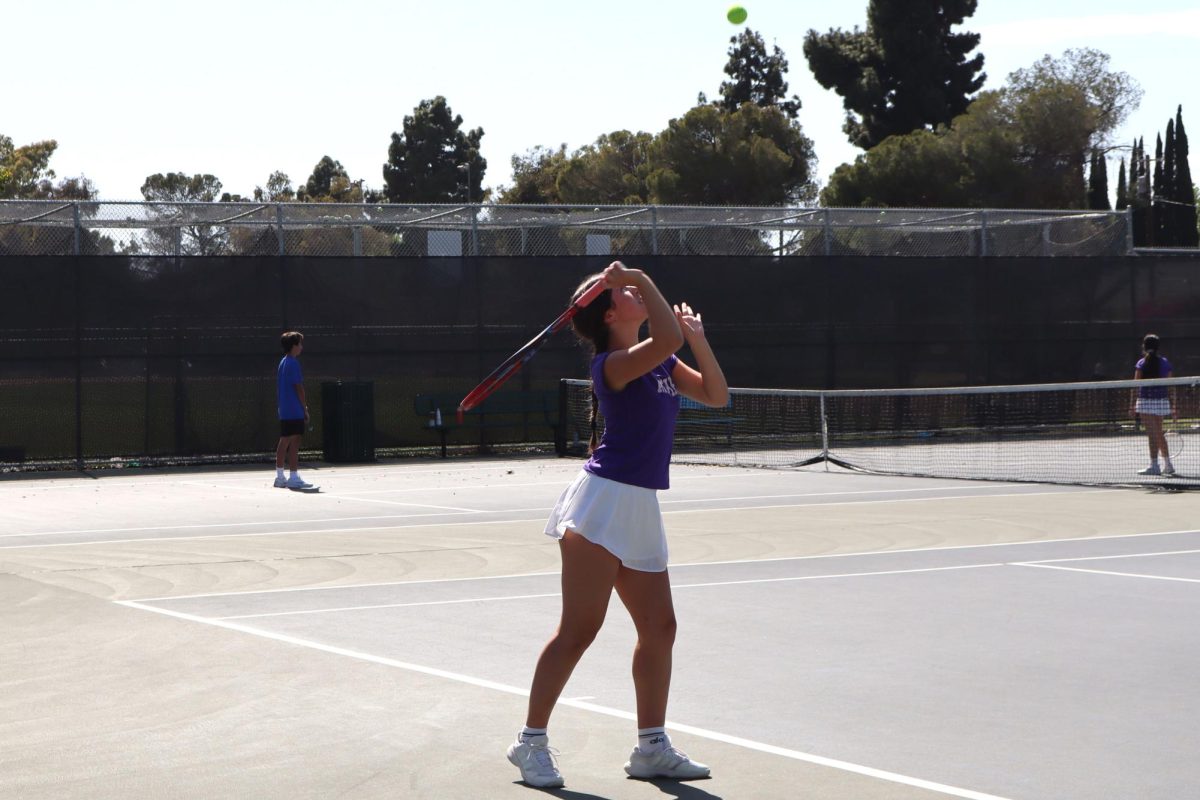

Whether it is the soccer doing a team sleepover or the track and field team going to Top Golf together, sports teams at Archer typically have a variety of traditions. For Archer’s varsity and junior varsity tennis teams, Head Coach Paula Feigenbaum has taken the lead on creating these team traditions to help players to feel seen, from Player of the Week to Round-Robin.
Feigenbaum started her tennis journey in middle school and became Archer’s head coach 10 years ago. She said she came to Archer because she was looking for a meaningful way to spend her time, especially after raising four daughters.
“I think it came about because I always played with my dad growing up,” Feigenbaum said. “I know that the biggest joy a parent can have is playing a sport with their child, and then I just decided to give it a try, and it was such a big hit, and it so that’s how it started.”
According to Tatiana Bojeczko (‘26), Round-Robin is a favorite tradition amongst most players and parents. This is an event where parents run up and down the court, hitting forehands alongside their daughters. For players whose parents are unavailable or don’t play tennis, Feignbaum made a parent alumni waitlist to fill in those spots if needed.
In addition to Round-Robin, Feigenbaum created a tradition of documenting each player’s journey on the team, helping them reflect throughout their time in the program. First, she records them when they find out they made the team, asking questions about how they feel and what they are looking forward to. As well as capturing moments and plays throughout their years. In their senior year, she records one final video with the same questions. On Senior Night, Feigenbaum plays all of the videos.
“Throughout the years, in addition to coaching, I take photos and then I keep all those videos and show them when they’re older,” Feigenbaum said. “We really cherish those memories.”
Feigenbaum not only advises her players but also said she strives to build deeper, familial connections with them.
“Because I have four daughters, I look at each of [them] individually,” Feigenbaum said. “I treat them like I would be treating my own daughters.”
Bojeczko and other players on the team echoed Feigenbaum’s approach of fostering a supportive and connected environment while balancing professionalism and growth.
“I feel like [Feigenbaum] is a mom figure to the team,” Bojeczko said. “She wants what’s best for us, but she also wants us to grow as a team.”
Another Archer JV and varsity tennis coach, Celia Quintero, said Feigenbaum reinforces a standard of positive feedback and encouragement, especially in the aftermath of rough moments or during changeovers.
“She always talks about being positive and fighting hard,” Quintero said. “If we can, we can always work on it later.”
Feigenbaum said she frequently emphasizes positivity and long-term growth for her players, encouraging them to work hard during the season and continue playing tennis beyond their years on the team.
“One thing I want all the girls to understand once they leave Archer … is that with seven years of playing tennis, they’ll have tennis for the rest of their lives,” Feigenbaum said.
Feigenbaum described the importance of viewing tennis as a life skill to train mental discipline.
“They will be able to go anywhere and be confident and say, ‘I’m looking for a doubles partner, put me in a game,’” Feigenbaum says. “That’s the skill they’re going to have forever.”