


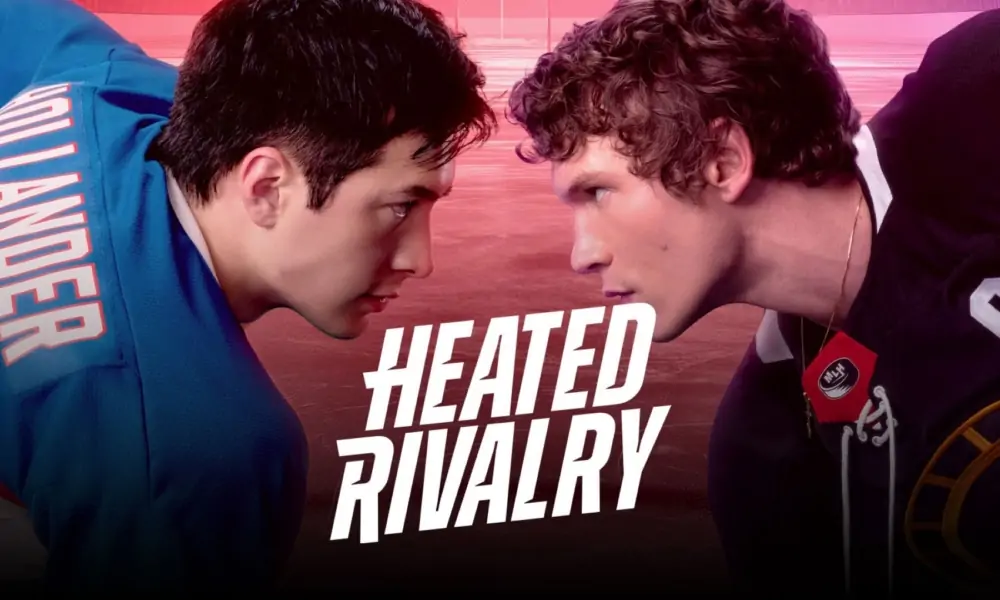
Editor’s Note: “Heated Rivalry” is a Crave series that is inappropriate for younger audiences. The show features explicit language and heavy nudity. The Oracle does not recommend this series for our younger readers, and Common Sense Media estimates it is appropriate for ages 17+.
As someone who has never been interested in hockey, I suddenly found myself hooked by two gay hockey players and their love story over winter break. Since the first two episodes were released Nov. 28, it’s safe to say “Heated Rivalry” has had the internet in a trance through its exploration of queer joy and resilience.
Although many people may have apprehension about a high school publication covering this show, the truth is many high school students are watching it. According to HBO Max, 53% of viewers were female before the finale, and Archer students are no exception.
Based on the bestselling book by Rachel Reid, “Heated Rivalry” follows hockey players Ilya Rozanov, played by Connor Storie, and Shane Hollander, played by Hudson Williams, as they pursue an eight-year sexual relationship that later turns romantic. The two are the captains of the top rival teams in their league, making their love forbidden. As two gay professional athletes whose encounters began in 2008, the show portrays the reality of being queer in the late 2000s through the 2010s. The show makes a point to comment on the harsh realities of hockey culture and the difficulties of being queer in a space that rewards hypermasculinity.
According to OutSports, the National Hockey League (NHL) is the only male professional league to have no active players come out as queer. The series tackles this point head-on, as both main and side characters hide their relationships due to rampant homophobia within their league. In a sport often characterized by toughness and aggression, “Heated Rivalry” shows that it is not weak or “soft” to be gay. The characters’ masculinity is never questioned or diminished because of their queerness.
The Crave original series executed the slow-burn romance between Rozanov and Hollander beautifully.
The extended timeframe of “Heated Rivalry” allows the story to feel more realistic, as deeper love usually takes time to grow. This allows viewers to become fully immersed in their relationship, making it feel more like they’re living through it rather than just watching it.
“Rachel tells the story chronologically, and I thought I wasn’t going to mess with that,” showrunner Jacob Tierny said in an interview.
“Heated Rivalry” shows what it means to be queer in a space that isn’t accepting. Rozanov and Hollander create their own story by rejecting what society claims love is supposed to look like and letting their love exist as it is.
With “Heated Rivalry” being Storrie and Williams’ first major roles in television, they both had no issue digging into the deep emotions that these roles required. Both actors were able to reveal the layers within their characters, clearly differentiating between their characters’ hockey personas and true personalities.
Although the show can be very erotic and it is easy to get lost in the multiyear jumps of their relationship, those details ultimately add to the story’s realism. The timeline is not as clear-cut to ultimately show how their love was not able to exist as openly as in straight relationships. Rozanov and Hollander were only able to be together during occasional hook-ups.
Overall, “Heated Rivalry” was able to break barriers in queer media by letting the characters stay comfortable in their masculinity while exploring their sexualities. The show conveyed the complex relationship between someone’s public versus private image and the mental toll that comes with it.
The next time you’re looking for an explosive enemies-to-lovers show to watch, try “Heated Rivalry.”
Heated Rivalry (2026)
-
Story
-
Acting
-
Technical Quality
-
Enjoyment
Summary
“Heated Rivalry” is a sports romance that will make sure to keep you hooked throughout the entire show. Following the relationship between characters Ilya Rozanov and Shane Hollander, the show explores themes of challenging toxic masculinity and what is means to be queer within the sphere of sports.


