It’s no secret that all marginalized races and ethnicities face discrimination, whether by microaggressions or blatant racism. Throughout history, Asians have faced heavy discrimination, from the American “Yellow Peril” to the Chinese Exclusion Act of 1882. Especially after the COVID-19 pandemic, hate crimes and discrimination against Asians rose significantly. However, since Asian people also have positive stereotypes placed on them, such as being good at math or working hard, the fact that they face prejudice is often overlooked. This is especially prevalent on social media.
H-Mart, 99 Ranch and Mitsuwa Marketplace are all examples of Asian-centric grocery stores that were founded in the 1980s and 1990s, two of which — H-Mart and 99 Ranch — were founded by immigrants. For some, the ’80s and ’90s may feel like centuries ago, but in reality, that is only 30-40 years ago. The majority of Asians didn’t begin to immigrate to America until the mid-1800s, and the fact that these chain stores opened so recently shows that Asian culture has only just started to become an accepted part of America.
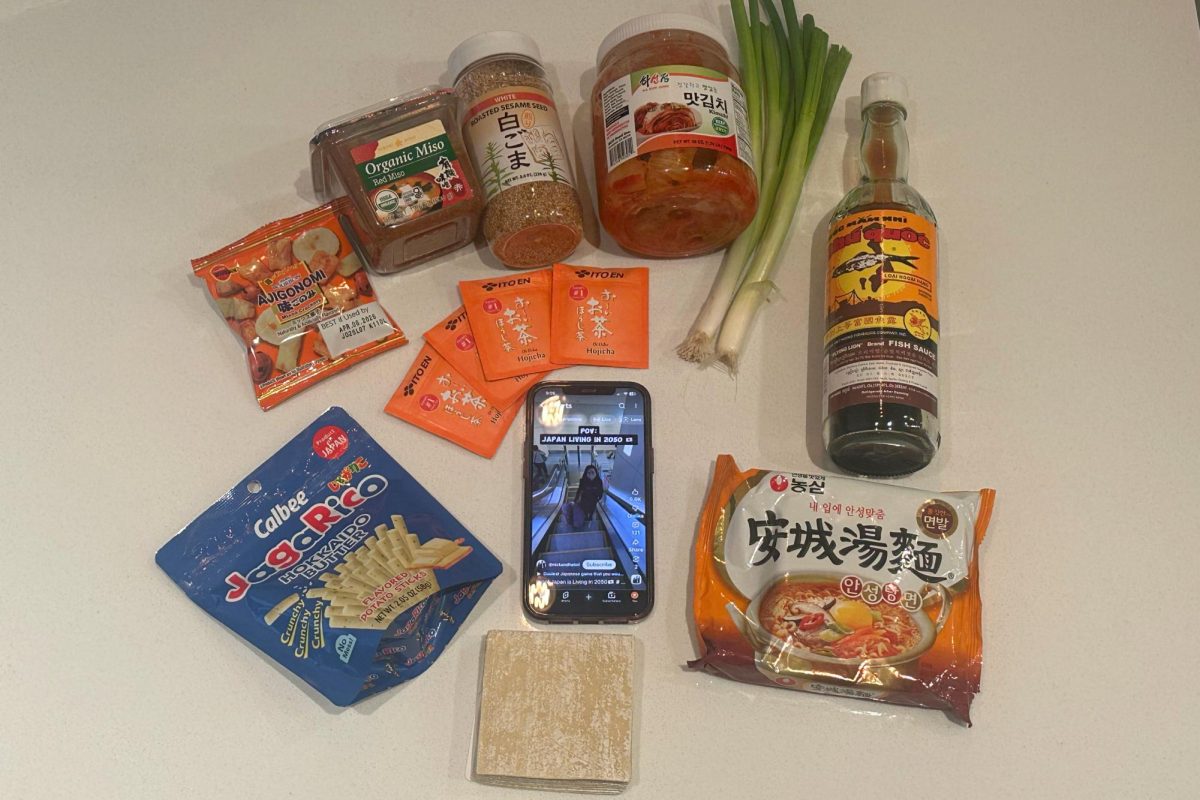
Madeline, an Asian American creator on TikTok who goes by say_qis, posted a video sharing her opinion on white people shopping in Asian grocery stores. In short, she said she would often side-eye white shoppers when she noticed them shopping — especially if they seemed unaware of what they were purchasing and had only seen the products on social media. Currently, the original video is not available on the platform. Racism is something that ostracized groups will likely face for years to come. Therefore, it is no surprise that some Asian communities feel awkward having white people in their grocery stores. These stores are places for Asian culture to thrive and for Asian minorities to escape judgment from white-dominated spaces.
Madeline received immense backlash from many communities, where people insinuated that she was gatekeeping or discouraging non-Asians from purchasing Asian goods. Although the feelings of those who disagreed with her are valid, this is a prime example of how the victim mentality and social media are damaging to cultures that have historically been discriminated against.
It is easy to see both sides of this argument. Since some white and non-Asian people genuinely enjoy Asian culture and food, they may feel as though they are being pushed out of a space they enjoy. However, due to the recent rise of Asian influence on social media, there are people, such as Koreaboos or obsessive Japanophiles, who make those of Asian descent more uncomfortable.
These admirers of Asian culture are obsessed with the idea of being Asian or having an Asian partner. Some even go as far as to call themselves Korean or Japanese and try to use makeup to create a more Asian look. On the surface, one could argue it is cultural appreciation. But the very idea that a non-Asian person is trying to make themself look Asian is ignorant and implies that Asian features can be chosen and taken away. This is especially harmful to Asian people who have a thinner eye shape, since they have been discriminated against because of it, and suddenly, people are dying to replicate it.
Recently, on social media, there has also been a stark increase in the number of viral products that originate from Asia. Influencers preach how amazing these products are, and it is reasonable to assume this would benefit Asian culture and Asian-run brands. However, since social media is so fleeting, these products and their popularity will fade away as quickly as they came. This is not only damaging to the brands, but also to how Asian culture is perceived worldwide because it paints Asia as something to only care about when it is popular.
On social media, a traditional Korean dish called gimbap is often referred to as “Korean sushi.” It may seem harmless, but the more the term is used, the more normalized it becomes. That renaming can slowly chip away at the authenticity of the dish and its creators.
It is worrying to see how social media portrays Asia in so many different ways. Asian culture is so easily misunderstood and misinterpreted, which leaves room for so many discriminatory practices to become normalized. The more that these subtly racist practices and ideas are perpetuated, the more harmful they will be to marginalized communities. Asian or not, any minority who faces prejudice is struggling every day due to social media.
Society should be working towards acceptance, not backhanded appreciation. It is vital to take time to understand other cultures. The more misinterpreted information that is spread on social media about marginalized groups, the more society will misunderstand them.