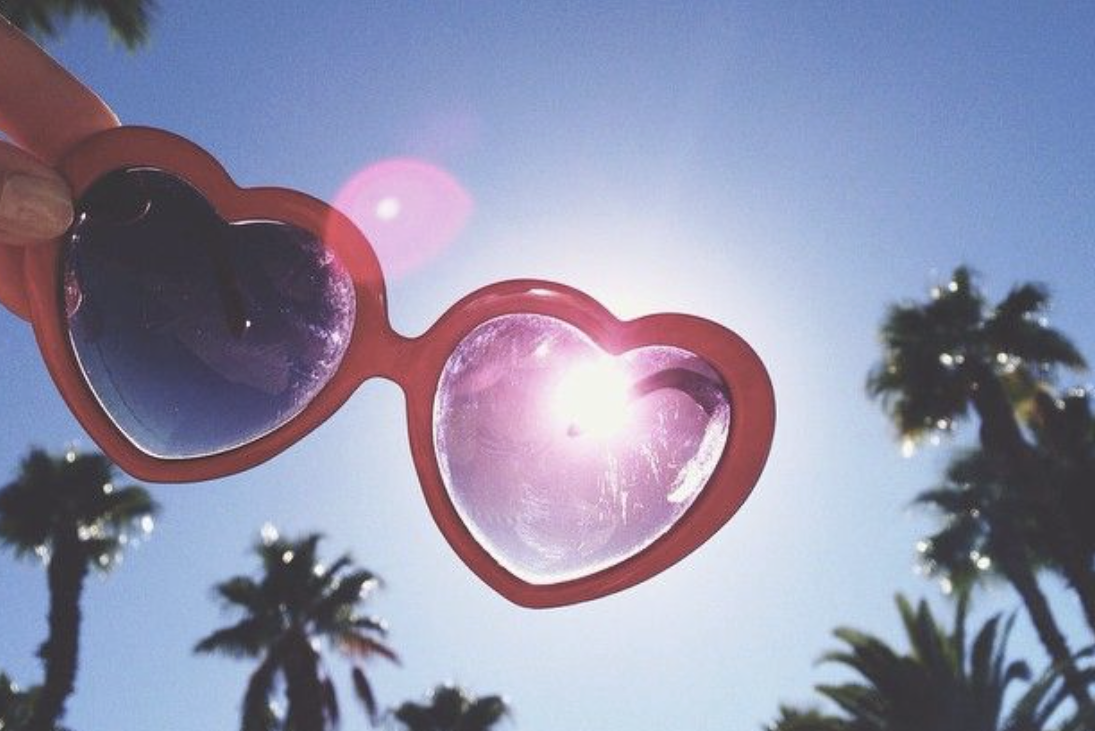
You’re sitting in a car with the air conditioning blasting and “Closer“ by The Chainsmokers playing on the radio. While sipping your unicorn frappuccino, you gaze at the pink and gold sunset out the window and snap a photo of the scenery. You post it on Instagram with the iconic Rio de Janeiro filter. For a moment, there are no problems — just tranquility and peace.
That’s because it’s 2016.
So what made 2016 feel perfect? Or is the real question why the thought of 2026 feels so heavy?
The phrase “2026 is the new 2016” has been circulating on social media. It suggests brighter aesthetics, carefree summers and better music. It proposes a return to more joyful days and a cultural reset back to when everything felt fun. Although we teens were just kids, we remember 2016 as a more easygoing time.
In 2016, the world felt distant in a way that made everything seem lighter. News traveled slower, and rage did not dominate every corner of the internet. Data from the Gallup World’s Emotional Health report shows that feelings of anger, sadness, worry and stress have increased since 2016. Today, it seems nearly impossible to open an app without seeing headlines about potential World War III, climate change accelerating faster than predicted or political crises unfolding. There is a constant sense that something terrible is about to happen, and that feeling follows us everywhere.
That endless tension is exhausting. In 2016, simple joys had room to thrive. Laughing with friends or just hearing your favorite song unexpectedly come on the radio could carry an entire day. These moments still exist, but they feel harder to find. Part of that change is just the progression of life. Gen Z had fewer responsibilities and less pressure to keep up with everything. Feeling carefree came naturally because we weren’t carrying as much.
Recent studies show that younger generations report lower levels of happiness than older generations, an unusual shift compared to past trends. The World Happiness Report, compiled by Oxford University’s Wellbeing Research Centre, Gallup and the United Nations, found that people under 30 in North America are feeling particularly stressed and uncertain.
Economics professor David Blanchflower of Dartmouth College, who has studied well-being for over 20 years, explained in a Dartmouth article that most people’s happiness follows a U-shaped curve.
“We found that people were at their unhappiest in middle age,” Blanchflower said. “You’re happy when you’re young, and you’re happy when you’re old — that’s the U-shape.”
However, the left side of that curve has recently stopped rising. Young people are no longer experiencing the higher levels of happiness seen in previous generations. Many people believe events like the COVID-19 pandemic contributed to the declining trend. Blanchflower agrees that COVID was a difficult era for the world, but it wasn’t the sole reason for society’s unhappiness.
“Yes, COVID’s bad,” Blanchflower said. “But what we didn’t realize was that COVID was just extending the trend that had already been there.”
Even the world’s aesthetic mirrors this emotional change. Today, the trending aesthetic is muted and modest. Minimalism has replaced color, and trends feel more curated rather than free. Studies of material culture reveal that neutral greys now dominate over 80% of objects. This displays a clear withdrawal from saturated color.
Interior designer Sarah Storms is known for her use of vibrant colors and playful animals in her work. Her eccentric artwork intentionally pushes back against this minimalist goal. Storms discussed the importance of being surrounded by color in a Good Housekeeping article.
“Minimalist interiors can often feel stiff or museum-like … the colors — cool greiges, black and stark white — used in these spaces can feel cold,” Storms said. “When you surround yourself with color, whether it’s bright or moody, you instantly have a reaction — happiness, comfort and serenity.”
The dread surrounding 2026 stems from the uncertainty of growing up in a world that feels increasingly unstable and being asked to plan a future within it. When people say “2026 is the new 2016,” they are expressing a desire to feel safe, hopeful and unburdened from anxiety.
This nostalgia also reveals something important about what we value. It is a sign that we need more balance, vibrancy and space to exist without constant pressure. The world will not stop being complicated and pretending otherwise is unrealistic. But we can still protect the moments that make life meaningful. We can allow ourselves to enjoy catchy music, sunsets without distraction and laughter without guilt.
Although Zara Larsson’s “Lush Life“ and rose-tinted filters are making their comebacks, we are still living in 2026 and that reality can be difficult to face. But maybe it doesn’t have to be. What matters is not recreating the past, but carrying forward what made it feel so special. Choosing joy, even when the world feels heavy, is not naive — it is necessary. Paying attention to the small moments that remind us we are alive is how we make the present feel lighter, even when the future feels uncertain.