


This year marks 81 years since the end of the Holocaust, the Nazi regime’s genocide of 11 million people, including approximately 6 million members of Europe’s Jewish population. The Holocaust was a part of a broad mass murder system that targeted Jewish people and queer people, people with disabilities, Jehovah’s Witnesses, Romani people and political dissenters, among others.
There are approximately 196,000 living Holocaust survivors globally as of January, and many survivors continue to share their stories and experiences with younger generations.
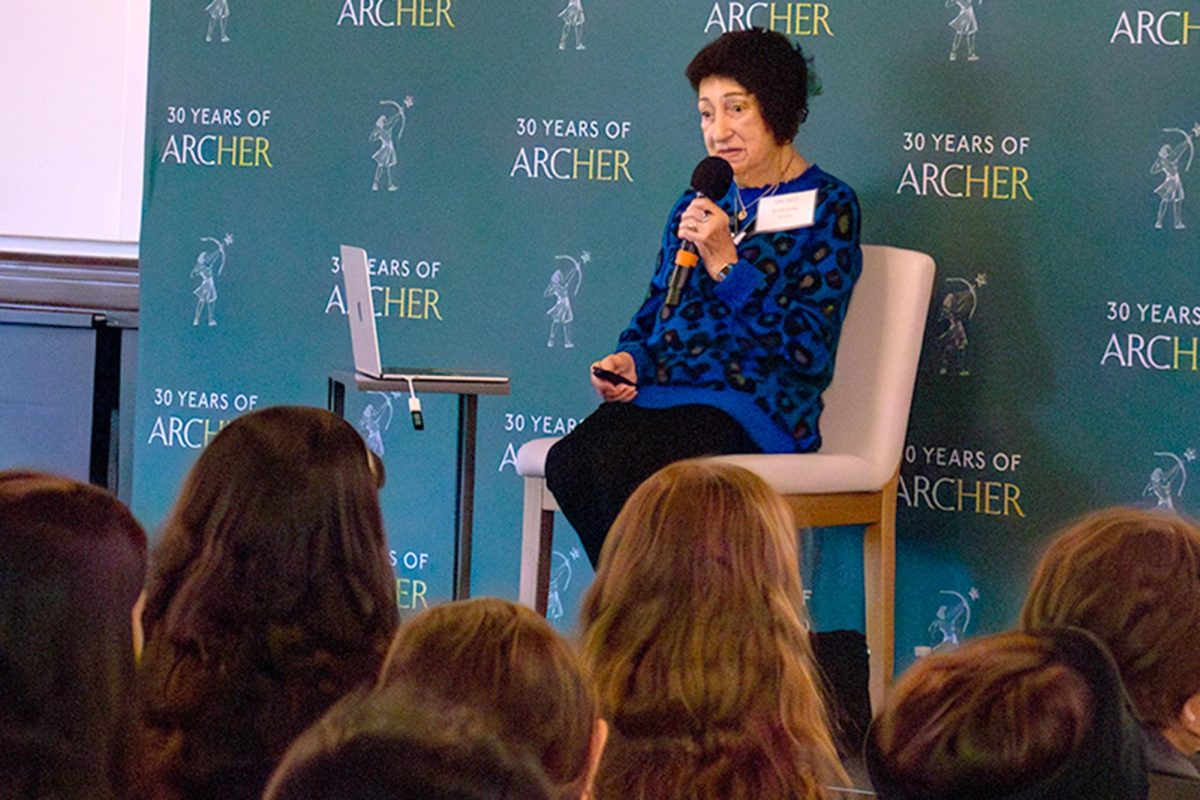
Archer’s Jewish Student Union hosted Gabrielle Karin, a 94-year-old Holocaust survivor from Slovakia, to speak at an assembly Monday, Feb. 2, to commemorate International Holocaust Remembrance Day. The assembly was hosted in the Zeller Student Center for upper school students and broadcasted on Zoom for middle school students. Karin spoke about her experience during the Holocaust and the art she began creating to process her emotions.
According to Jewish Journal, Karin and her husband, Frantisek (Feri) Lederer, moved to Los Angeles in 1960. She worked as a fashion designer until 1992, when she retired and became an artist. One piece of her artwork is a 15–foot sculpture representing Kindertransport, which was a series of rescue efforts from 1938-40 to help refugee children flee Nazi occupation.
“When I came to the United States and I didn’t see a word about it, it bothered me,” Karin said during the assembly. “I decided to make something out of it.”
Jewish Student Union faculty co-adviser Alex Greenberg described the life lessons she’s gained from hearing about the experiences of Holocaust survivors.
“I’ve learned that being here is a gift and to not take what I have for granted and to learn from those who came before me,” Greenberg said. “It’s just a really special experience to get to hear from someone who’s lived such a different life.”
Jewish Student Union Executive Board member Avery Greene (‘26) said it is crucial to seek out opportunities to hear from Holocaust survivors. Greene said hearing Holocaust survivors’ experiences firsthand will not always be possible due to their increasing age.
“It’s a physical reminder of what the Jewish people have overcome in the past and how we’re stronger than that, and we will keep thriving,” Greene said. “That’s a really important message, especially with everything going on now. I think it’s important to know that things have happened in the past, and Jewish people have prevailed.”
During the assembly, Karin said she questioned how she could move forward with her life after what she had gone through. She said she made an intentional choice to live life fully.
“Hitler did not touch my body, Hitler did not touch my soul,” Karin said during the assembly. “I decided to be happy, and I am.”
In addition to educating audiences about the Holocaust, Karin has created a large collection of sculptures that capture her own, as well as other survivors’, experiences. Greenberg said she admires Karin’s resistance and how she turned her trauma into art.
“It’s amazing to hear how women, in particular, have pushed through incredibly challenging situations,” Greenberg said. “I think it can help Archer students realize that they can do anything, and they have so many resources to learn from different people and hear different experiences.”
At the end of the assembly, Karin left Archer students with a message to treat the people around them with respect, even if they may have different ethnicities, religions and beliefs.
“We are all the same people … You don’t have to like each other, but you have to respect each other,” Karin said. “We all have a right to be here.”
Izzie Erickson • Feb 4, 2026 at 11:12 am
This is such a great story, Hollyn! Great quotes and extremely timely. Amazing job.
Henry Alpert • Feb 4, 2026 at 8:00 am
Truly enjoyed this article- I was taken with thoughtfulness and what I was able to take away from the reporting..
It is a truly informative and reminds me of all that we should value.
DA • Feb 3, 2026 at 9:05 pm
Thank you for the thoughtful and insightful article. Given the current state of the world, remembering our history is incredibly important. “We all have a right to be here.” Right on!