


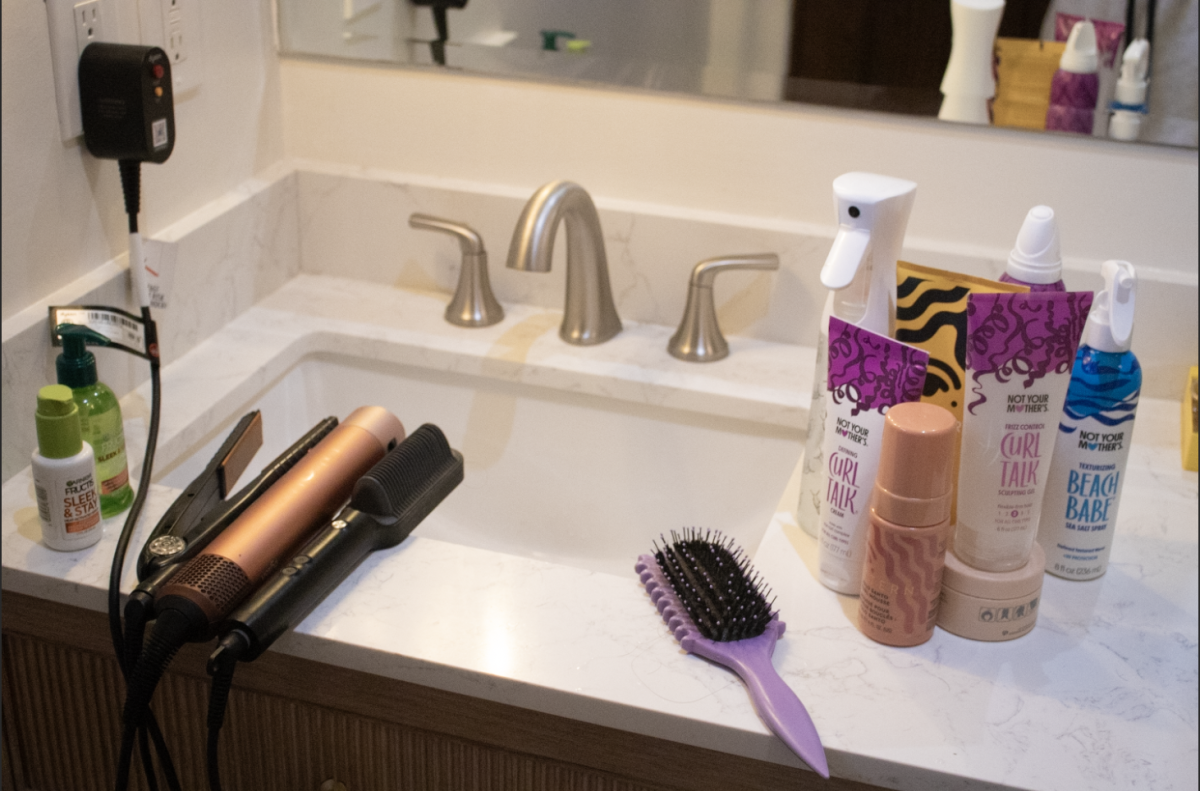
There’s something so tiring about waking up an hour earlier than my alarm clock every morning just to decide how acceptable and manageable my hair is that day. I don’t wake up early because I feel adequately rested or because I need an extra hour of studying for a test. I wake up only because it feels like the only way to make sure I blend in.
My hair has never really fit into a category. It’s not pin-straight; and it is not perfect spiral curls, either. It’s thick, frizzy, wavy, textured and uncontrollable. Some days it behaves; other days it refuses to cooperate.
Growing up, I learned fast which version of my hair got attention and which didn’t. When I straightened it, I got many compliments such as “You look so pretty today,” or “You should wear your hair like that more often.” I smiled and thanked them. It felt extra special when someone said my hair looked nice, and their praise showed me that I was doing something right.
When I wore it naturally, the reaction was different. I noticed the usual compliments from those same people never came. Instead, they would offer suggestions and comments I didn’t ask for. “Did you brush your hair today? I love the wild look! Try this hair oil that always calms my hair. Your hair is like a lion.” People felt inclined to voice their opinions when it came to my hair, whether they were kind or not.
That is how a lot of stigma works. Not through insults or yelling, but through patterns. Through praise for some things and silence for others. It’s subtle, but it sticks.
Society has a weird way of making hair become a factor of who you are. Who decided that straight, shiny hair was professional, pretty and put together? And what about people like me, whose hair doesn’t naturally fall pin-straight or into perfect curls? The message is clear: If it’s frizzy, it’s something to manage, to tame or to hide.
I used to only have my hair straightened occasionally — special events, haircuts, family pictures and school photos. But over time, it became more frequent. First, I began straightening my hair weekly, then almost every day.
The exhausting part isn’t just waking up early or the heat from the straightener — it’s the constant calculation. The mental checklist before leaving the house: Does my hair look okay? Will someone notice? Will I get judged? And then there are days I let it air dry and go wild. On the days when despite being nervous about what people think, I end up doing a long natural hair routine, I feel a sense of freedom.
That freedom didn’t happen overnight, though. It started with small choices, such as wearing my hair naturally to school on certain days. Over time, I realized confidence wasn’t about controlling my hair but accepting it. Embracing my natural hair became less about how it looked and more about refusing to believe it needed to be fixed.
My hair is thick, frizzy, unpredictable and textured, and I’m learning that it doesn’t need to be changed. While I can’t say I am confident enough to wear my natural hair every day, I am learning that I no longer have to apologize for it.
At the end of the day, no one should have to feel ashamed of the way their hair grows naturally. Not because it makes a statement or fits trends, but because it is theirs.



Charlotte Burnap • Mar 7, 2026 at 4:08 pm
Amazing work Leani!!
Clara Lieberstein • Mar 4, 2026 at 3:02 pm
Such an amazing piece, Leani!!