
The BNP Paribas Open, also known as the Indian Wells Tennis Tournament, is a top-tier professional tennis competition that is held every March at the Indian Wells Tennis Garden in Southern California. Top-ranked men’s and women’s players compete on outdoor hard courts at “Tennis Paradise,” the largest two-week joint ATP and WTA event outside of the four Grand Slams. The tournament took place March 1-15.
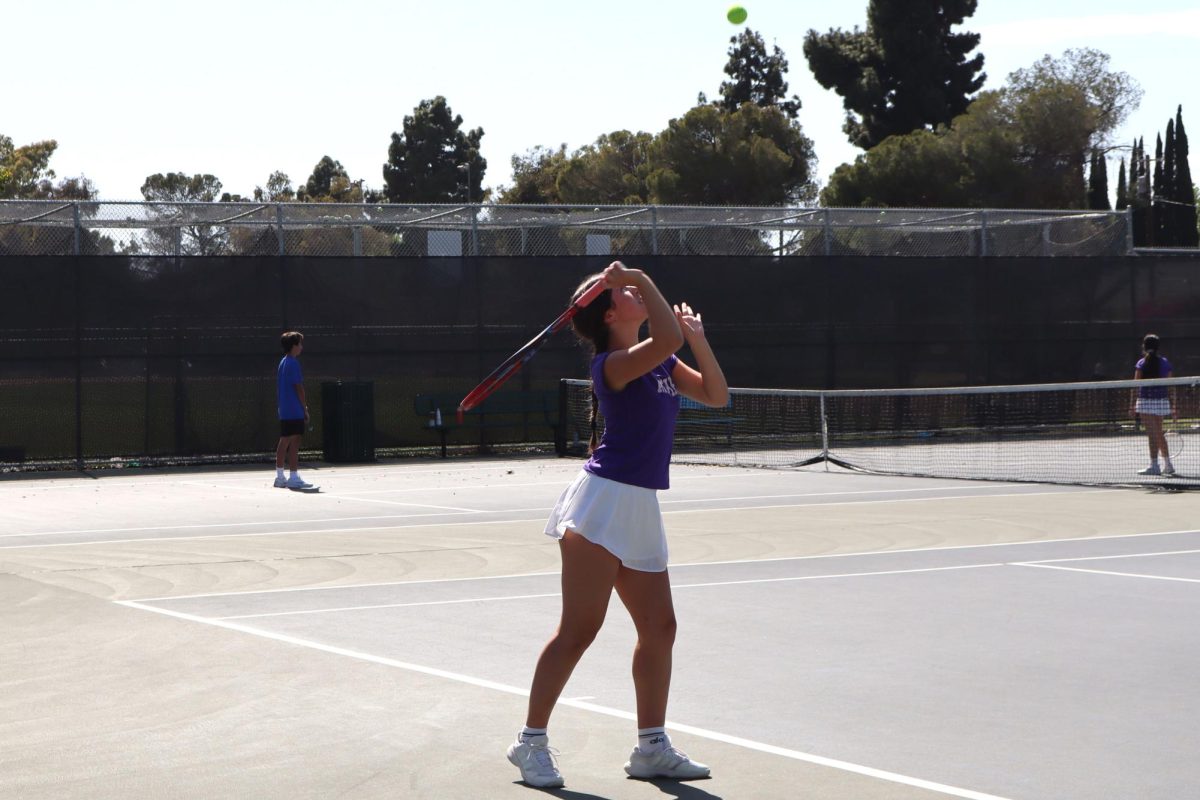
Archer Assistant Varsity Tennis Coach Celia Quintero organized a party bus for Archer tennis players and their parents to watch the Indian Wells Tennis Tournament March 7. Quintero said she wanted to let her players get to know one another outside of practice and for students to gain inspiration for what they could achieve.
“I wanted the players to see what is possible,” Quintero said. “They can see the power, determination and hard work that you have to put into tennis.”
Tennis players qualify for the BNP Paribas Open at Indian Wells by being one of the top 76 singles players of 96 at the Association of Tennis Professionals or the Women’s Tennis Association. The other 20 players who did not make it entered the main draw by winning two matches in a 48-person qualifying tournament, in which the top 12 were chosen by receiving one of the eight available wild cards.
The players, parents and Quintero watched Novak Djokovic play against Kamil Majchrzak. Afterwards, they saw a match with the No. 1 player in the world, Carlos Alcaraz, against Grigor Dimitrov.
Roxanne Hall (’30) said it was really exciting and surreal to watch the players. It was a fun and cool experience that she was grateful to have gotten, she said.
“I was really impressed by their level of skill and every single shot that they pulled out,” Hall said. “This is something I wanted to work towards … watching all these players utilize their immense level of skill. It was just so impressive and so motivating.”
Eighth grader Elle Spiegel plays tennis on the middle tennis team. She said she enjoys watching the tournaments in person rather than on a screen because she gets to experience the reality of a professional tennis match and a better view.
“When I see in person, I see their emotions and genuine reactions after the shots,” Spiegel said. “When you see it on your TV, you’re like, ‘Oh, like that’s a celebrity,’ but when you see it in person, it changes how you look at the point.”
Hall said she did a project in Spanish class on Djokovic. She said she learned many fun facts about him and studied him in depth. For her, completing the project felt like she was stepping into the shoes of Djokovic. For example, she would answer her classmates’ questions about where he is from and what he does.
Hall said seeing Djokovic playing live broadened her perspective on him as a tennis player and gave her a new point of view.
Similarly, Annabelle Toplitzky (’30) said she observed specific skills at the tournament that she did not think about doing before. She noticed how they utilized overheads and volleys more often to get a lot of power and get an easy point. The players played smarter, not harder, by hitting the ball where their opponent was not instead of just getting it back to them, she said.
Topolitzky said she also noticed how the players were consistent all the way through and kept on their toes, always getting ready for the next point.
“I noticed that they got a little more aggressive, but they kept their calm and tried their best no matter the score. They didn’t lose their momentum and their power,” Toplitzky said. “Do not let the score get you down. Just focus on yourself. This is something I want to improve in my own matches to become a stronger player.”