

The rise of fast fashion in recent years has increased attention towards fashion sustainability for many consumers and big brands. Students and corporations have started adopting practices aimed at extending product life cycles and reducing waste. As of 2023, 92 million tons of garments were ending up in landfills every year. These statistics are measured on a larger scale, but taking tiny steps towards keeping the environment clean can make a big difference.
Lacoste, founded in 1933 by tennis player René Lacoste, has made it their mission to offer long-term, durable clothing that can be passed down through generations. Chief of Sustainability at Lacoste, Rhizlene Mimoun, said how important it is to the brand to make sustainability accessible.
“René Lacoste himself did a lot socially, planet-wise, and we do everything to make sure … we carry this heritage,” Mimoun said. “We put in every effort to have the least impact possible on the planet and to make sure our products are durable. Because, for us, the durability of a piece is key in sustainability because the more the product lasts, the less you need to change the pieces.”
When determining how to ensure that their products stay durable and sustainable, materials have to be taken into consideration.
“We select organic, certified, or recycled materials, and we develop our own standards-based cotton supply chain,” Mimoun said. “We want to go even further than, maybe, some regulations ask for the company. And of course, we increase the durability of our products and double the lifespan of our timeless species, such as a polo, for example.”
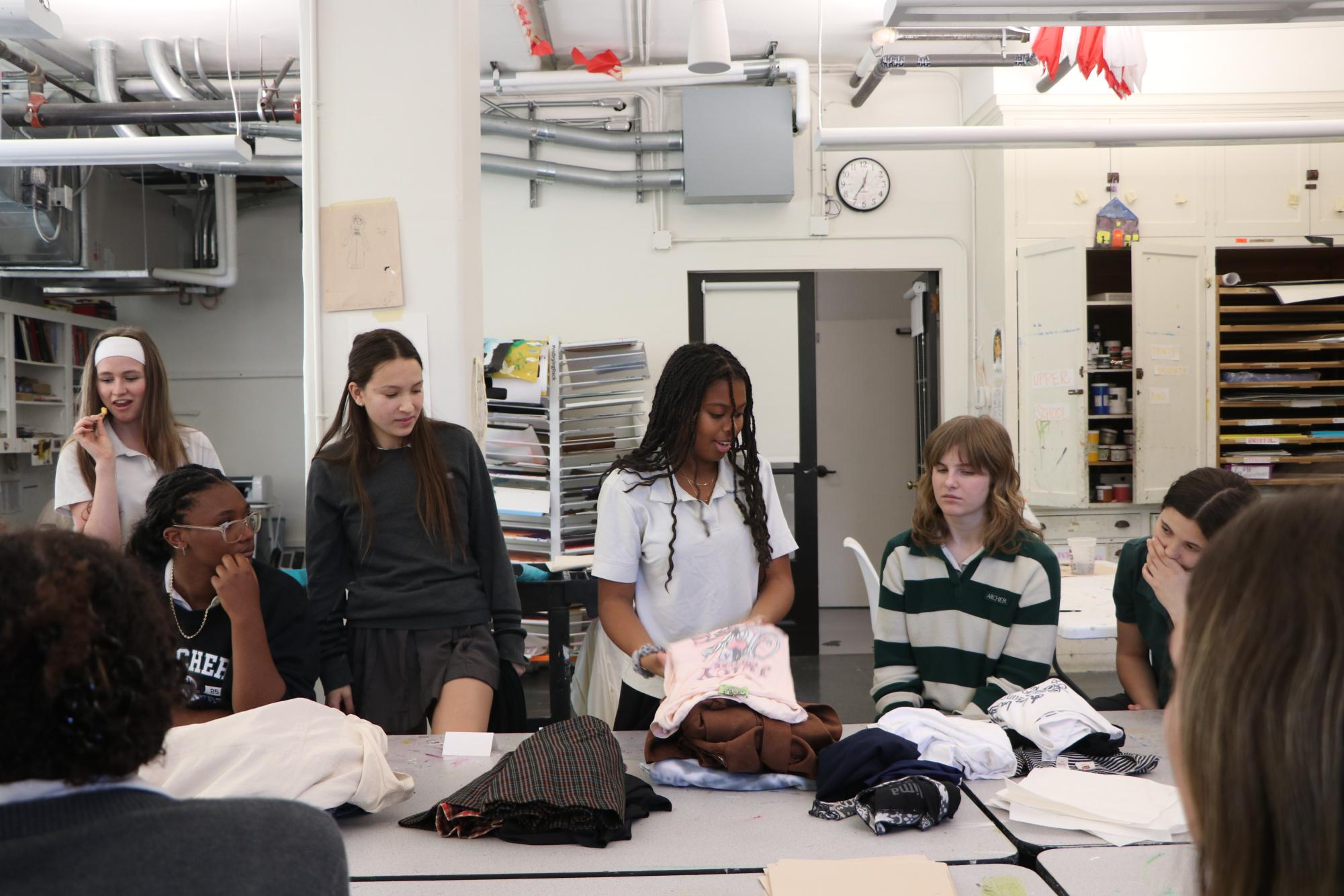
Big brands are able to make an impact on a global scale, having an impact through factories and textile selection. Mimoun said that school clubs can bring awareness to the subject through the tight-knit community. Lola Thomas (‘26) is one of the founders of Archer’s fashion sustainability club, Fashion Moving Forward. Thomas said, on an individual level, being aware of what and where we’re buying from is vital to making a bigger impact.
“Fast fashion is hurting our planet every day by the minute and there are so many ways that we can ameliorate that. And so I thought, ‘Why not use something I love and do for fun to make that issue better?’” Thomas said. “So I’ve decided to start upcycling and also inform community members on fashion sustainability so that they can use something that I find so fun to make a visible impact.”
Thomas said that, although awareness is widespread about the harm of fast fashion, social media instigates harmful misinformation. In turn, this causes many to disregard the impact fast fashion has on the environment.
“Fast fashion brands are more likely to be distributed and advertised on social media, particularly with the rise of more influencers on TikTok and Instagram, and therefore, more low-quality clothes are being sold and thrown away, which contributes to pollution,” Thomas said. “Additionally, fast fashion companies tend to have worse working conditions for the manufacturers, and so bolstering fast fashion also impacts the people who have to work there, and it makes their conditions worse.”
While it’s convenient to go to a shopping mall and grab the nearest hoodie, second-hand shopping has had a rise in popularity. In the Archer community, many people value the importance of second-hand shopping — Laila Boodell (‘28) is one of them. She has started to make her friends custom sweaters for their birthdays, sewing intricate details into the upcycled fabric.
“I’ll just make somebody a hoodie for their birthday, and I feel like it’s so nice, especially when I see them wearing it, and I’m like, ‘I made that,’” Boodell said. “Handmade gifts are also so much more meaningful because you spent time on that, you put effort into that, and you toiled away making it, so I feel like it’s a nicer gift to give, even if it does take up more time.”
Boodell said she values upcycling, especially when she looks into the future with her sewing business. She plans to provide an alternative to fast fashion trends by making clothes that have a personal touch.
“I try to get all my fabric and hoodies from thrift stores or secondhand — doing a lot of upcycling,” Boodell said. “I follow people who also have sewing businesses who try to upcycle and not buy new fabrics. They don’t buy a bunch of new products when they have all this stuff that’s already in the world that they can use.”


