
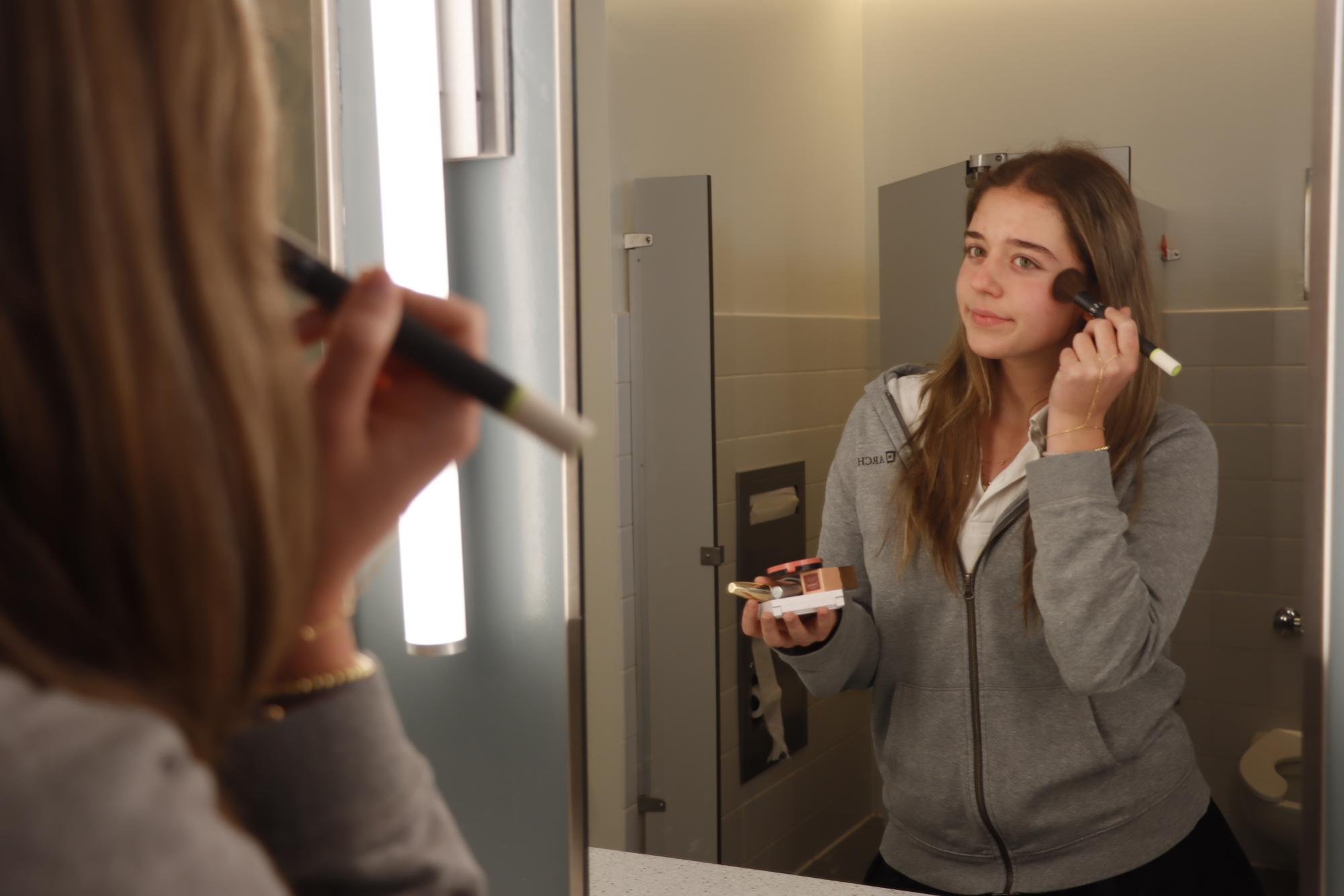
Women of all ages wear makeup, from dancers to models to average women walking on the street. According to Civic Science, 42.7% of women over the age of 18 in the United States wear makeup every day. Although that study showed a decrease in the number of adult women who put makeup on daily, another study showed a significant increase in the number of girls between the ages of 7-12 who have started wearing makeup.
Wearing makeup is not the only societal norm imposed upon women; idealized hair styles, body type and height are a few other prominent beauty standards. Clothing and makeup can be means of self-expression, however, discrimination against women based on their fashion and cosmetic choices has increased over the past few decades.
Beauty standards impact in society
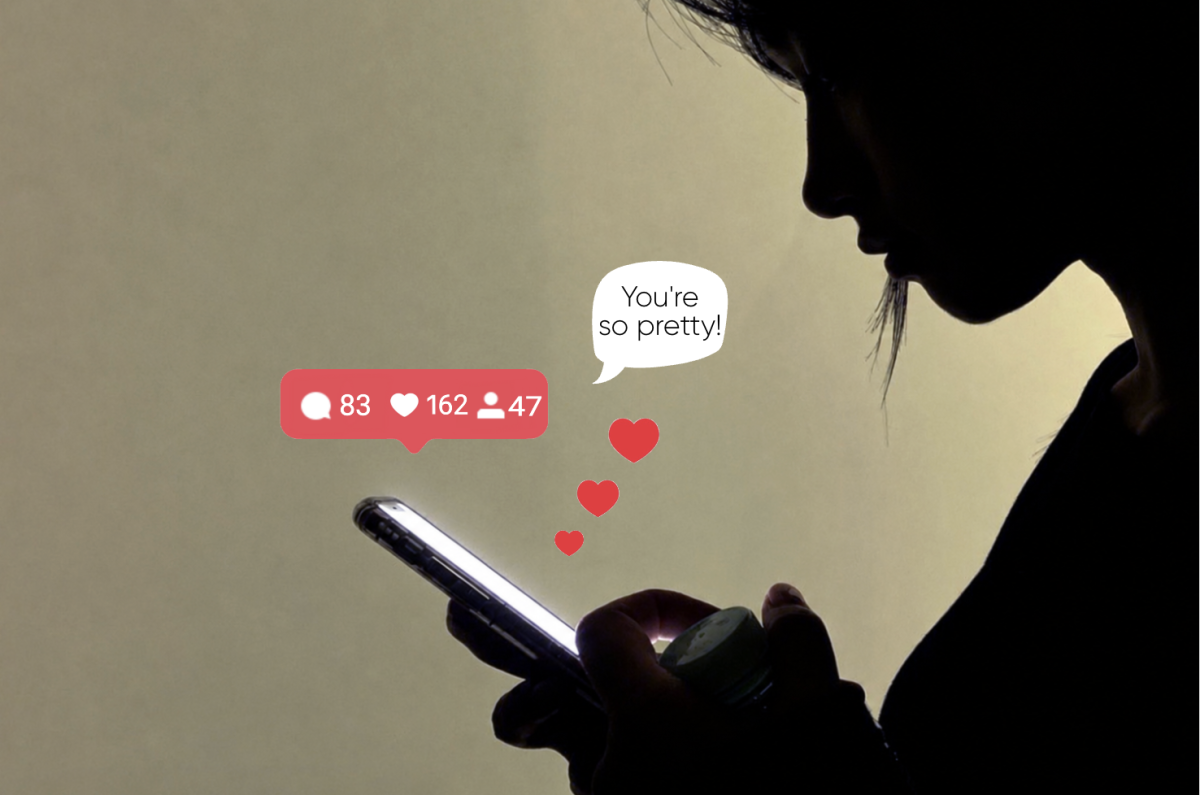
The concept of beauty has shifted throughout centuries and across cultures. Social media influences beauty standards, promoting certain trends, from “unrecognizable makeup” to the “clean-girl aesthetic.”
Many young people, including Archer students, are trying to change how women view themselves through positive reinforcement and the practice of self-love. Junior Olivia Hallinan-Gan has a podcast titled “The Feminist Focus,” where she discusses women’s rights and the importance of knowing one’s worth.
“I just want to see a change in how women see themselves. And I think that comes from outside because standards are institutionalized,” Hallinan-Gan said. “[Beauty standards] are in every aspect of people’s lives.”
Social media algorithms favor those who meet the beauty standards, causing potential harm to young girls who do not. Hallinan-Gan said using social media can decrease self-confidence over time.
“[Social media] has deteriorated people’s self-esteem,” Hallinan-Gan said. “It puts into this idea of how people should look based on what they see on social media.”
Ivy Woolenberg (’25) is a board member of the Girls Empowering Girls club, an organization where members connect over their experiences as girls. Woolenberg said social media can be misleading due to the number of filters available and the amount of people who have undergone procedures to alter their appearance.
“There are unrealistic expectations for social media,” Woolenberg said. “A lot of what people see seems natural, when, sometimes, there’s undisclosed plastic surgery, procedures and filters.”
GEG Board Member Katie Borris (’25) suggested beauty standards have worsened due to the invasive marketing strategies employed by beauty brands and services.
“There are so many products and different services being promoted,” Borris said. “It can be super challenging to keep up with them all.”
Beauty standards’ impact on women
All interviewees agreed that aspects of a woman’s body are often subjected to shame more than those of a man’s. Features such as hair color, face shape and eye color are criticized, despite the fact that people are born with these traits, and there is no natural way to change them. Hallinan-Gan said one of the most widely loathed body parts for women are the little pouches over their uteruses, known as the vesicouterine. These pouches conflict with beauty standards because they represent visible fat, Hallinan-Gan said.
“People have different physiques that they are born with, so women have little pouches over their uteruses, which I think is so beautiful because it protects our internal organs,” Hallinan-Gan said. “But people tend to shame themselves for having one. And I think that’s so incredibly messed up.”
Nora Stefani, a professor at Northern Arizona University, specializes in beautyism — a term used to describe one’s discrimination based on physical appearance— feminist theory and communication. In her 2019 dissertation, she explored women’s experiences with beauty standards and societal norms surrounding body image, personality and beauty. Stefani said the more people are aware of beauty standards, the more people won’t feel the need to conform to them.
“I hope people are more aware of beautyism, so they don’t participate in it,” Stefani said. “[People] have research suggesting that the more you’re aware that you might be stereotyping somebody based on their looks or discriminating against somebody.”
In the ninth-grade history curriculum, there is a unit on beauty standards, as well as pretty privilege and the advantages of being seen as beautiful. Beth Gold, a history teacher and Director of the Artemis Center, said there is a lot of pressure on women to keep up with beauty standards. Realizing what is real and what is not, since various influencers alter their appearance, can help alter how one views oneself.
“There’s been a lot of pressure on women to conform to whatever is the contemporary beauty standards,” Gold said. “The more awareness students have about trends versus what’s healthy and what’s realistic, the better it is in being authentically you and not trying to feel the pressure to conform.”
Stefani said many people believe that to feel socially accepted and accomplish various things, such as social status, they need to conform to beauty standards.
“What [women] want is to feel socially accepted or to feel competent at work,” Stefani said. “[Women] want certain relationships or feelings, and if you’re aware of that, you can start to move away from this idea of needing to change your appearance because there’s pretty much always a better way to get that thing.”