


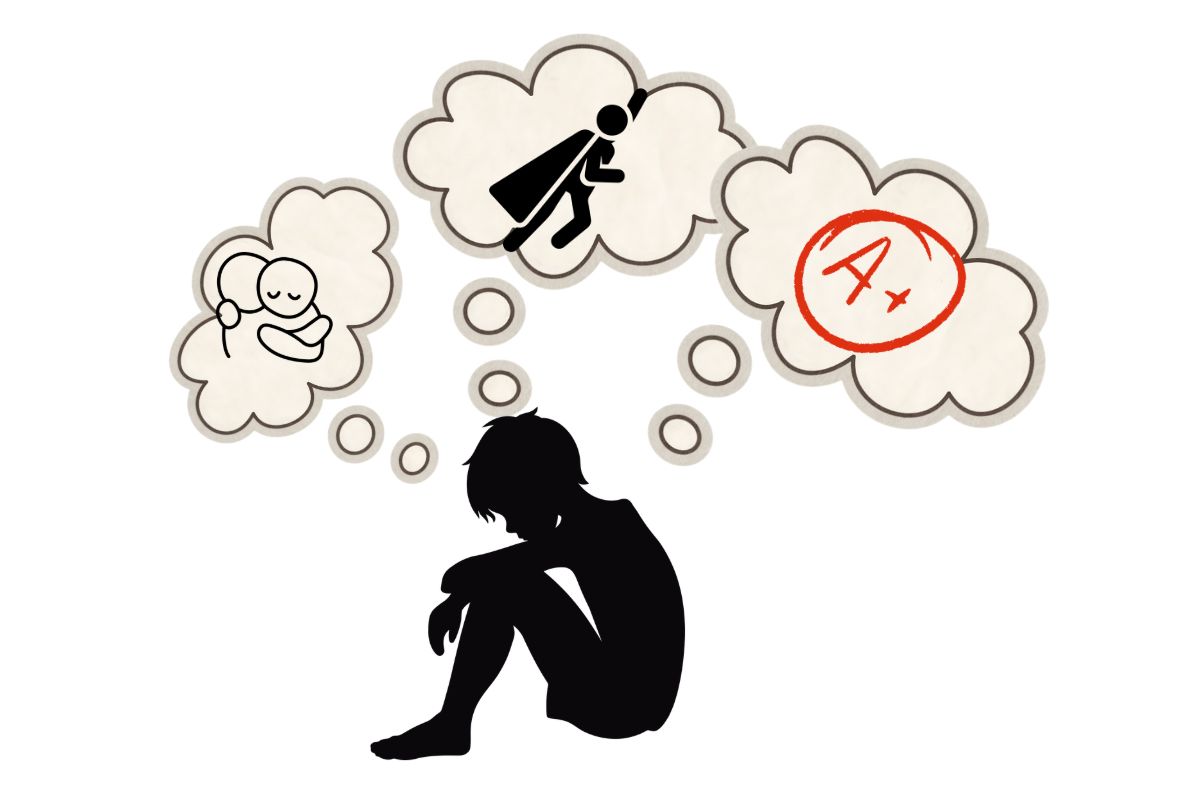
A teenage girl posts photos of herself on social media and sets her phone down beside her. Minutes later, the screen lights up and buzzes with notifications: a like, a comment, a new follower. For teenagers growing up online, validation no longer exists only in classrooms, friendships or family conversations but is constantly reinforced through the endless stream of feedback built into social media.
For many teenagers, validation is experienced through digital feedback systems such as likes, comments, views and streaks in addition to in-person interactions. Research from the American Psychological Association indicates that adolescents show heightened sensitivity to peer feedback due to the developmental timing of brain systems involved in reward processing, which mature earlier than regions associated with impulse control and long-term decision-making. Data from the Pew Research Center shows the scale of that environment, with about 95% of U.S. teens reporting access to a smartphone and the vast majority using the internet daily, making digital feedback a routine part of everyday communication.
Karen Wolfe, a child and family therapist and CEO of SF Bay Play Therapy, described validation as a consistent component of adolescent development across generations and explained that it plays a role in identity formation.
In this audio clip, Wolfe discusses how family involvement influences the way teenagers develop their sense of self. She explains that while peer relationships are an important part of teenage self-discovery, adults and family guidance remain essential influences that have become less involved over time.
Wolfe said the process of getting to know oneself apart from parents and society, often described in developmental psychology as individuation, has always relied on external feedback and peer comparison. However, she noted that the environments where this feedback occurs have changed significantly with the rise of social media platforms and quantified engagement systems.
“Social media complicates things in terms of the adolescent’s job to look outward,” Wolfe said. “Now there are far more influences that are constant and amplified in a way previous generations didn’t experience.”
Sophomore Maggie Collins said her understanding of social media shifted after watching “The Social Dilemma” in Human Development class. The documentary explores how social media platforms are designed to maximize user engagement through behavioral psychology and algorithmic systems.
“One part that stood out was when they showed people in a control room, basically deciding how to keep users online,” Collins said. “It made me realize they’re not just trying to connect people — they’re trying to keep you on the app.”
Before watching the movie, Collins felt social media was more like passive entertainment. Afterward, she said she became more aware of how platforms are intentionally designed to encourage continued interaction.
“I thought it was just somewhere to scroll without thinking,” Collins said. “Now I see it more as a system designed to keep your attention.”
Research from the National Institutes of Health shows that social feedback, including likes and positive responses, activates brain regions associated with reward processing. Studies suggest adolescents may be especially responsive to these signals, which can increase the reinforcing effects of social validation.
Behavioral research describes this pattern through intermittent reinforcement, where unpredictable rewards increase repeated behavior. On social media platforms, each post creates an uncertain outcome, since users do not know how much attention it will receive or when responses will appear.
“You post something and then you keep checking it,” Collins said. “Even if you don’t mean to, you still go back to see what happened and how people reacted.”

Algorithmic systems also shape exposure by prioritizing content based on previous engagement patterns. This can result in users being repeatedly shown similar material, narrowing the range of content they encounter over time.
“If you interact with one type of content, you just keep getting more of it,” Collins said. “It starts to feel like that’s all that exists.”
Themes of increased social comparison and digital environments are also discussed in Jonathan Haidt’s book “The Anxious Generation,” which examines correlations between rising adolescent anxiety and increased exposure to social media, while noting that multiple factors influence mental health outcomes. Collins said curated content can alter what normality looks like.
“People only show the good parts of their lives,” Collins said. “It leads to comparing yourself and makes it feel like everyone else is doing better than you are.”
Content creator Ryan Rockefeller, who has more than 184,000 followers on TikTok, said validation became more noticeable as her audience grew. She creates comedy and social commentary content based on internet culture and personal observation. Rockefeller said audience response gradually began to influence how she perceived her work.
“I got a lot of positive comments, and it made me feel like I had to maintain that version of myself,” Rockefeller said. “It started to feel like there was an expectation attached to it.”
Rockefeller described that posting online often involves uncertainty because creators do not know how audiences will respond. Over time, she said positive engagement can reinforce the desire to continue posting and seek similar reactions.
“You put something out there, and you don’t know how it will do,” Rockefeller said. “When it does well, it feels like validation for taking the risk. You start to associate posting with that feeling, and it can turn into chasing it.”
Wolfe said in-person interaction and digital communication differ in how feedback is processed, particularly because of real-time social cues present in face-to-face environments.
“When two humans talk to each other, changes happen in the brain,” Wolfe said. “There’s a reciprocity you don’t get online. In-person interaction changes the brain in ways that social media doesn’t, and social media actually does the opposite. It creates more of a deficit of your neurochemicals.”
Rockefeller said her relationship with social media validation is complex. She said she enjoys making content most when she is authentically presenting herself.
“I’m not going to pretend I don’t care what people think, because I do, especially people in my real life,” Rockefeller said. “I’m becoming more aware of how to validate myself first. Ironically, when I’m more focused on doing things that actually feel like me, that’s when people respond the most.”
Notifications continue to appear across screens throughout the day, each one briefly interrupting attention before being replaced by the next. The pattern repeats without a defined endpoint, shaped by systems designed to encourage ongoing engagement rather than resolution. Within that structure, validation becomes constantly available but never fully complete.
“Social media is a collection of everyone’s best moments, not their full reality. You don’t actually want everything you think you do, because you don’t have the full context behind it,” Rockefeller said. “Try to spend more time in real life with real people, because that’s where you actually build a sense of who you are. And stay weird; it makes space for other people to feel like they can be themselves, too.”







Ambreen Lalani • Jun 2, 2026 at 9:45 pm
Great article Arissa!