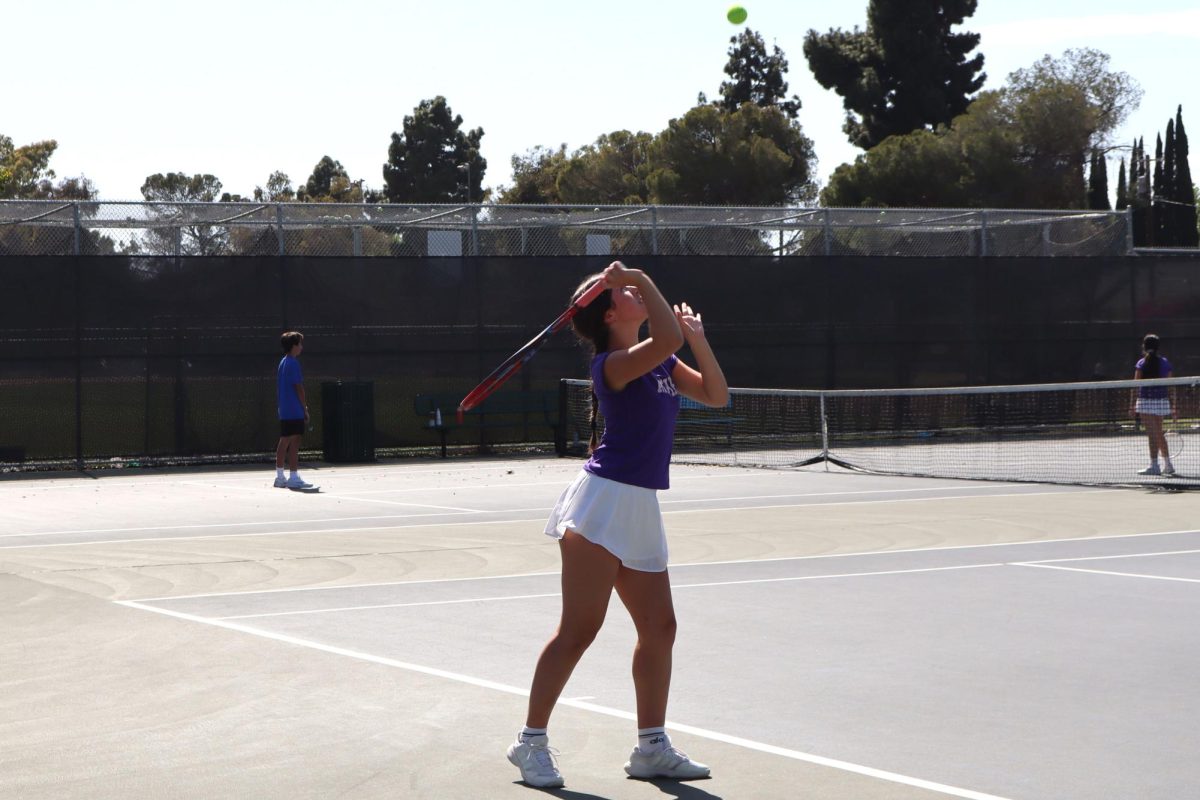

At the end of each school year, both returning and incoming students receive a Google form to sign up for sports they want to play the following year. Even if students do not choose to commit to a sport, they can still participate in other forms of fitness at school. According to Fitness and wellness teacher Natalie Coleman, student-athletes sometimes participate differently in fitness classes and school sports teams. Coleman explained that fitness classes are more centered around “quirky” games, while school sports focus on getting game-ready.
Archer’s fitness classes offer activities like soccer, volleyball, kickball and capture the flag. Students are required to take both fitness and human development classes from sixth to 10th grade. After 10th grade, they are only required to take human development. Meanwhile, after-school sports rotate per season.
Coleman coaches ninth grade fitness classes and middle school volleyball in the fall. She said students tend to be more motivated in school sports than when learning a sport in fitness class.
“In sixth grade, all the girls are extremely motivated. It’s their first year at Archer, this is the first sport of the year and they want to be part of a team. They want to be part of the camaraderie amongst each other,” Coleman said. “Whereas, [in] fitness, sometimes you’re like, ‘Oh my gosh, my arm’s going to hurt.’ You’re thinking of all the negative things.”
However, Fitness and wellness teacher and middle school soccer coach Jamie Fink said she notices a lot of similarities when coaching fitness classes and sports teams. For example, both fitness classes and sports teams teach students useful skills for the classroom and life, she said.
“It’s not just the skills that we learn in fitness class, but how it’s applicable to everyday life and working on just like the fundamentals and the basics first, which I do in both soccer and fitness,” Fink said. “And then progressing that into gameplay and into a larger game to see the students apply the knowledge that they’ve learned into a game setting.”
Haley Lazarus (’29) has played for the middle school soccer team all three of her years at Archer and has Fink as a fitness teacher this year. Lazarus said there is a distinct difference in the competitive energy between fitness classes versus sports teams.
“It is definitely more competitive in soccer than it is in fitness class,” Lazarus said. “There was a lot more of, ‘Okay, we’re really focusing and locked in.’ It was a little bit less tolerance when we were just not paying attention and not doing stuff.”
Fink coached Mara Kraus (’29) for two years on the Archer soccer team and this year in fitness. In fitness class, Kraus got the chance to play with classmates who’ve never played soccer, which she said helped her communication and leadership skills.
“I also play club, and just playing with a new team helps you learn different play styles, I think, even if they do have less experience,” Kraus said. “And it does help you be a leader … you’re learning to communicate with other people, especially if they don’t play soccer.”
Because soccer requires a lot of teamwork, Fink said there’s significantly more team bonding that goes into team practices than in a non-soccer fitness class.
“I guess the main difference that I can see is that since soccer is such a team-oriented sport, we really focus on the team aspect of it,” Fink said. “Like in fitness, we focus a little bit on team building in the beginning and then we kind of dive into other units. Whereas in soccer, the team component still remains a lot, and we really try to focus on.”