
-
Kaelene Ashmore performs the women’s style of the fancy shawl dance. Ashmore said that women only started performing this style of dance in the 1950s. “The women wanted to show that we can be just as athletic, ” Ashmore said. “We dance as fast as the men.”
Photo credit: Dara Alitoro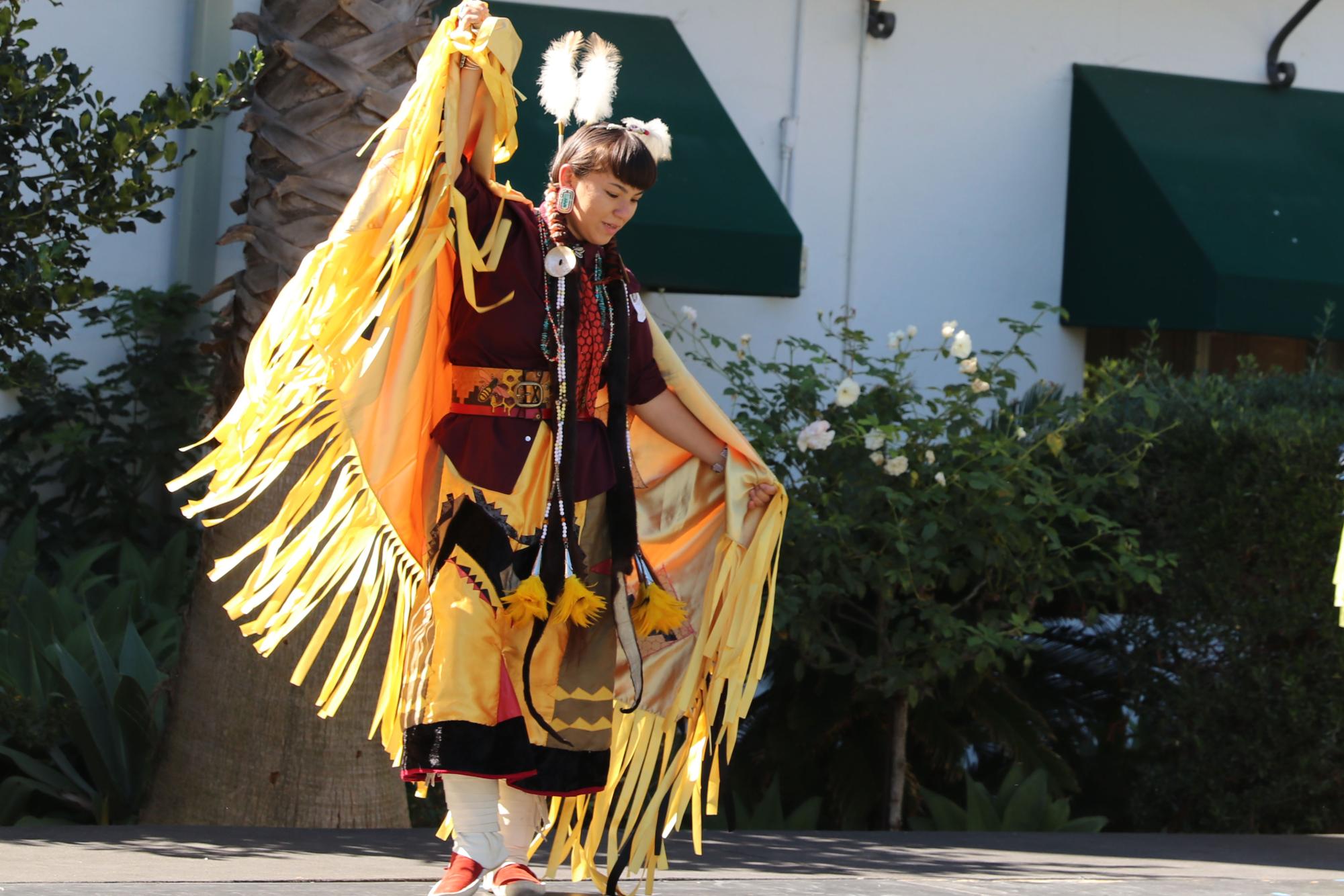
-
Sisters Caitlin and Kaelene Ashmore, who are performers for the Wildhorse Native Association, demonstrate to Archer students how to do a few cultural dance moves. Amongst other students, the crowd included Yasmine Haddad (’26), Averie Tan (’32) and Issie Stone (’31).
Photo credit: Dara Alitoro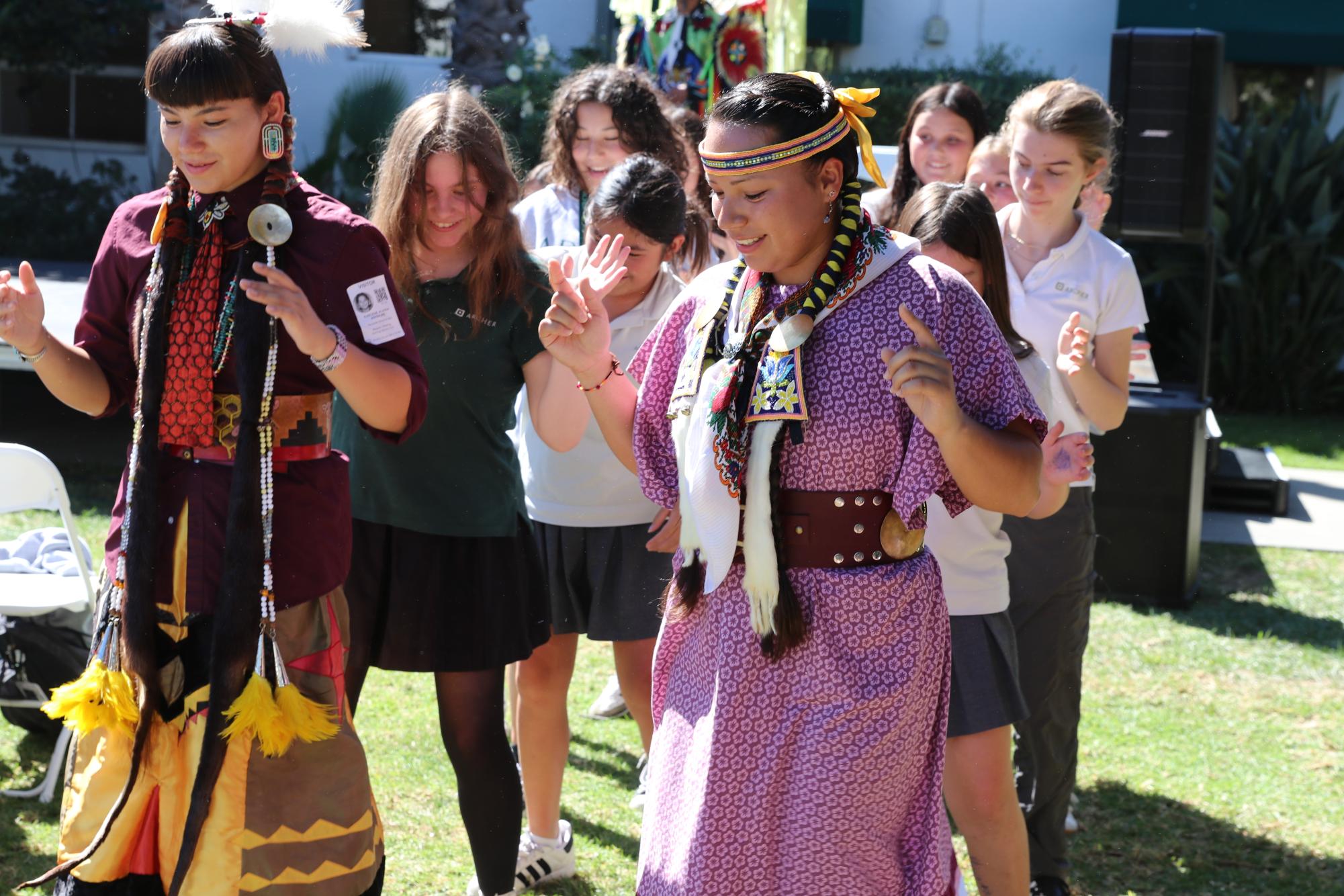
-
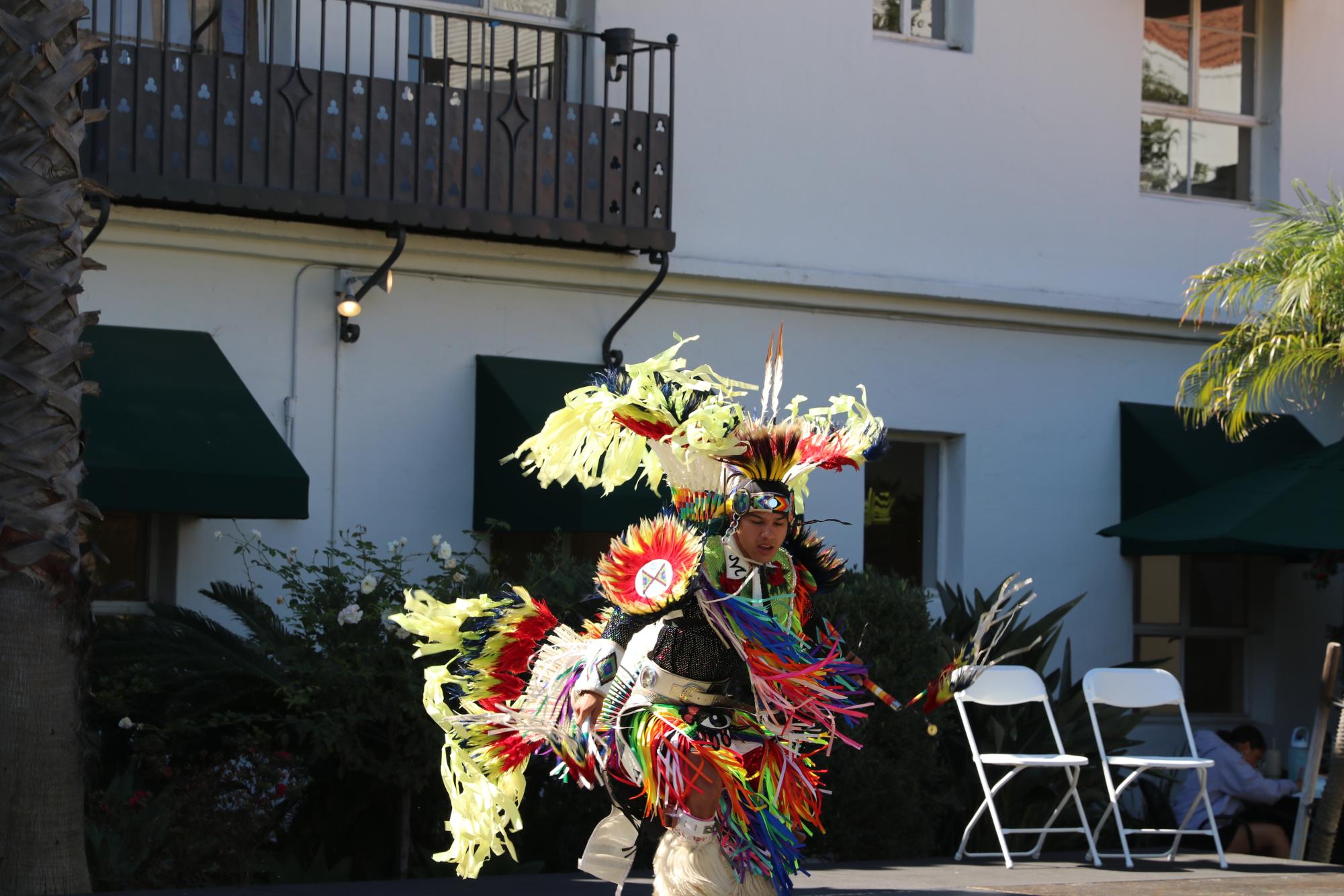
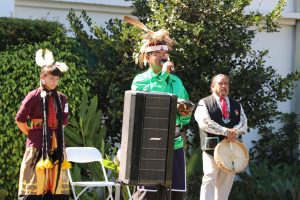
Wildhorse Native association performer Michael Tiger dances the male version of the fancy shawl dance. Before his performance Tiger explains the different components of his outfit. “What you see behind me are two bustles that are made out of turkey spikes and hackle feathers,” Tiger said. “And what’s on my head is called a roach, and it’s made out of porcupine quill.”
Photo credit: Dara Alitoro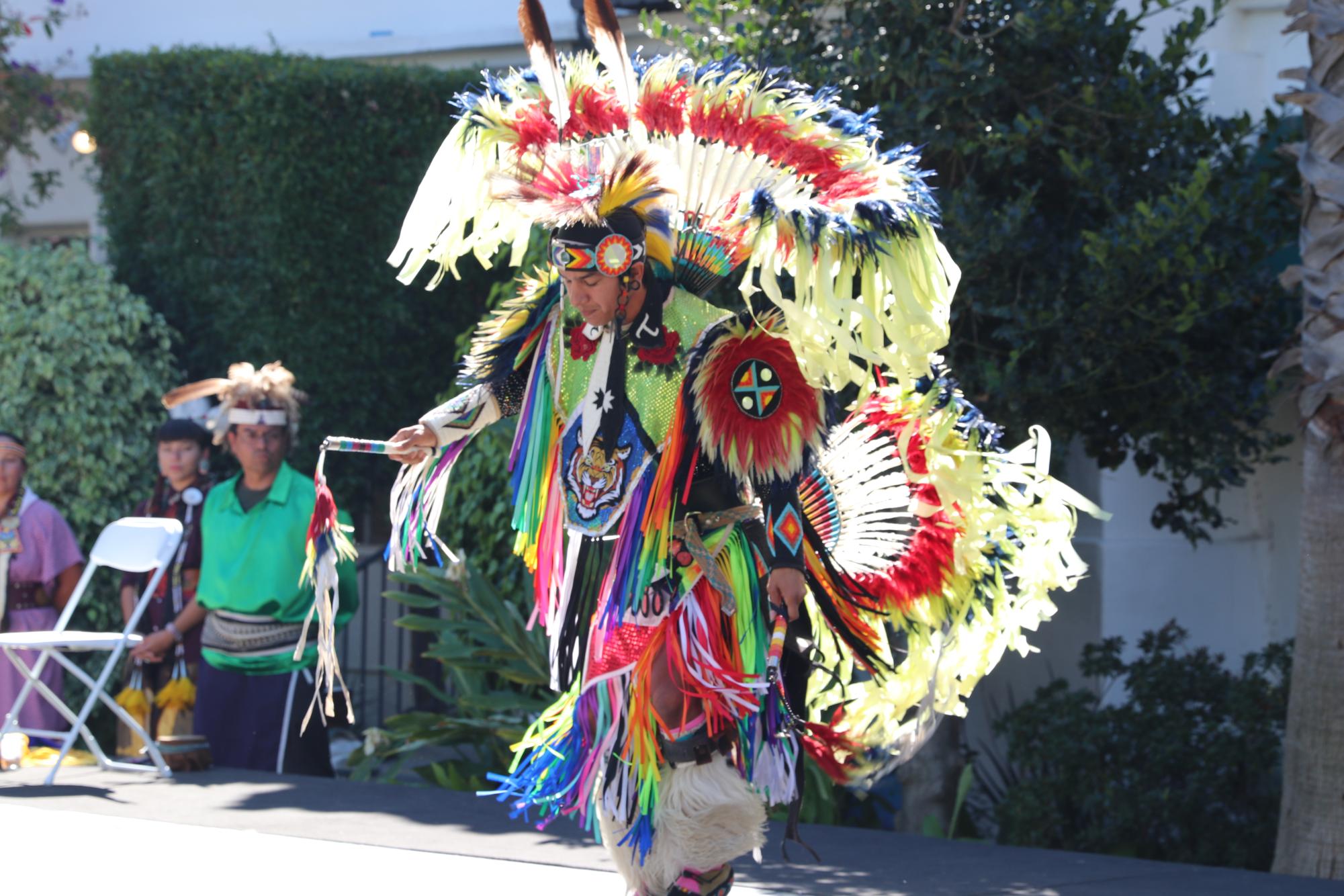
-
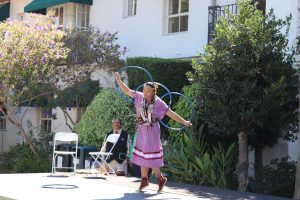
Kaelene Ashmore creates a butterfly with her hoops as she performs the hoop dance. Ashmore advises the audience to point out things they recognized during the performance. “This dance resembles what we see in our world around us,” Ashmore said. “We can also make figures out of our hoops because of what we see.”
Photo credit: Dara Alitoro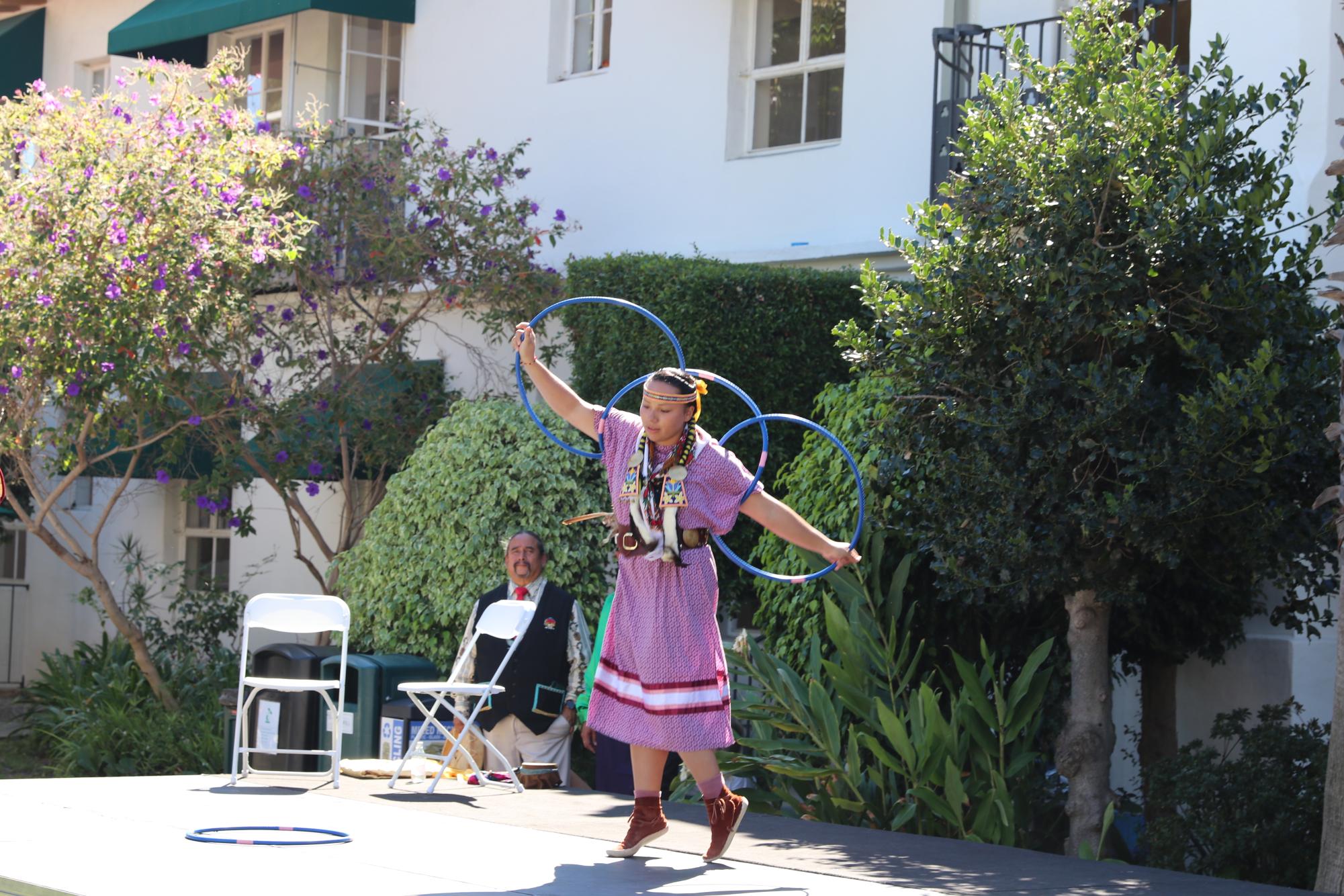
-
Kaelene Ashmore performs the hoop dance, which she said she has been practicing for three years. Ashmore also explains the cultural background of the hoop dance. “This style of dance is called the hoop dance,” Ashmore said. “It is from the Taos Pueblo people up in New Mexico.”
Photo credit: Dara Alitoro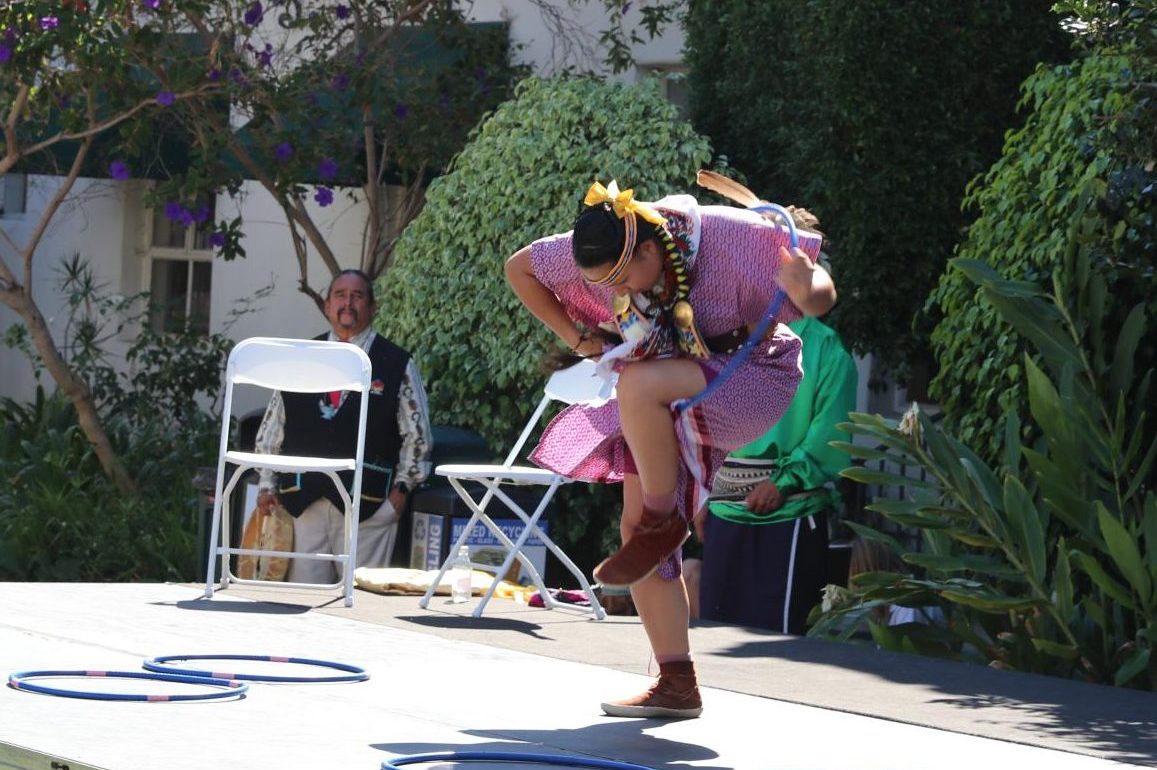
-
Performer Michael Runningwind speaks to the crowd as he introduces himself in his native language. Runningwind performs Native social dances and leads a dance for Archer students to participate in. “You girls can even burn some calories, “Runningwind said.
Photo credit: Dara Alitoro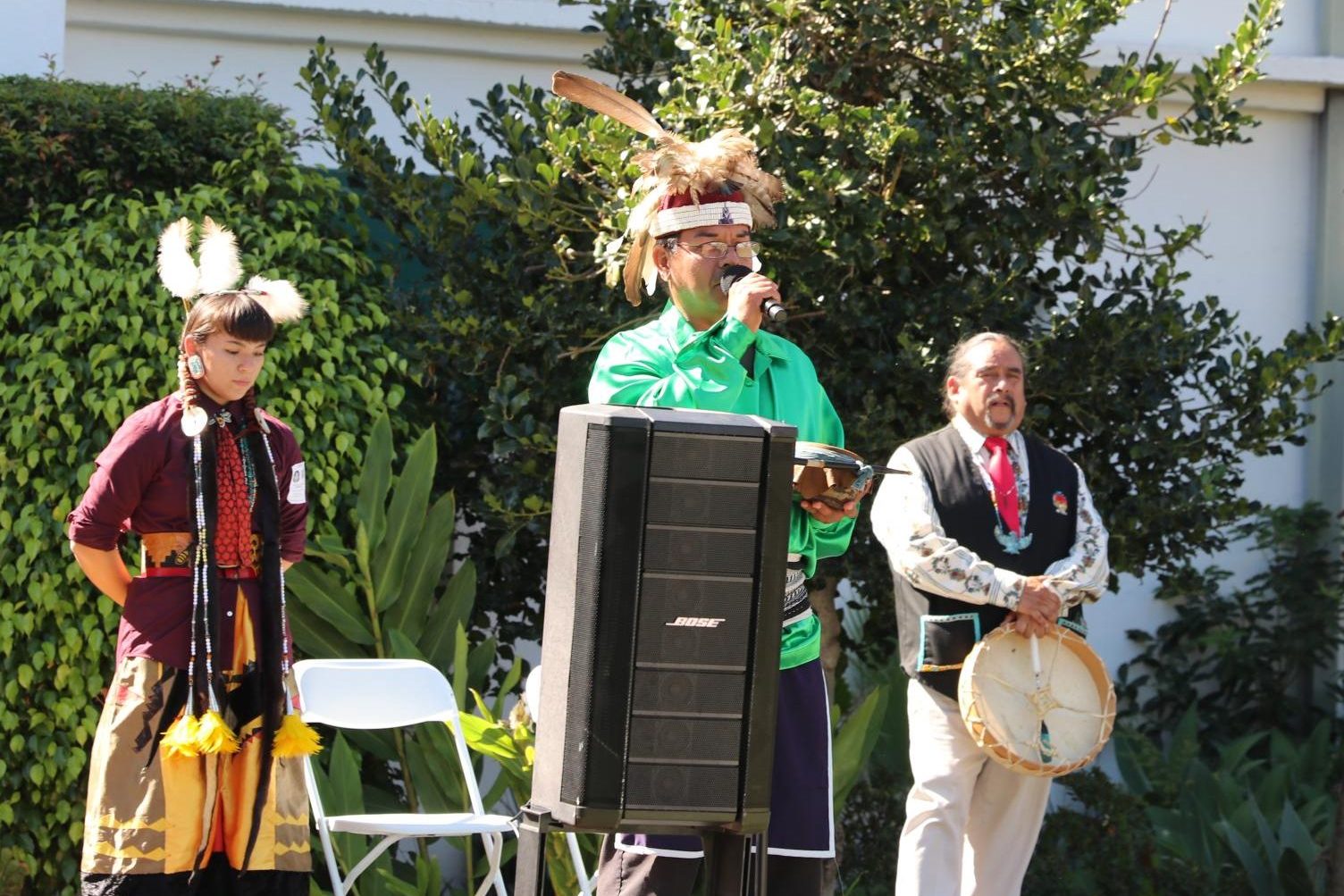


Indigenous Peoples’ Day, celebrated this year Monday, Oct. 13, is a day to honor Native American cultures, celebrate their history and achievements and acknowledge the discrimination they still endure. This holiday was previously named Columbus Day after Christopher Columbus, who claimed he was the first to discover America. Although it was commonly known that Columbus had lied at the time, the name of the holiday was not officially changed in LA County until 2017. Other states like Alabama, Alaska, Hawaii, Iowa, Louisiana, Maine and Michigan also refer to this holiday as Indigenous Peoples’ Day. However, 30 other states still call this holiday Columbus Day.
To celebrate this holiday, Archer held its first commemoration in the courtyard by inviting the Wildhorse Native American Association to perform traditional dances that originated from the Ponca and Pueblo tribes. This association was founded in 1989 and aims to give urban Native American youth in the Los Angeles area the opportunity to learn about traditional values native tribes like drumming, singing and dancing. They teach traditional Northern songs, dance styles, arts and crafts, regalia making and ceremonial activities.
During Tuesday’s celebration, Director of the Wildhorse Native American Association Jorge Lechuga introduced each dancer— explaining the cultural background of their art and outfits. Lechuga spoke about how these styles of dance are rarely seen outside of powwows and that it is important to recognize the hardships that Native American people have endured.
“Native people struggle a lot, but we still speak our language, we still practice our culture, we still have our dances and songs,” Lechuga said. “That’s something we’ll always have, regardless of what governments or political powers do. We as Native people love our Indian ways and always will.”
After Lechuga’s introduction, Caitlin Ashmore performed the hoop dance, which was originally a predominantly male dance. However, in the last decade or so, women have been more involved in this dance than men have. Her sister, Kaelene Ashmore, sang for her during her performance after informing the audience of the history behind it.
“This style of dance is from the Taos Pueblo people of New Mexico,” Caitlin Ashmore said. “It represents what we see in our world because we make figures out of our hoops from what we see.”
After Caitlin Ashmore’s performance, Kaelene Ashmore introduced herself in her native language, Diné Bizaad, before translating her words into English for the audience. Lechuga said they share their introduction in both languages to help others understand its meaning and the importance of their cultural identities.
“Greetings, my relatives & and people! My name is Kaelene Ashmore. My first clan is Tobacco People Running into Water,” Kaelene Ashmore said. “My maternal clan is the Red Cheeks clan … Therefore, I identify as a Diné woman.”
Next, she demonstrated the women’s Fancy Shawl dance, which gained popularity during the 1940s. Kaelene Ashmore said that the dance is known for its fast footwork, colorful regalia and expressive movements that symbolize the grace and strength of women in Native American communities.
“Women wanted to show that they could be just as athletic and dance as fast as the men,” Kaelene Ashmore said. “When the women outdanced the men, the men told them that they needed to have their own style. So originally, the women used blankets on their arms instead of shawls. Over time, the style evolved, and the women’s Fancy Shawl became its own category.”
After Kaelene Ashmore’s performance, dancer Michael Tiger showcased the men’s style of the Fancy Dance. Tiger said his outfit took him two years to construct, as every piece of it was handmade. He said sourcing the materials for the regalia is difficult and time consuming.
“This dance is also known as the Fancy Dance or the Double Bustle,” Tiger said. “These bustles are made out of turkey spikes and hackle feathers, and you can see on my head, this is a roach, what we call a roach, and it’s made out of porcupine quill and these are deer hair that are dyed.”
After Tiger’s performance, the dance presentation concluded with a message of gratitude. Lechuga shared how grateful he is to have the opportunity to visit Archer.
“We want to thank the school for inviting us and letting us share a little bit about our culture,” Lechuga said. “I hope you learned just a little bit. Understand that yes, there are still Native American people here in the United States. Yes, we still speak our language. We still know our songs and dances.”
Following the event, Kaelene Ashmore said in an interview that Indigenous Peoples’ Day is significant because it represents Native American people being seen.
“It’s an awareness about our existence — we are still here today,” Kaelene said. “It shows that we’re not invisible.”
She also said it is important to be respectful and understanding when learning about Indigenous cultures because it’s equally important to approach traditions and ceremonies with care and awareness.
“Sometimes people get too excited, and I understand that,” Ashmore said. “But at the same time, we’re also human. When we ask you to respect our spaces or not take photos at certain times; it’s out of respect, not control.”
After performing the hoop dance and the men’s and women’s fancy shawl dance, the performers made Archer’s history as the only group who’ve ever performed during Indigenous Peoples’s day. However, the Wildhorse Native American Association only gave Archer a glimpse at Native American culture.
“I feel like Indigenous Peoples’ Day is a really important day worldwide, not just here in the United States … because my people do so much to bring awareness,” Kaelene Ashmore said.