Editor’s Note: This column addresses disordered eating habits, which can often be especially prevalent during the winter holidays. If you are struggling with body image or disordered eating in any way, please consult the National Eating Disorder Association.
The sleigh bells are jingling, the air is cold and crisp and Mariah Carey blasts from every speaker — it must be December. And there’s one thing that seems to unify all holiday celebrations: food. It’s such an intrinsic part of community, tradition and culture, so it’s natural to be especially inundated with it during the holidays.
But those of us who already struggle with comparing our eating habits and bodies to those around us know all too well the insecurities these months can exacerbate, and articles show I’m not alone. It’s an impulse I’m working to move away from, but personally, the feeling of being in control of my eating and exercise habits often provides an extra layer of comfort and confidence, especially when outside stressors prevent me from receiving it from anywhere else. However, during the holiday season, many of us are demanded by external factors to relinquish that control and routine for unpredictable circumstances. It’s not only being surrounded by food — it can be unsolicited family comments, the inability to exercise due to travel and even pressure to achieve a seasonal “aesthetic” or certain look in photos.
During times that are wrought with comparison and stimulate my body image insecurities, I often find myself coming back to the ideological debate of body positivity versus neutrality.
Let’s start with body positivity, which I’d guess is what most of us picture when we think of body acceptance. Broadly, it encourages us to love ourselves unconditionally, to recognize that beauty standards are a product of the patriarchy and to combat stigma surrounding the female body in the media.
Over the past 10 years, however, body positivity has undergone a major evolution, especially when it gained online traction during the pandemic. This viral facet of the movement undoubtedly has its benefits, namely, increased visibility, especially as an antidote to the diet culture-adjacent messaging so many young people receive on social media. As one of those very young people, I want to make it clear that despite my critiques of body positivity, I am grateful for its impact and share its values.
Ultimately, I believe that turning a movement into a hashtag means exposing it to the short life cycle of a trend. In other words, #bodypositivity has fizzled out, leaving us in a cultural recession when we are most in need of its confident messaging.
Body positivity’s fateful infiltration of the social media algorithm begs a larger question, one that feminists have been asking for decades. Can the oppressed slowly overtake oppressive systems by rising through their ranks, or does profound social change allow for only a complete overhaul of said systems?
In addition to its adoption of social media, the modern wave of the body positivity movement has other flaws. It failed to recognize the pioneers of what was then called the Fat Acceptance movement, who have been engaging in activism since the 1960s and working toward extensive sociopolitical change, not just focused on product and profit. Modern body positivity also focused on empowering predominantly white women. And furthermore, under this sub-movement, the messaging dictates that you must not only always love yourself wholeheartedly, but do so within the capitalist system. Often, the epitome of self-love is advertised as purchasing a “well-fitting” product, and support of the movement is equated with increasing the online traction of influencers who may at times use #bodypositivity. I believe this reveals the ways corporate culture overtook the purpose of the modern movement, focusing no longer on empowering the everyday woman but rather responding to the realization that her insecurities were becoming harder to capitalize upon.
Let’s talk body neutrality now. Rather than demanding a narrative of constant self-love and defining that self-love as an outward and performative phenomenon, body neutrality promotes the idea that our bodies are simply one aspect of our multifaceted identities — ones we don’t have to let define us. In a world that places such abhorrent emphasis on women’s appearances, I’ve personally found more success upon implementing elements of body neutrality into my life.
However, it’s far from perfect. Although body neutrality’s lack of relation to a corporate goal helps it refuse to compromise its values, it can also erode its influence, affecting only those of us already searching for strategies for self-acceptance. It’s also much more abstract as a concept, making it harder to implement into everyday life.
For my part, I don’t believe we have to choose between the two. Both these movements are not only psychological tools for self-acceptance — they are perfect examples of the complex and fluctuating ways movements can achieve lasting social change.
I often also find a massive disconnect between body acceptance as an ideological concept versus in practice. To return to my personal experience for a moment, even when it’s simple and easy to remind myself of the data and science disproving the voices in my head telling me I’m “out of control,” my emotions have a harder time agreeing. It can sometimes feel most empowering to refuse to give these anxieties my time in the first place, adopting a “my body is none of your business” approach until the holiday frenzy subsides.
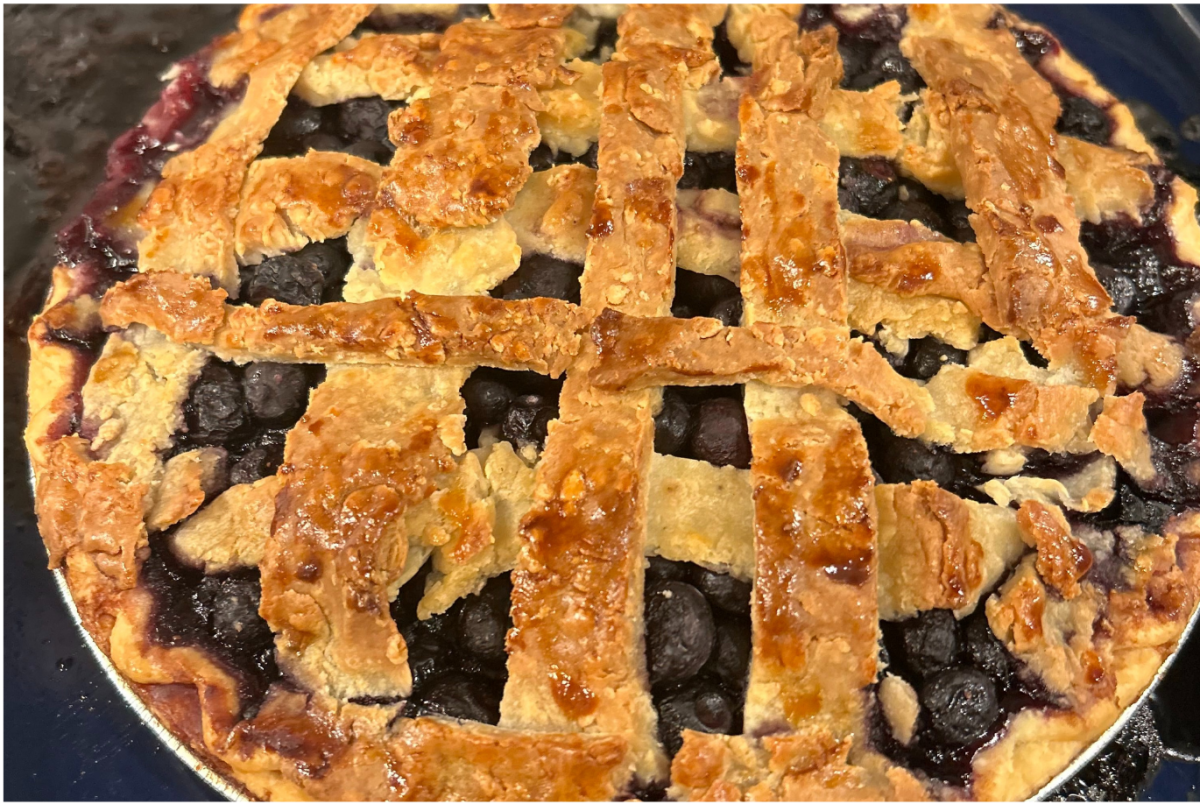
I hope you might be empowered to turn to these movements’ principles when December gets cold. As for me, I will savor my great-grandmother’s pierogi recipe on Christmas Eve, fight my cousins for a heaping of gelt over games of dreidel and pour hours into baking Italian rainbow cookies. I will try to love my body not in spite of but because it is lived in, while recognizing that it does not define me.
Because contrary to what our minds may try to make us believe, to eat is to be stronger than the thoughts telling us we shouldn’t. To eat is not to give in to some shameful impulse, but rather to listen to the most natural, human one there is.