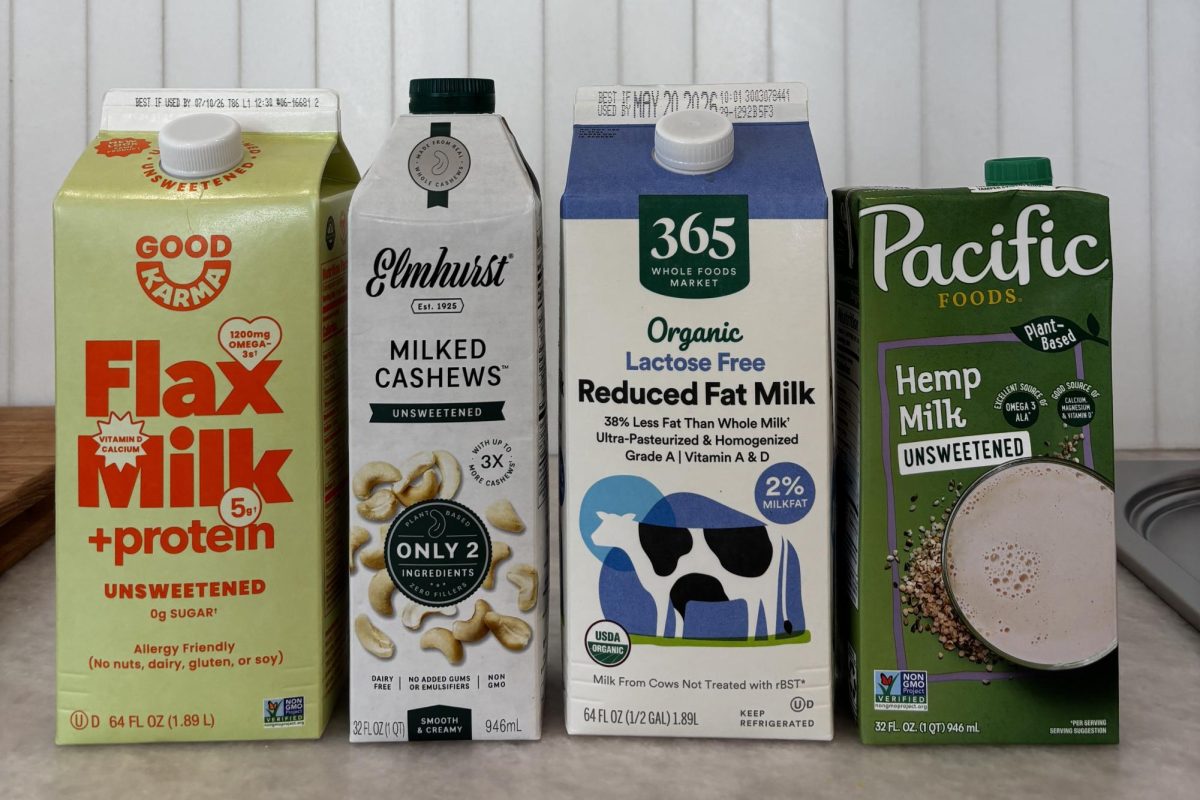

The other day, I went to the grocery store to buy granola and, sadly, left empty-handed after staring down a wall of over 30 brands, flavors and varieties of the delicious snack. Having returned from a weeklong retreat in rural Canada just a few days prior, I realized I no longer had the patience and strength of will to make this seemingly small decision.
In the collection of lakes I visited, the Muskokas, there were only a few general stores and just one within a sensible traveling distance from where I was staying. In those stores, I found two — maybe three — varieties of granola, bread, chocolate and milk. So my grocery cart and meals that followed were fairly simple, easy and decided for me.
The peace of mind and ease we experience when stripped of the burden of decision is commonly referred to as the paradox of choice: Although having more options would seem to make us happier and more content, too many choices overwhelm us and leave us exhausted. This is why high-level tech or business billionaires are known to have a “uniform,” reducing the number of decisions required of them by wearing the same clothes every day. But how devoid of personality and fun!
What is it about options and variety that tire us? I believe it’s the weight of the choice that goes unchosen. I could pick this granola, but what if the other one’s better? Can I buy both? Can I have all the granola? Every decision is a small loss of the other path. I personally feel the weight of this phenomenon now more than ever, as a senior about to pick a college, area of study and my life’s path. My classmates and I express a shared exhaustion with the endless possibilities for what we can do and be. More than that, we are all in mourning for the paths we do not choose.
When we express this to adults — teachers, counselors and parents — we are told over and over: “You can always change your major!” or “You don’t have to decide now!” But the truth we all know is that we can never follow every path that piques our interest. There simply aren’t enough hours to do it all.
The burden of choice is one of the inevitable weights that come along with growing up. We, as children, have our choices made for us and our daily lives are set by people who, hopefully, know better than we do. This would explain why my peers and I feel so nostalgic for our childhood: a time of ease and levity. Back then, the questions were not, “Who will I be?” but, simply, “What will I draw today? Who will I play with?” We trusted that our lives would unfold, that dinner would appear, and that our days would repeat with the same familiar structure we’d always known.
But growing up means taking on the responsibility of creating who we are. Choices feel like a heavy act of self-definition, but these decisions don’t have to be as paralyzing as we make them. Childhood was not peaceful because options didn’t exist, but because we weren’t making every choice an irreversible piece of our character.
The lesson of childhood is something we can return to by following our intuition and choosing joy instead of focusing on others’ opinions. Children don’t worry about which drawing will win them an award, or which game at recess will further their career-related goals: They do what’s fun.
So maybe the antidote to decision fatigue is allowing ourselves to pick a granola brand — or a college or a major — not because it is the perfect choice, but because it’s a good one, and it makes us happy, for now. As Marie Kondo says, “Does this spark joy?”
It may seem like an oversimplification of the complex decisions we must make, but our intuition and the sway of our hearts are not random. It’s our map. I hope we carry that small lesson of childhood with us: the permission to choose imperfectly, to change our minds and to follow our bliss, wherever it may lead.