


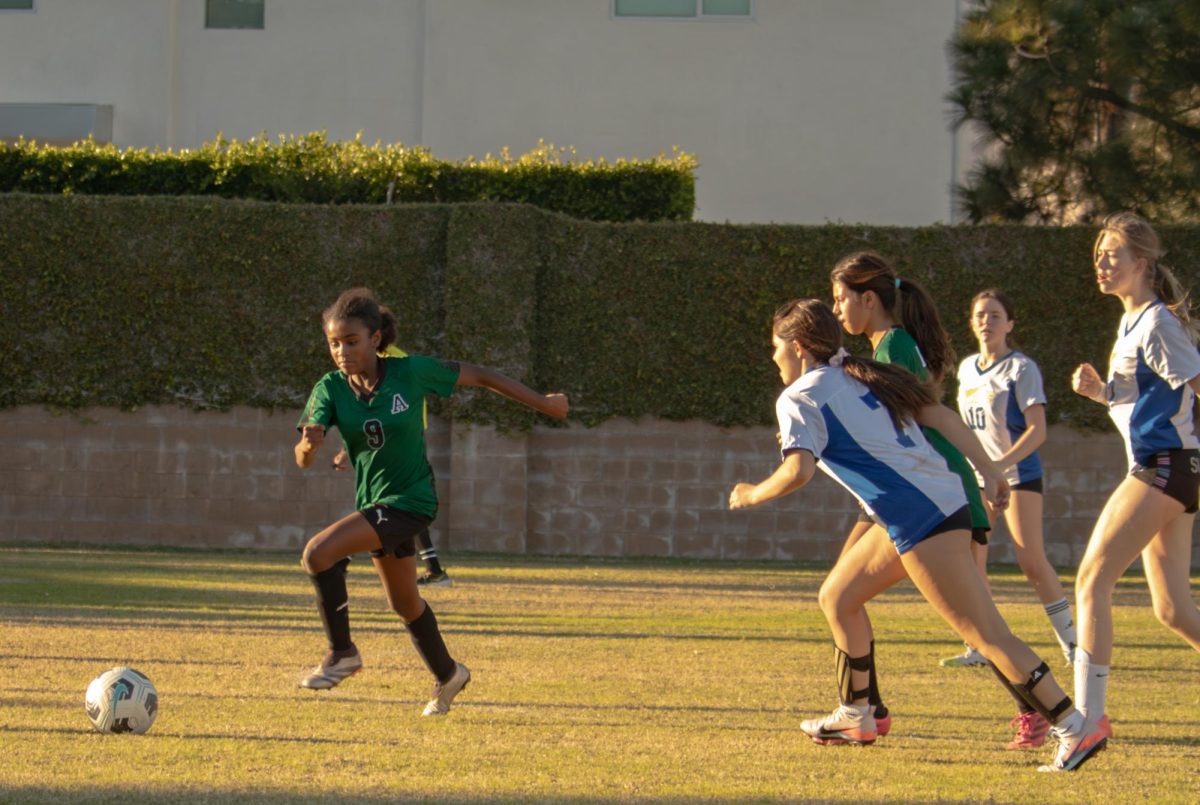
Archer’s seasonal pep rallies are a major part of each semester, bringing the student body together in the courtyard to celebrate athletes who compete in the school’s name. Upbeat music blares from the speakers as dancers perform energetic choreography. However, according to a survey of 46 Archer student-athletes out of 501 students, playing sports is an ongoing and demanding commitment that runs deeper than these celebrations.
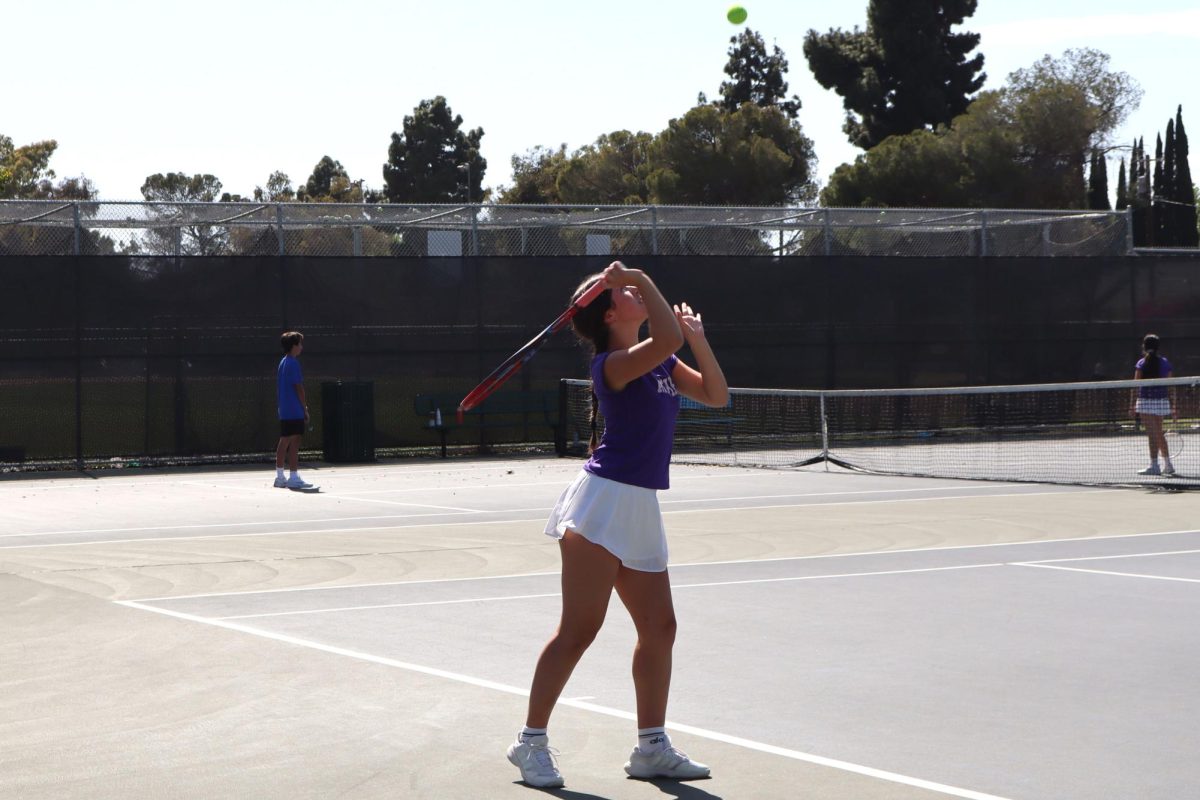
Whether it be tennis, volleyball or swimming, there is almost always an Archer sports team practicing and competing at any given time of year. Despite the glory a victory can bring, the student athletes who filled out the survey said that they often face pressure to excel.
Serenity Jones (‘26) is the co-captain of Archer’s varsity volleyball team. Because of her position on the team and her status as a senior, Jones rated the performance pressure she faces at a 7.5 or 8.
“I put a lot of pressure on myself to be as good as I can be, and I think our coaches do as well,” Jones said. “They’ve seen us since we were in sixth grade playing. So I think that they put a lot of pressure on us to know what we’re doing and to teach … the underclassmen.”
Freshman Bella Sklaver, a member of Archer’s Varsity volleyball team and Sunshine Volleyball’s 15 Pacific club team, described her performance level at competitions and practices and how it has an impact on her.
“I’m working on my confidence,” Sklaver said. “However I do in a game or in a practice sets the tone for the day … I’m trying to get over that hump — that I have a life outside of volleyball, and that’s okay.”
Maya Cerbo (‘28) is a swimmer for Archer’s varsity swim team as well as Blast Sharks’s Junior Olympic club team. Cerbo said she faced adversity in her sport when she sprained her ankle twice in 2024. Cerbo described how she felt the need to keep going despite her injury.
“The second time I sprained my ankle, my mom — I love my mom with my whole heart — she was definitely the hardest person to tell,” Cerbo said. “I knew at the time that she’d also get sad with me not being able to swim the way I could.”
According to clinical and sports psychologist Andrew Ahrendt, PhD, a member of the Nebraska Medicine Sports Medicine team, sports injuries have a significant impact on athletes’ mental health, regardless of their level. The more one’s identity is connected to athleticism, the greater the injury’s impact will feel.
Cerbo described how her ankle injury impacted her performance and emotional state at a swim meet.
“I have this vivid memory of a long course swim meet. I had just finished the 200-meter freestyle, and my ankle hurt so bad that I went from leading first to falling to almost dead last because of how much it hurt,” Cerbo said. “I got out, and I felt so upset because I thought I was going to win, but also I was in so much pain.”
Sklaver is a campus captain for the nonprofit organization The Hidden Opponent, which is the leading nonprofit organization for athlete mental health advocacy. Sklaver’s purpose as a campus captain for The Hidden Opponent is to bring mental health initiatives to high school campuses.
“I don’t want other athletes to feel like they’re alone,” Sklaver said. “I feel that really it’s important to talk about because, especially with women or girls’ mental health, there’s a stigma around not keeping it to yourself.”
Cerbo describes her swimming teammates as consistently uplifting. Despite the stress the sport can bring, through swim meets or relays, Cerbo said the bonds with her teammates are what keep her going.
“The most fun part for me is when I’m at swim meets and not racing, when I get to just sit down and spend time with my friends,” Cerbo said. “After the second day for WAG, my team went out to dinner, and that was really fun, because I got to sit with a close friend, and we just talked for three hours.”
According to Jones, sports have been a major aspect of who she is, and she has a strong passion for athletics.
“I’ve always really been into sports. I love being an athlete,” Jones said. “I also have a pretty good relationship with sports. I mean, I love to do it.”
For Sklaver, despite the stress she sometimes faces, being a student athlete has been an overall positive part of her life.
“I love the sport. It’s given me some of my best friends. It’s given me life lessons that have been learned,” Sklaver said. “I wish for everybody, if they want to be involved in a sport, to be involved, because I just find that there’s so much you can get out of it.”





Alice • Jan 31, 2026 at 12:28 am
This is a thoughtful, well-reported article that goes far beyond the surface of school sports. The author balance joy and pressure beautifully, and the way she weave student voices, personal stories, and expert insight shows her journalistic ability. The empathy for the athletes comes through clearly, and the article leaves readers with a deeper understanding of both the challenges and the meaning of being a student-athlete—excellent work, especially for a reporter at your age.
Dareen • Jan 27, 2026 at 9:08 pm
I really appreciate that articles like this are being written by the student body. Being a competitive athlete is an existence aside from school that consumes a student athlete. I was one myself in tennis. It can transform your day, your week and your overall confidence. Both in a team sport and especially in an individual sport. Most student athletes have kept their heads down and dealt with this mental pressure to find time to practice and perform without sharing the mental strain and pressure with their teammates, and that is a heavy burden. When cracked it’s amazing, but when defeated can be very hard to overcome. Being open and sharing and communicating with other likeminded athletes and coaches makes a huge difference to the mental comfort of the sport in a student’s life holistically. And I love how Holly’s brought this to light in this article, in a familiar and natural way. Thank you Hollyn.
Georgia • Jan 26, 2026 at 2:19 pm
Wow, very insightful and timely piece — especially with the Olympics approaching! So great to have a piece about mental health in sports. I was especially struck by this line: “The more one’s identity is connected to athleticism, the greater the injury’s impact will feel.” Having been a competitive figure skater in the past and “toughing out” injuries without listening to my body and then paying a heavy price later, I am so happy articles like this are bringing much needed attention to how best to manage stress and the passion to win while also respecting our mental and physical health.
Dan • Jan 26, 2026 at 11:26 am
Such good insight into the mentality of Archer athletes. Good to see the students thriving on-the-field and carrying that positive energy with them off-the-field. Well put-together piece by Miss Alpert — I hope to see many more articles from her.