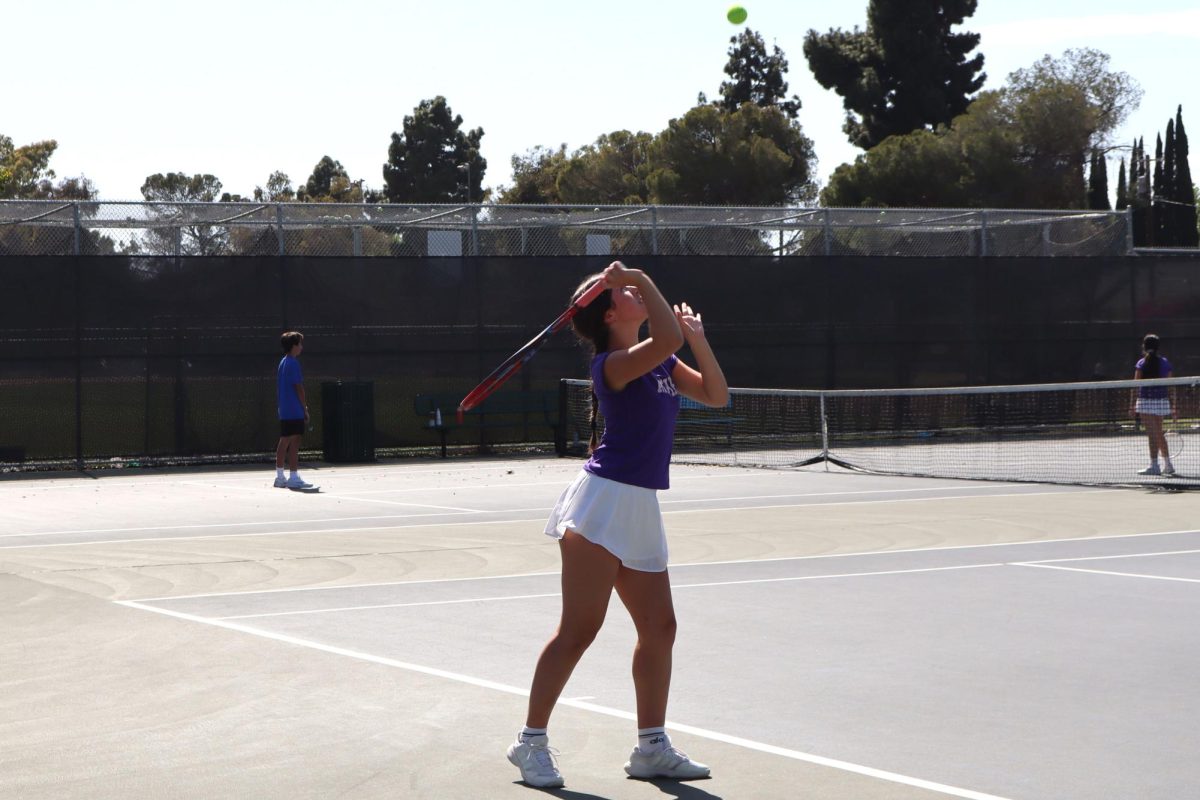

For many teenagers, school breaks are a time for sleeping in, catching up on shows or hanging out with friends. For student athletes, however, breaks are rarely a time to pause their active lifestyle.
Across the United States, more than 8.2 million high school students compete in organized athletics, which are structured activities and competitions organized by leagues, schools or clubs. According to the National Federation of State High School Associations, sports are woven into the lives and schedules of adolescents today. That participation doesn’t automatically stop once school is on break. Many athletes continue training, conditioning and preparing for future competitions as soon as classes are let out.
Sophomore Laila Boodell knows this pattern well. As an equestrian rider, her schedule doesn’t change much during winter or summer breaks.
“I don’t really have an off-season,” Boodell said. “Over winter break, when I’m not out of town, I’m usually riding around five days a week. If I’ve gone two weeks without going to the barn, I just wish I were riding again. Consistency is really important in my sport.”
While the amount of practice can be overwhelming, Boodell said that, during peak show season from September to November and in mid-spring, there is a routine change to her schedule to accommodate balancing shows and practices.
In between major shows, she replaces intense riding days with lower-impact activities like Pilates, yoga and technique-focused sessions. Her goal is to keep both herself and her horse conditioned while avoiding unnecessary strain. According to the American Academy of Pediatrics, up to 50% of injuries treated in pediatric sports medicine are linked to overtraining, which is why lighter training periods can help reduce injury risk.
Sports performance trainer Nate Shemtov has coached basketball, volleyball and baseball players of all levels and is familiar with athletes’ routine shifts during breaks. Shemtov said the way athletes spend their breaks depends a lot on the individual and how they recover matters just as much as how they train.
“Active recovery is super productive,” Shemtov said. “You’re not getting sore and you’re not staying still, but you’re also not pushing your body to the same level as during the season.”
He explained that breaks are a chance to do things athletes don’t always have time for during the season, like mobility work, strength maintenance and movement that keeps bodies prepared for intense competition. Experts also recommend young athletes take at least two days off per week from organized training to reduce injury risk and prevent burnout.
“It’s all about managing your training load,” Shemtov said, “being strategic and doing the right things at the right time. It’s important to find time to do things while ensuring you aren’t overworking yourself.”
Shemtov added that athletes who continue training consistently during breaks are less likely to lose strength, endurance or technical skill, though recovery time is equally important.
“It’s very easy to fall off and very easy to just ride off training while you’re in season,” Shemtov said. “The key is to balance your training and your off-time. Give yourself time to rest, but still put in the work.”
Freshman Skylar Hall’s breaks barely have a balance between activity and rest, she said. During the regular club volleyball season, which runs from winter to summer, Hall practices volleyball at least three times a week. When breaks come around, she stays active by playing volleyball at the beach with her team, practicing with her brother or attending training clinics in preparation for tryouts.
According to Boodell and Hall, the social cost of playing sports during breaks is one of the hardest parts. While friends are using time off to relax or hang out, training schedules can make it difficult to participate. Breaks often become another extension of days shaped around practices, clinics and preparation for the next competition.
“Sometimes, I have major FOMO,” Boodell said. “I try to keep a social life as much as I can, but there are sacrifices I have to make.”
Hall said she feels the same tension between wanting to rest and staying committed to her sport.
“I would rather be chilling on the couch, watching a show and hanging out with friends,” Hall said. “My friends aren’t on the same schedule as I am, and they usually have free summers while I’m getting ready for tryouts.”
Rather than using breaks as time off, athletes often use the time to stay connected to their goals and maintain enough activity to stay prepared while still allowing room to recover. Hall said this balance helps her stay motivated beyond the regular season.
“It’s important for me to stay active during break because it shows dedication to myself,” Hall said. “I know it will make me a better player in the long run, even though I may not see it at the time.”