-
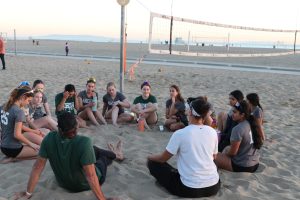
The team forms a circle before the Crossroads game to plan out their strategies. Tom Slauterbeck, one of the team’s coaches, said that the team works really hard to mantain a positive enviroment. “They are able to train and get themselves ready in time for the game,” Slauterbeck said. “They’re also very supportive of the other team because everyone wants to get better while still challenging themselves”
Photo credit: Dara Alitoro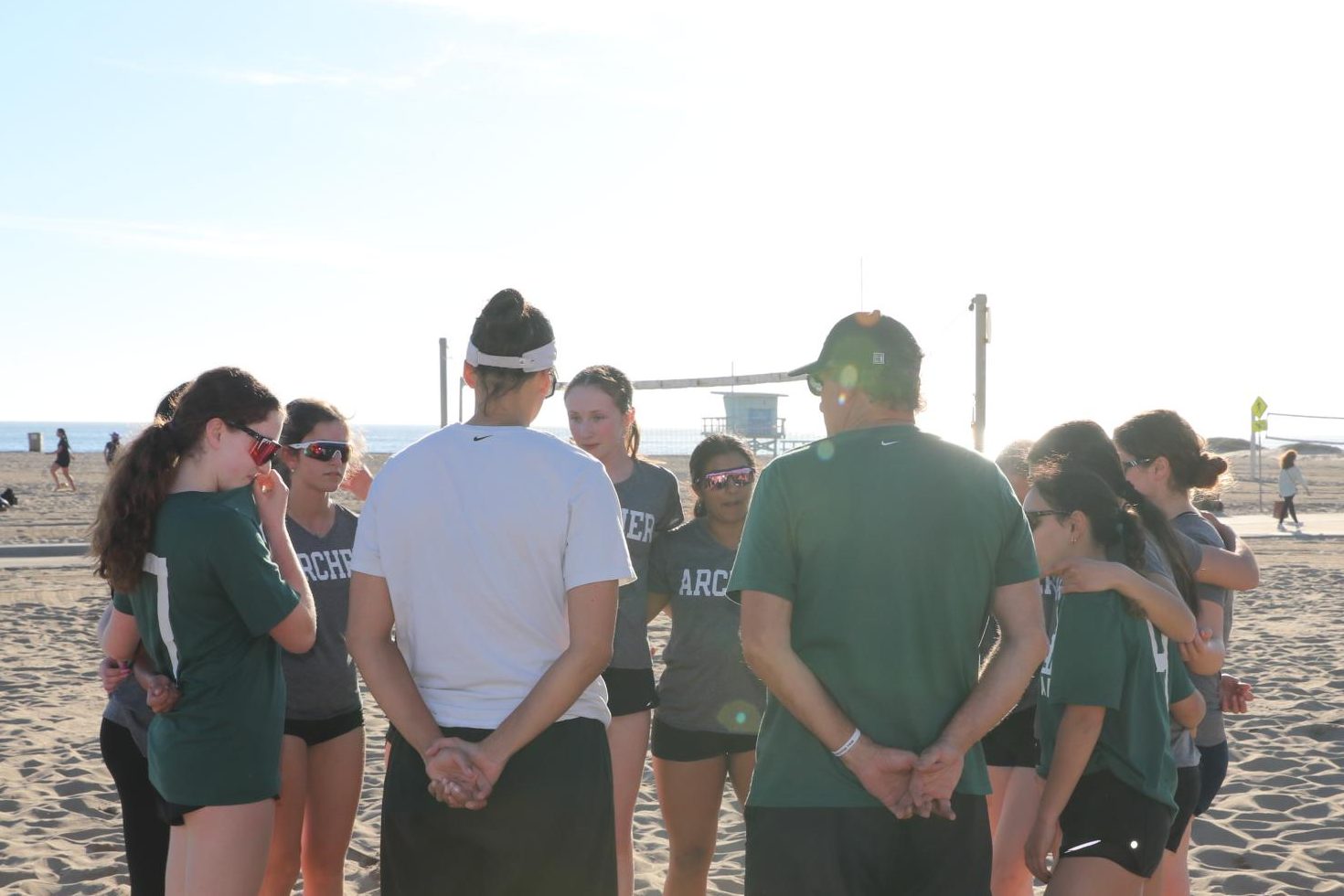
-
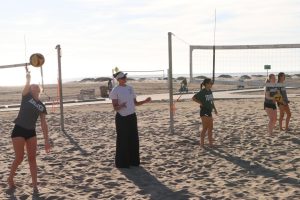
The Archer beach volleyball team completes practice drills before playing Crossroads. Sophomore Alice Rifenbark (’28), said the community the team has built is one that supports the growth of every player. “It’s such a nice community and everyone is friends with each other,” Alice said. “It’s good to work with everyone because everyone’s so uplifting and supportive of each other.”
Photo credit: Dara Alitoro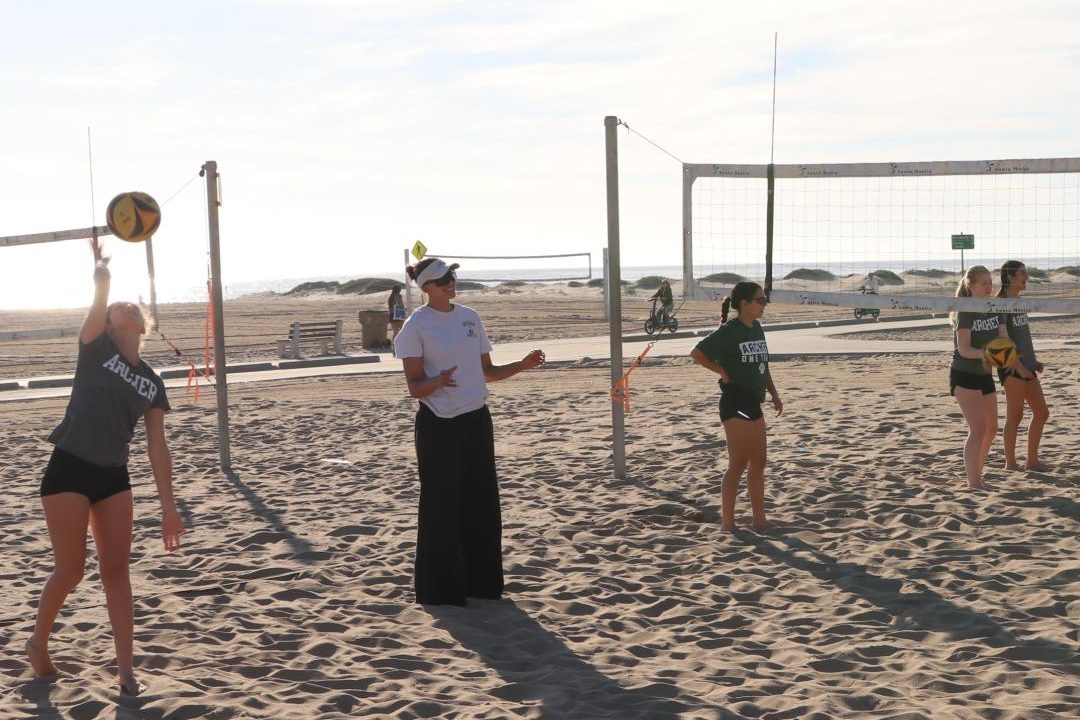
-
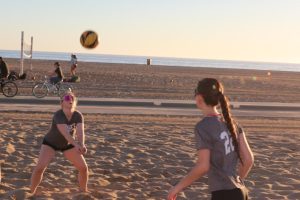
Charlotte Stein (’26) sets the ball to Phoebe Measer (’27). Measer said that this season was her first time playing with Stein. “I think I’ve definitely learned a lot from having a partner who’s older than me. She’s like my mentor,” Measer said. ” I think like even though Charlotte and I are not in the same grade, we still have a lot of respect towards each other.”
Photo credit: Dara Alitoro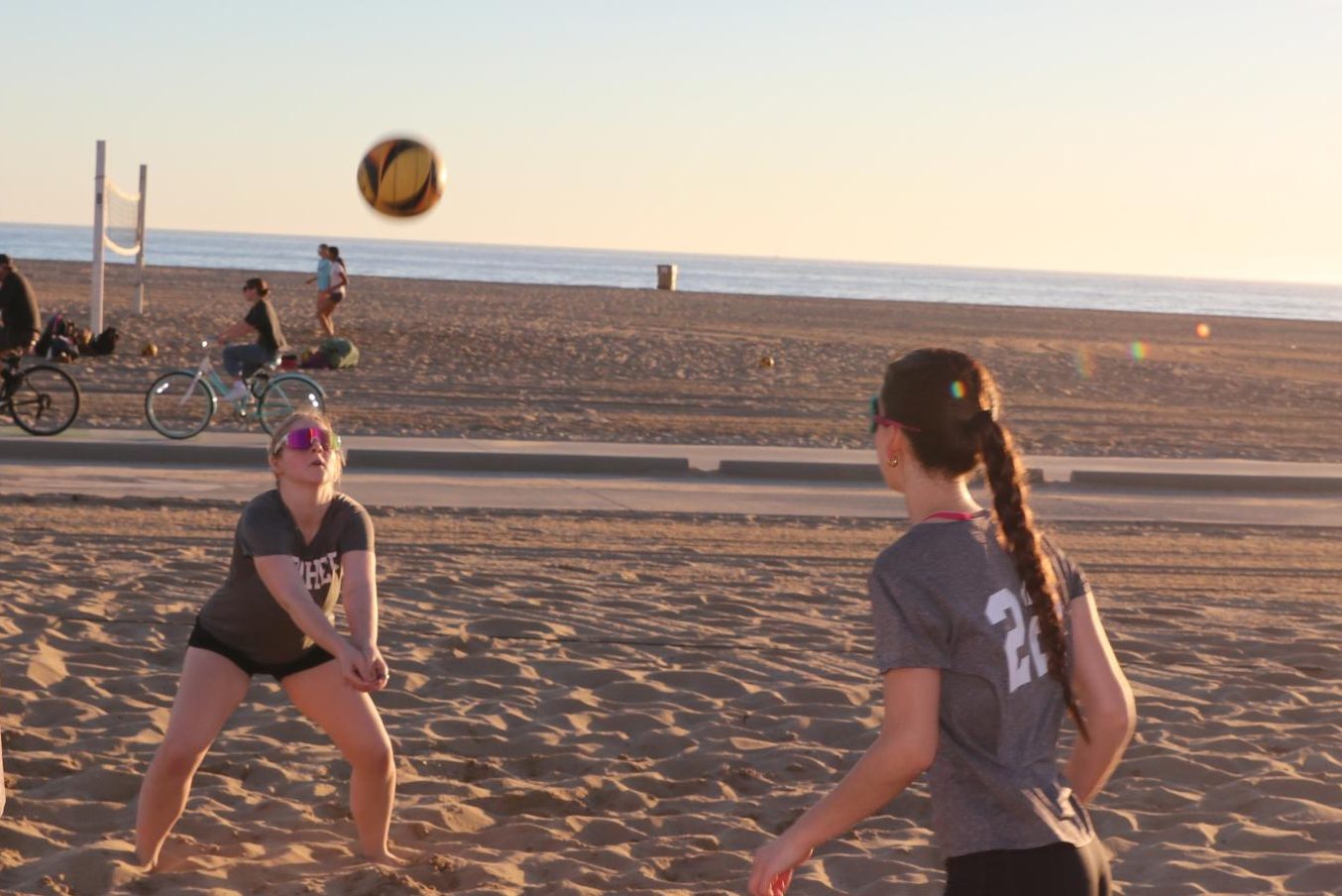
-
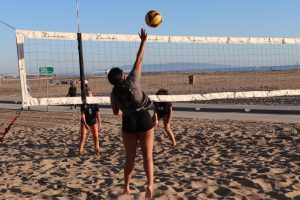
Sophomore Arissa Lalani spikes the volleyball over the net during a game with her partner, Vienna Gentin (’29). Lalani said that she and Gentin have a great partnership that helped them to both to play well. “Even when there are low points in games, it’s important to stay positive and look toward the next point,” Lalani said. “I love having a partner that hypes me up and snaps me out of it when things aren’t going great.”
Photo credit: Dara Alitoro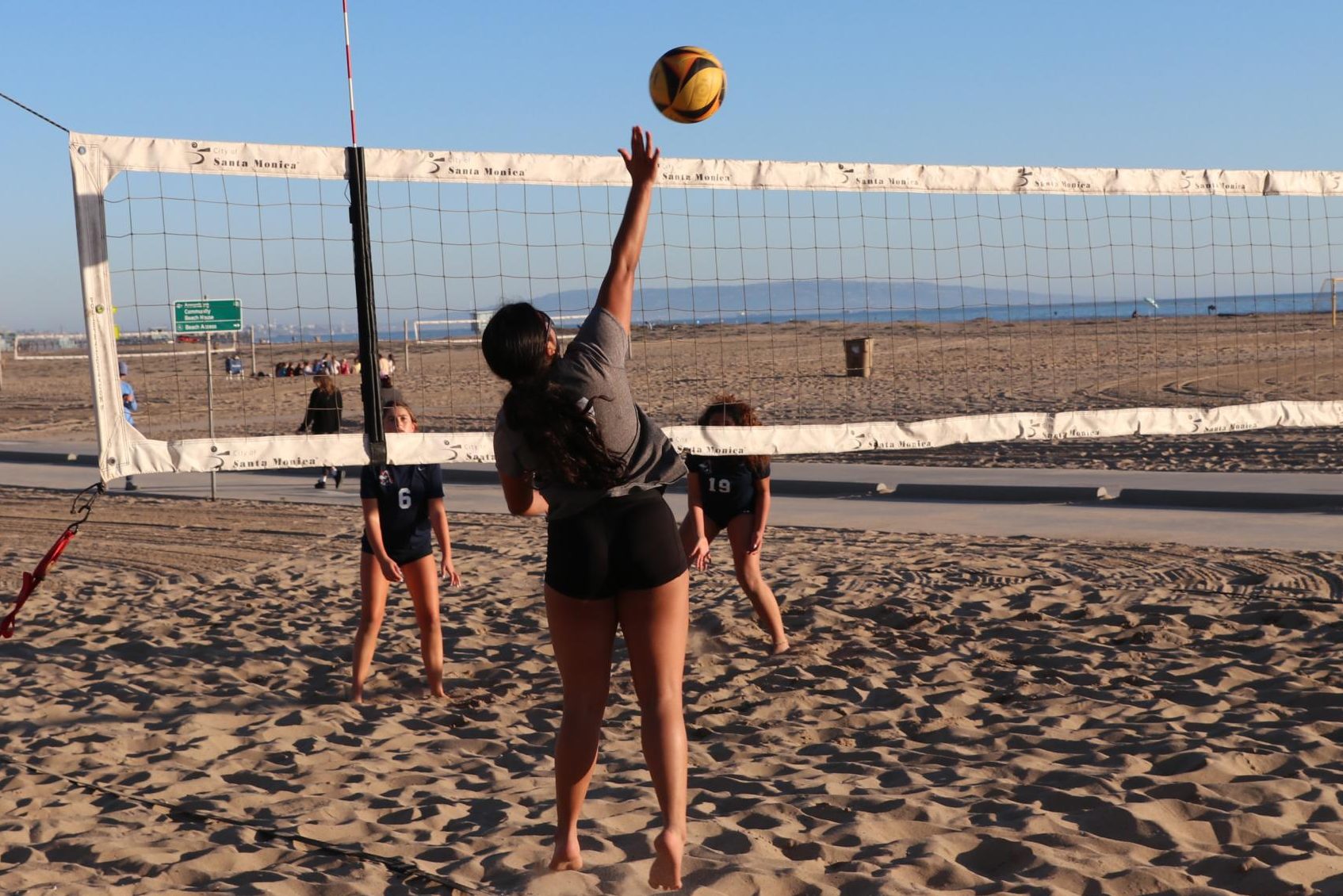
-
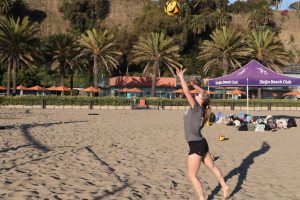
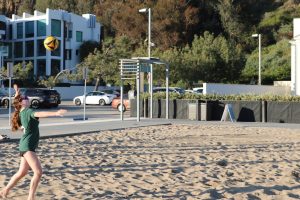
Senior Sara Salehi gets ready to set the ball over the net. She said that she and Bella Sklaver(’29) use constructive feedback to communicate throughout the game. “We have to be able to take feedback from each other during the game, pertaining to our own strengths and being able to talk and correct each other,” Salehi said.
Photo credit: Dara Alitoro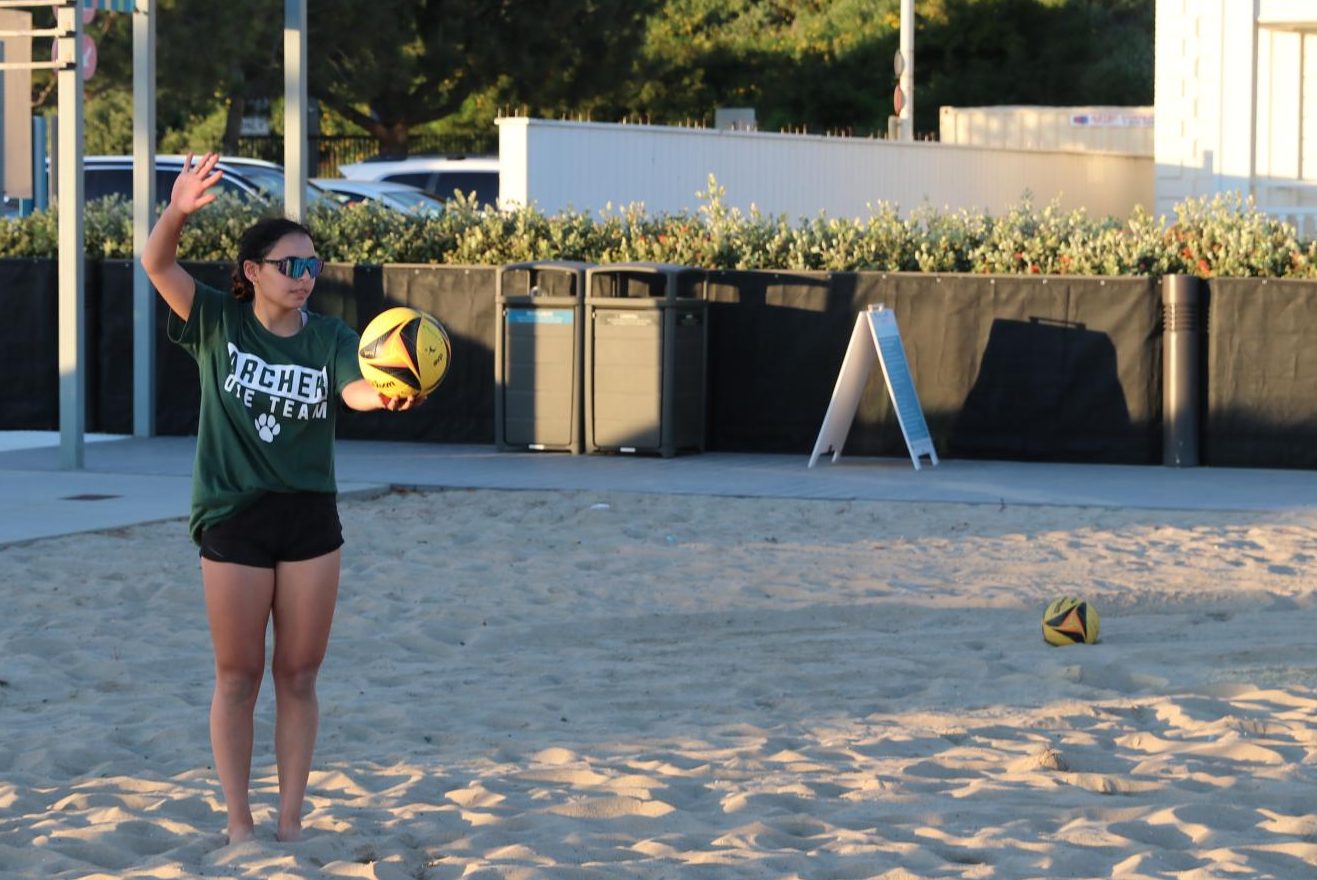
-
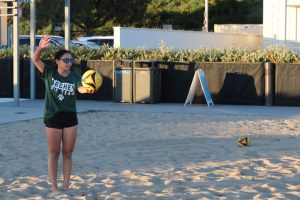
Sophomore Olivia Elsea serves the ball over the net. She said that the Crossroads game was her first time playing with Shanthi Seth (’27). “It was super interesting to learn more about how she plays as an individual,” Elsea said. “We were both kind of learning what we need for like a good pass or set.”
Photo credit: Dara Alitoro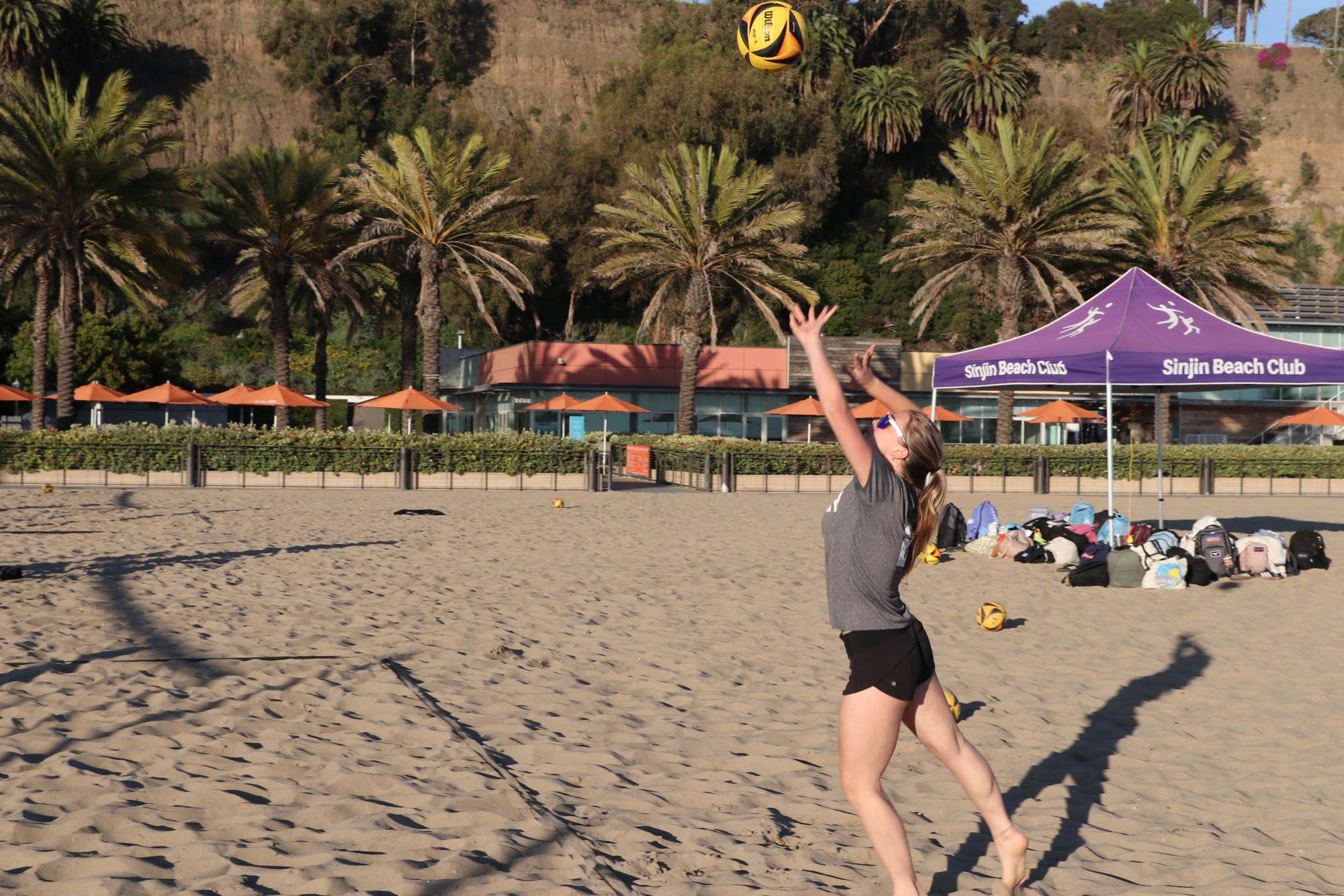
-
As her match with Crossroads was coming to an end, freshman Bella Sklaver sets the ball over the net. She said that she was extremely confideent going into the game against Crossroads. “I wasn’t really nervous going into the game with Crossroads, even though based on their reputation, they are a more sporty school,” Sklaver said. ” I think if I was nervous, it was really just eagerness to get out there and play.”
Photo credit: Dara Alitoro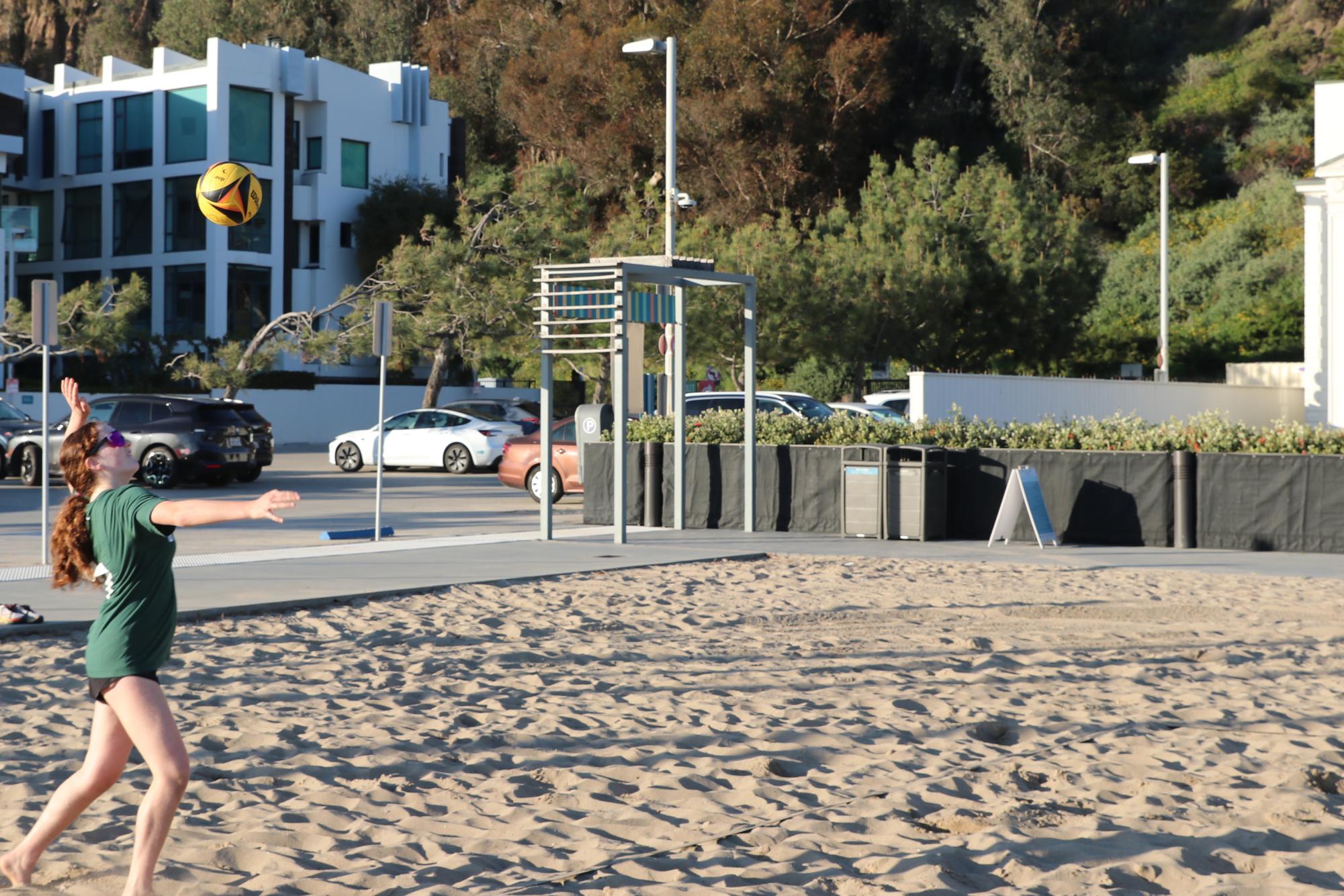
-
After beating Crossroads 4-1, Archer’s team huddles up to discuss how they played in the game. Slauterbeck said that the team’s victory was especially remarkable because some of the players didn’t attend the game. “Even with one of our top teams out, we were able to handle a really strong,” Slauterbeck said. “It just shows that when you have a strong athlete who believes in the coaching staff, the coaching staff believes in them.”
Photo credit: Dara Alitoro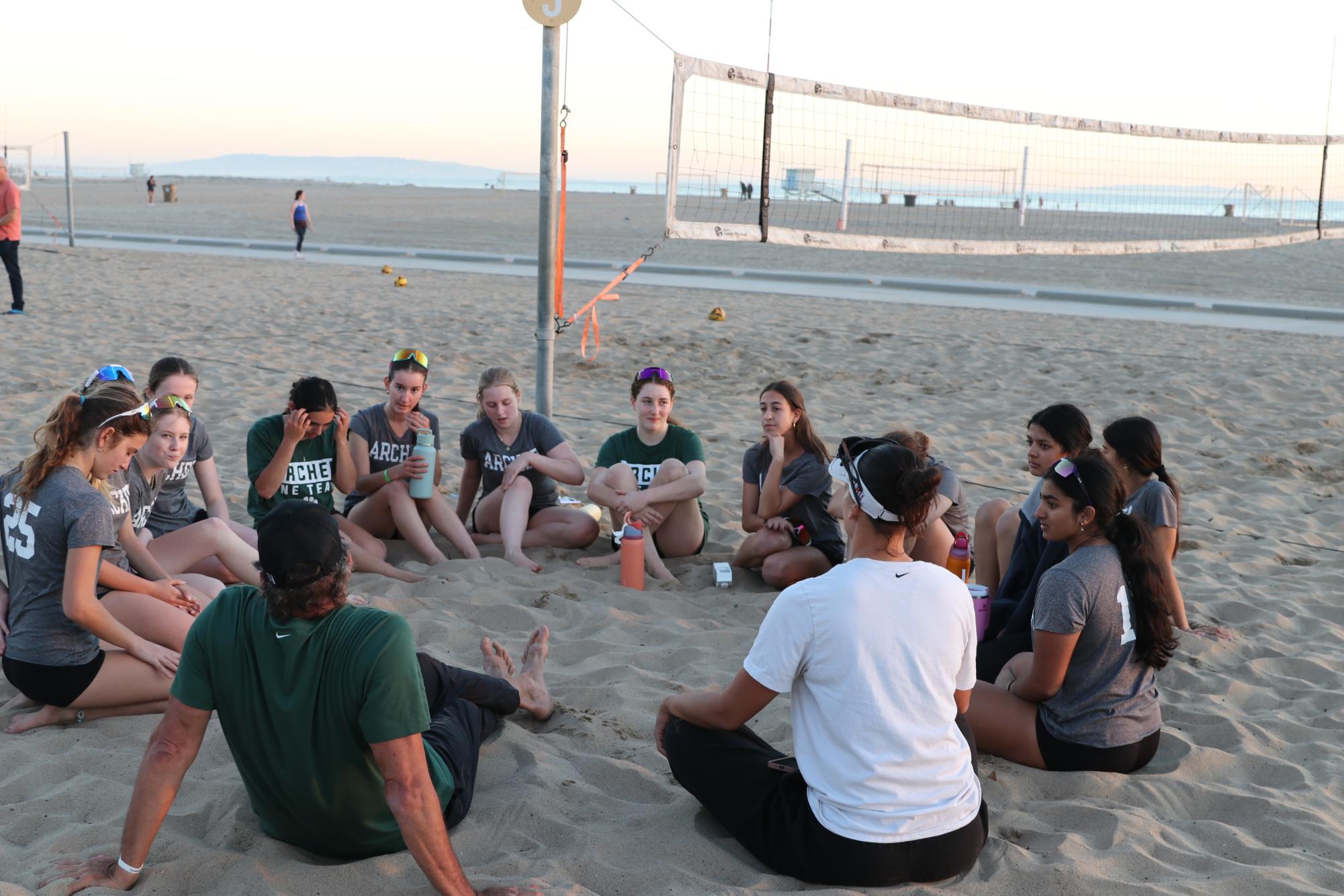
With only two players on the court each match, senior Sara Salehi said beach volleyball is a sport that demands more than just skill. She said it requires building a support system that fosters trust between both players on the sand.
“In beach volleyball, you have to trust your teammate because you won’t be successful if you don’t,” Salehi said. “Having just one person on the court means that you have to be over the top with your support and communication.”
Beach volleyball originated in 1915 at the Outrigger Canoe Club in Waikiki, Hawaii, where members began playing a casual version of volleyball on the sand. Early games were typically played with larger teams, often six players on each side, similar to indoor volleyball. The modern two-player version later emerged in 1930, in Santa Monica, California, after athletes and beachgoers who had seen the game in Hawaii adapted it for smaller teams.
In beach volleyball, players use their hands and arms to send the ball over the net and into the opponent’s court. They earn a point when the opposing team cannot return the ball or sends it out of bounds.
Tom Slauterbeck is one of Archer’s beach volleyball coaches alongside Eleanor Johansen. Slauterbeck said he played a major role in helping establish beach volleyball as one of Archer’s athletic programs. In 2012, Denny Lennon, Archer’s athletic director at that time, approached Slauterbeck and asked if he would be interested in bringing beach volleyball to Archer. Slauterbeck agreed and Archer hosted its first-ever beach volleyball game that same year.
“Even from the very beginning, I’ve noticed the trend that Archer girls work really hard. The players are really interested in getting better, and there’s an excitement to it,” Slauterbeck said. “However, what really sets this specific team apart is that it’s one of the strongest and biggest teams that we’ve had.”
The current Archer beach volleyball team consists of 16 players, ranging from freshmen to seniors. Junior Sophie Shafipour said the diversity on the team strengthens their overall performance because it builds a supportive and accepting community. When Archer played Crossroads School for Arts & Sciences Feb. 26, Shafipour said she was able to deepen her relationship with Caroline Collis (’26).
“I think we blend really well together, and she’s just such a great and fun person to play with,” Shafipour said. “I think that the tournament really helped us build momentum to win both of our games this week.”
Archer’s game against Crossroads was one of the two games that they had won that week. Going into the game, Shafipour said that although she was nervous after hearing that Crossroads had beaten Campbell Hall, she decided to focus on doing well in the game instead.
“I think what really carried our team to win was our confidence,” Shafipour said. “It was really great to see how Caroline and I both came in with such positive mindsets, which allowed us to reflect and reset during our timeouts.”
Playing alongside senior Salehi never felt intimidating or limiting, Bella Sklaver (’29) said. Instead, she and Salehi built a strong relationship on the court, she said. Through constant communication and holding each other accountable, Sklaver said they were able to form a bond rooted in trust.
“I think the trust for your partner comes from those moments where you’re like, ‘Oh my gosh, why did I do that?'” Sklaver said. “But finding joy in the hardships is also where you build that trust.”
The environment the coaches intentionally create fosters the team’s constant support for one another, Olivia Elsea (’28) said. She explained that even practices are structured in a way that allows every player to feel comfortable around one another.
“Practice is always so fun. We run around the courts at first, and we do it all together as one big team, which is super nice. After that, we start throwing with a partner, usually the partner you’ll play with in our next game,” Elsea said. “It’s super cool when you get a new partner because you get to learn so much more about people by the way they play.”
When asked what the Crossroads’ win meant for the team, Elsea said it reflects their determination and ability to stay strong together throughout the match.
“I think this victory just symbolizes our resilience and our excellence as a team. As individuals, we’re just players, but when we come together, we create a beautiful team that has passion for the sport and love for each other,” Elsea said. “When you have a mix of that and all the communication between players, it creates a really lovely environment where you rely on each other.”