



Hockey is facing a steep decline in popularity. Over the past 15 years, Canadian youth hockey has seen nearly a 25% drop in participation, while United States viewership of the 2025 National Hockey League Stanley Cup had a 40% decline. These statistics have left the NHL an outcast among the “Big Four” North American sports leagues: the National Football League, Major League Baseball and National Basketball Association.
This decline also comes with a stagnant, homogenous fanbase, where 66.3% of viewers identify as male and 72% as white. This uniformity has made it harder for the league to broaden its audience.
However, 2026 seemed to be the year that everything could change. The year began with a “Heated Rivalry” craze, followed by viral memes surrounding NHL defenseman Quinn Hughes. Most recently, the Winter Olympic gold medals won by the U.S. men’s and women’s hockey teams appeared to have created the perfect storm to reinvigorate hockey’s viewership.
Then, with one phone call, everything came crashing down.
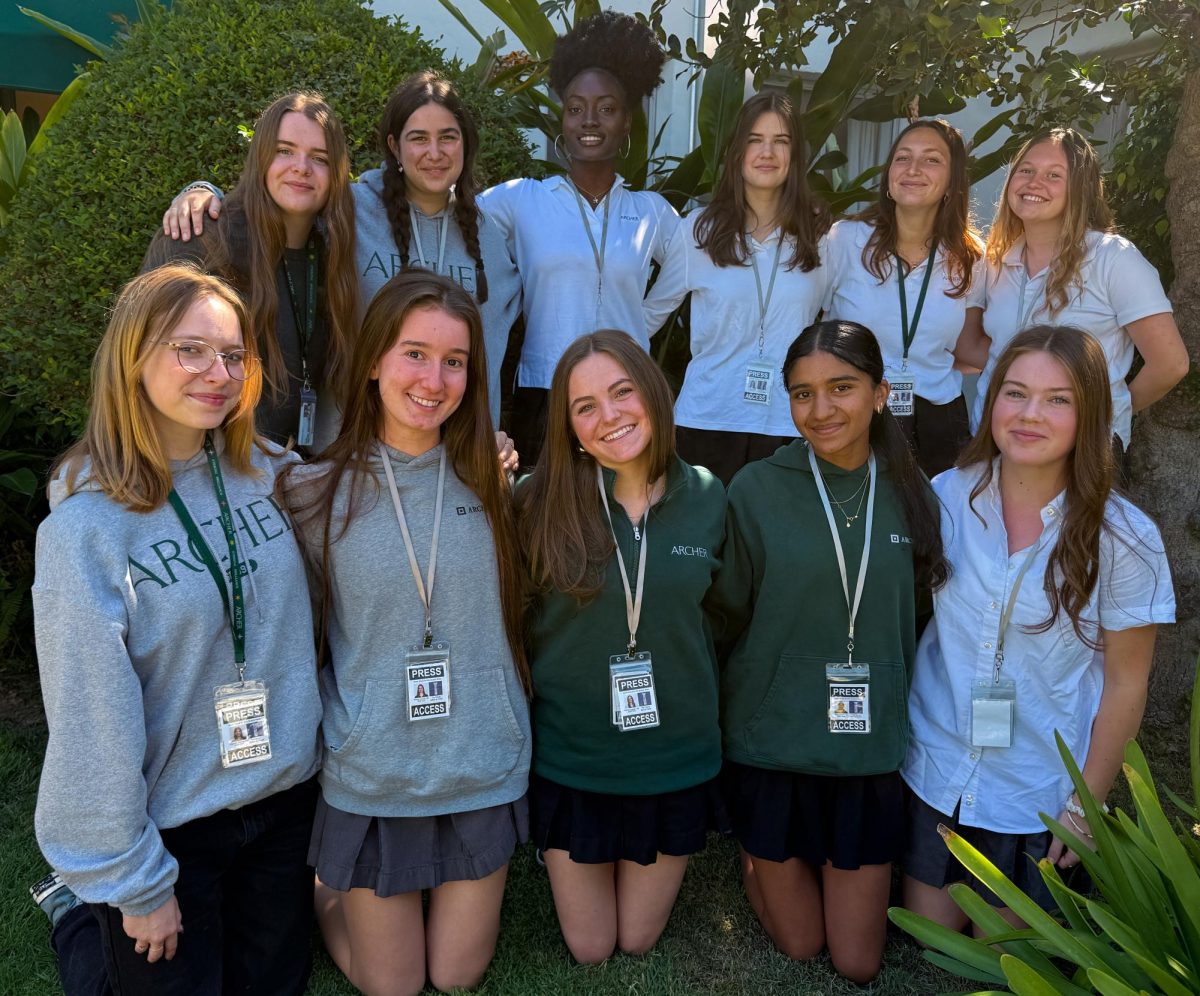
Female empowerment is a vital pillar of the Archer community; we are the next generation of female activists, legislators, mathematicians, doctors and, of course, athletes. As female journalists privy to the male-dominated nature of our field, we feel it is vital that we share our perspective on the celebration-turned-culture war that happened after this phone call.
Fresh from their 2-1 win against Canada, the U.S. men’s hockey team returned to their locker room to celebrate. They were joined by Federal Bureau of Investigation Director Kash Patel, who chugged beer alongside the team as winger Matthew Tkachuk draped his gold medal around Patel’s neck.
The celebration continued: A viral video showed Patel and the rest of the team speaking on the phone with President Donald Trump. The president called the team “unbelievable” before inviting them to his State of the Union address, which the players readily accepted with cheers and adulation. Trump continued, telling the players that he would “have to bring” the women’s team too, joking that he would “probably be impeached” if the women were not included. The players roared with laughter.
This event prompted criticism on social media, with many arguing that the comment discredited the undefeated, gold-medal-winning women of Team USA Hockey. At Archer, similar sentiments have echoed across campus.
The Olympic Games are widely renowned as a time of national unity and celebration. The mutual successes of the men’s and women’s hockey teams had the potential to promote gender equality in sports and inspire countless children, regardless of gender identity.
For a brief window, before news of Patel’s presence or Trump’s joke broke out, this dream was a reality. Following the women’s victory, NHL defenseman Ryan McDonagh said the game inspired his young daughter, who watched with eyes “wide open.”
“She’s very young, but she’s got big aspirations because of great role models like them,” McDonagh said.
Now, the narrative has shifted. Headlines no longer discuss inspired viewers nor gold medal celebrations; rather, they center on a misogynistic joke. From start to finish, this affair has been disappointing, upsetting and — worst of all — unsurprising.
To echo the words of Team U.S.A. women’s hockey captain Hilary Knight, the actions of the men’s team have rewritten the narrative. Interview questions have transformed from celebrations of victory to discussions of misogyny in sports, as if the historical ban on women’s hockey, lack of funding and social stigmas are not enough of an answer.
“We’re just focusing on celebrating the women in our room, the extraordinary efforts … as well as the double gold for both men’s and women’s at the same time,” Knight said, “and really not detract from that with a distasteful joke.”
While some male athletes apologized, others refused to take accountability. One of the most prominent figures throughout this controversy has been Jack Hughes, who scored the game-winning goal. He stood front and center during the infamous phone call and has continued to assert that the laughter he and his team shared was harmless.
“People are so negative out there, and they are trying to find a reason to put people down and make something out of almost nothing,” Hughes said. “I think everyone in that locker room knows how much we support them.”
Statements like these prove Jack Hughes and many of his peers fundamentally misunderstand the outrage. We are not eager to paint men as villains, nor are we eager to paint the women’s hockey team as damsels in distress. We are faced with the sour realization that in a time of celebration, the U.S. men’s hockey team showed no allyship to the women they had just spent two weeks supporting.
How much harder do women have to work to gain the respect of their male counterparts?
These female athletes did everything the men did — and they did it better. The U.S. Women’s Hockey team has medaled in every single Olympic Games since the event’s inception in 1998. The women have earned three golds in just 28 years, whereas it took the men 102 years to achieve their third. Out of the total of 12 Olympic medals the U.S. won in 2026, eight were won by women: the sixth consecutive year that female athletes won the majority of America’s gold medals.
Yet no matter their success, these women were the target of a joke made by the president of the very nation they just won gold for. The intentions or emotions that led to the eruption of locker room laughter are ultimately obsolete. A message was sent to every young woman watching that video: Female pride, bravery and ambition will never be taken seriously.
So what can we do? Watch women’s sports.
For basketball fans, the Women’s National Basketball Association is a leader in social justice and offers exciting and engaging gameplay, as does Unrivaled, the three-on-three basketball league that began in 2025.
For soccer lovers, the National Women’s Soccer League is the fastest-growing professional women’s sports league in the U.S., loved for its parity — anything can happen.
The upcoming Women’s Professional Baseball League will feature internationally renowned players such as Kelsie Whitmore and Ayami Sato.
Volleyball fanatics can choose from Major League Volleyball and League One Volleyball to enjoy nonstop action and long-lasting rallies.
Of course, the Professional Women’s Hockey League offers high-energy, exhilarating games, boasting incredible talent and a passionate atmosphere.
Our voice, our activism and our attention matter. Hockey does not begin and end with the NHL. Sports are about unity, and the laughter and mockery of men should never detract from the passion, resilience and talent of their female counterparts.


Ally O'Boyle • Mar 17, 2026 at 5:25 pm
Much-needed coverage! great editorial!