Content Warning: This article mentions sexual violence, sexual assault and rape. If you or anyone you know has been sexually assaulted or abused, reach out to the UCLA Rape Treatment Center by calling 424-259-7208 or contact RAINN’s National Sexual Assault Hotline by calling 800-656-HOPE or texting “HOPE” to 64673.
For decades, Cesar Chavez was a celebrated figure of American history for his work co-founding the National Farm Workers Association, alongside Dolores Huerta and Gilbert Padilla. His activism concerning higher wages for migrant farm workers grew immense traction during the year-long Delano Grape Strike in California.
The strike ultimately resulted in wage increases for farm workers, lasting union contracts and the foundation of the United Farm Workers Foundation. These efforts popularized Chavez’s name. Following his death in 1993, Chavez received the Presidential Medal of Freedom from President Bill Clinton in 1994, and Cesar Chavez Day was established as a federal holiday by President Barack Obama in 2014.
Chavez’s legacy was rarely disputed until March 18, 2026, when a New York Times investigation revealed his sexual abuse of girls and women. Debra Rojas and Ana Murguia allege Chavez sexually abused them as young girls over the span of five years and used his powerful status within the UFW to keep them silent.
Huerta, who coined the famous slogan “Si se puede'” or “Yes we can,” said she was 36 years old when Chavez began abusing her. She revealed in a statement that he raped her multiple times, resulting in two pregnancies she kept hidden in order to avoid taking attention away from the labor movement.
Senior Caroline Collis said she didn’t know much about Chavez beyond his involvement in reforming labor conditions for predominantly Latino farm workers but was still upset when hearing about his alleged abuse.
“I was, honestly, in a bit of shock and frustration because I feel like we’re hearing about so many sexual abuses in the media right now,” Collis said. “To see another one was just very saddening.”
Librarian Denise Soto said she was not surprised to hear the news that Chavez had allegedly abused his fellow civil rights leader, Huerta, alongside two young girls.
“There are people who were in utter shock when they heard about this, ‘Cesar Chavez, he could never,'” Soto said. “If you were aware of some of the farmworker unions that were actively opposed to him and his legacy and stuff, I think that there’s a lot to learn from that. Just because somebody is willing to fight for a cause doesn’t mean that they necessarily agree or believe in it.”
Although the revelation was not surprising to her, it was still disappointing to hear, especially since he was an important figure in Latino history, Soto said.
Spanish teacher Annie Santana said reading the New York Times investigation was devastating and personal for her. Her grandfather was a Mexican immigrant who was a part of the Bracero Program, which brought over 4 million Mexican men to work as short-term laborers in the United States during World War II.
“Well, after reading Dolores Huerta’s statement, it was really devastating just to think that the focus would change from migrant farm workers who are such an important part of our society and personally a part of my family history,” Santana said. “That the focus would be on his actions instead of how much they have contributed to our society, especially at this time when immigrants are being targeted by ICE and there’s so much — so many emotions already heightened.”
Soto, Santana and Collis all said that these difficult revelations offer an opportunity to highlight the legacy and contributions of Huerta, who was often overlooked due to her gender.
“I feel more comfortable celebrating Dolores Huerta and the movement in general. I think there are many people who have contributed to that movement and the movement was built on the work of many migrant workers,” Santana said. “I feel like the celebration should be a pluralistic one instead of having someone put up on a pedestal to focus on. It’s very difficult to continue thinking of him in any other way than how he mistreated girls and women.”
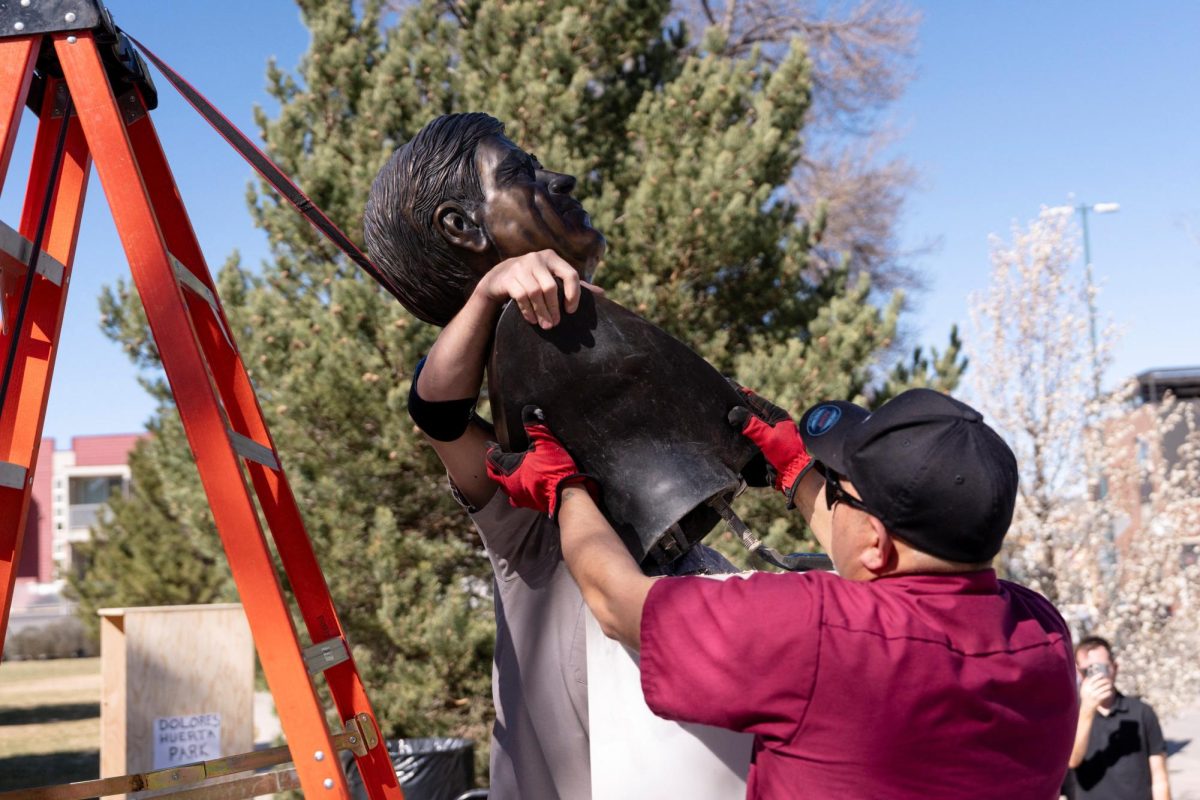
Soto said that the news surrounding Chavez is another reminder to be cautious when idolizing people, especially men. The swift change to rename Chavez’s holiday, schools and streets to honor Huerta feels more impactful, she said.
“I do think that it was a smart move to change — there’s a school that they’re changing their name and a street they’re talking about changing,” Soto said. “That’s a famous street. I drove by it the other day on the weekend and was thinking how much more impactful it would be now to call it Dolores Huerta Avenue.”
Collis said the way the history of the farm workers unions is taught should include the positive change Chavez was a part of, while still acknowledging his negative actions.
“For instance, there have been historical examples where we do recognize the good and bad things that a historical person does, always with a preface about the negative actions that they’ve had on this world,” Collis said. “I think Dolores Huerta’s work could be more centered — we obviously shouldn’t change the narrative — but understand that her work was such an integral part of what he did as well.”