
For the past eight years, TikTok has prided itself on having a “zero-tolerance policy” for hate speech and racism on its platform. Despite this claim, it is common for videos on social media with people saying the N-word or singing along to a song to have millions of likes and views — including comments praising this behavior and claiming they would use the word too. This issue of casual racism is not new. However, casual racism on TikTok has been at an all-time high.
What is Casual Racism?
The term “casual racism” refers to the normalization of racist behavior through jokes, slang or other everyday speech. These actions often go unaddressed because of the informal way they are said, leading to casual racism becoming embedded into everyday life. It can lead to xenophobia and cause discomfort in spaces, like school or work.
According to a 2021 study, there has been a major rise in casual racism on social media platforms like TikTok, Instagram and Facebook. These incidents include microaggressions, “digital blackface” (a form of racism where non-Black people adopt the stereotypical characteristics of Black people) and the allowance of content that promotes exclusionary behavior toward minorities. Because platforms often fail to remove this content, it is easier for younger generations, who are the main demographic on social media, to be influenced by this harmful behavior.
Historian and curator Larry G. Earl specializes in African American studies, focusing on the history of African Americans in the United States and how to combat racism. He also helped curate the Kinsley African American Art and History Collection. Earl is the lead historian for Destination Crenshaw, a project to reimagine the city of Crenshaw in a new light.
“On social media, especially because people don’t engage in intimate, personal relationships, young generations have become more casual about race and less sensitive to say those things,” Earl said. “It’s starting to be considered everyday use and will usually just fly over the heads of young people, which in some ways can be very problematic.”
Earl said social media platforms make it easier for young people to engage in racist behavior on their apps. This behavior is mainly seen through trends and other social media slang that is heavily popularized.
“I myself have mainly seen it through comments, people will show cultural appropriation or slang, things like that,” Earl said. “Some young people tend to take on the mannerisms of something, for example, distinctly Black, and will use that as a way of mocking and not appreciating the culture.”
In a audio excerpt, Earl discusses his views on racism on social media.
How is casual racism affecting Gen Z?
Marlborough sophomore Penny Franklin is an avid TikTok user. She said racism on TikTok is not dealt with seriously and is brushed over too often.
“With the side of TikTok that I’m on, I’m lucky enough to not see a lot of racism every day,” Franklin said. “But when I do see it, like people lip-syncing the N-word in songs or saying ignorant things, people are just so chill about it and won’t say anything.”
Franklin also spoke about how the long-term effects of online racism often carry over into real life
“We’ve become so desensitized to it, and when you do see stuff like that people are just so used to it now which is such a bad thing,” Franklin said. “People think just because they are used to it, that it makes it okay to say or do which is absolutely not, and since it’s happening so much on social media, it starts to happen more and more in real life”.
Archer freshman Ismarcis Ponce-Cruz also spoke about her experience seeing discriminatory content on her feed. She has specifically noticed this type of content referencing immigrants post-election.
Ponce-Cruz has noticed a rise in racism on social media with certain words being used against minorities, specifically post election against Mexican and Colombian-immigrants.
“I feel like younger audiences do see that this is bad, but they don’t want to do anything because of how other people may think of them and their families beliefs, they become a bystander,” Ponce-Cruz said. “Some people just don’t say anything because they feel like it’s going to lead them into bigger issues.”
Though social media platforms like TikTok have mission statements highlighting on how they address racism, it doesn’t seem like anything is taking place to stop it. According to a study done by UC Berkeley, weekly rates of hate speech on the social media platform “X” have risen 50% since its purchase in 2022.
How can this be stopped?
Earl said that a way to combat hate speech is to remember American values. He said being yourself and not falling victim to peer pressure on social media.
“Even though our country deals with racism and inequality, in our founding documents, we say that all men are created equal,” Earl said. “I always tell my kids, always be a slave-to-master self, which means always be committed to bettering yourself, but also if you’re going to be a slave to something, let it be yourself and not
social media.”
Franklin said it’s important to stand up to any behavior that seems racist rather than letting it happen. She said the importance of not letting this behavior be looked over in the moment for more people to think it’s okay.
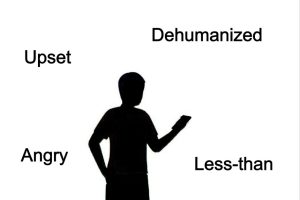
“It’s really important to call people out in the moment, make the conversation awkward when people are saying these comments,” Franklin said. “Let people know that saying these racist and insensitive things is not okay and has a negative impact on people and their feelings.”
Ponce-Cruz said that using a platform to speak against hate speech will bring awareness to issues that some people may not know about. She said her personal identity shapes the way she brings awareness to this type of behavior.
“You can use your platform to post what you truly believe in, and what you stand on,” Ponce-Cruz said. “Growing up Hispanic and living in a more Hispanic [community], I can bring awareness to how to use certain terms correctly and try to get people more informed about my community… [it’s important to] bring awareness to others, I know we all are still learning, but be open-minded and aware.”