

In March 2020, the World Health Organization officially declared the COVID-19 outbreak a pandemic. Individuals around the globe were instructed to isolate themselves from others, stay inside and wear a mask when in public. Now, more than five years later, the illness and people’s responses to it have changed. In January 2021, the Center for Disease Control and Prevention reported that 15% of all COVID-19 tests came back positive, compared to a 10.5% test positivity rate in August 2025 and 7.4% in September 2025. Whether this data reflects reduced testing or a true decrease in the disease’s prevalence, it’s clear that our response has changed.
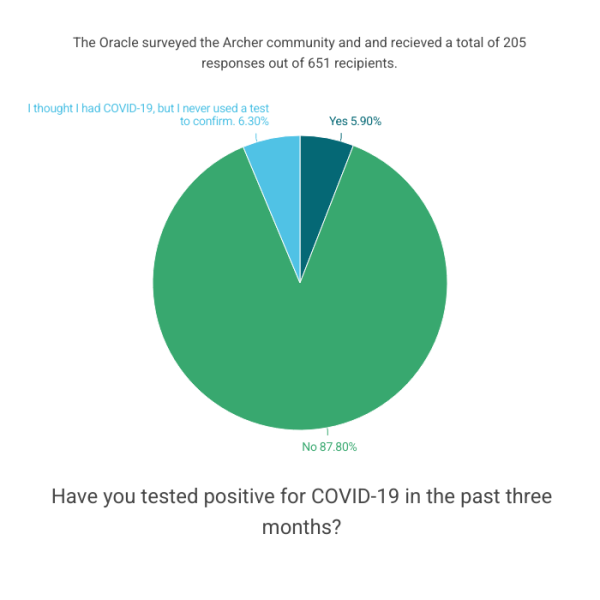
Dr. Pouya Shafipour is a primary care doctor with a subspecialization in nutrition, obesity and chronic thyroid problems. He approaches diseases such as COVID-19 in a holistic way, looking at a person’s diet, lifestyle, sleep habits, family history and blood work. Shafipour said his office has seen an uptick in COVID-19 cases in the last three months. Most people are able to recover from COVID-19 quickly, Shafipour said, by resting, hydrating and taking over-the-counter medications — but for people with underlying health conditions, it can be harder to heal.
At the beginning of the pandemic, Shafipour said he saw COVID-19 cases that were more serious than those he sees now — with earlier cases involving blood clots, for example. Now, most people have herd immunity, whereas at the beginning of the pandemic, immune systems had not yet seen the virus.
“If you live in a big city like LA, you go to school, you go to supermarkets, you go to sports — you’re constantly being exposed to viruses, bacteria and parasites,” Shafipour said. “The immune system is constantly fighting and getting exposed, and 99% of the time your immune system is winning the battle.”
Genetics, sleep, age, diet, depression, anxiety and other underlying conditions all play into the body’s ability to protect itself from infection. Shafipour said the virus has become weaker since the pandemic, but there is also more awareness around how to prevent contracting COVID-19 — like washing your hands more frequently. According to Bradley Company, in 2024, “hand-washing activity has leveled out at 74% of American adults who wash their hands more frequently (or more thoroughly) in response to seasonal virus outbreaks – a considerable rise from 45% in 2009.”
Shafipour said reducing stress and getting enough sleep are two ways to help strengthen your immune system. For example, he explained that during college final exams, students may pull an “all-nighter” on top of their existing stress, which can cause them to get sick more often. Studies have also shown that those who reduce their anxiety through spirituality, religion or meditation have a stronger immune system.
“We always think it is very complicated. It’s not — we don’t need to complicate this,” Shafipour said. “You eat less; you walk more; you exercise more; you park your car further. You try to go for a quick walk before, during or after work or do walking meetings.”
World Language Department Chair Laurence Clerfeuille has had both Long COVID and a long reaction to the COVID-19 vaccine, known as Post-Vaccination Syndrome. After her fourth dose of the vaccine in October 2023, she felt symptoms such as leg soreness and, most problematically, her constant fatigue. She did not feel relieved of this fatigue until September 2024 — almost a year after receiving the vaccine. The World Health Organization estimates that approximately 6% of people globally develop Long COVID after contracting COVID-19 in the first two years of the pandemic.
“I compare [Long COVID] to an old cell phone. So you plug it [in], but as soon as you unplug it, the battery goes down really quickly,” Clerfeuille said. “It’s like that — the number of hours of sleep can’t really fix the amount of fatigue.”
Clerfeuille said the intensity of this symptom required her to take a nap as soon as she returned home from work each day, only to go to sleep again a couple hours later. She said doctors do not seem to have much interest in finding a solution to symptoms, and there is not much information online about recovering from Long COVID. According to the CDC, “Living with Long COVID can be difficult and isolating, especially when there are no immediate answers or solutions.”
“I really wish there were more research on it and [that] the doctors were a little bit more interested,” Clerfeuille said. “I went [to the doctor and I] said that the [symptom] that worries me is the fatigue. [And they said,] ‘There’s certainly not much we can do about it.'”

Junior Phoenix Ferrari had COVID-19 in September. Ferrari said she was comfortable telling her classmates that she was absent from school due to COVID-19, while during the height of the pandemic, it was more stigmatized.
“I think people aren’t really as scared of it anymore,” Ferrari said. “People weren’t freaking out, but [during the pandemic] everyone was going crazy when anyone got it.”
Shafipour said it is important people are cautious of their surroundings when choosing to return to work or school and to consider wearing a mask when around someone with a genetic immunodeficiency.
It can take at least 7-14 days for an at-home test to turn negative after having COVID-19. Shafipour said individuals should stay home from school or work, especially if they have a fever or chills. But if an individual tests positive for COVID-19, and after one or two days of resting does not have a fever or chills, they can return to school or work with a mask, as long as that fits with their employer’s protocols. This has changed since May 2022, when “Isolation [could] end and employees may return to the workplace after day 5 if symptoms [were] not present or are resolving, and a diagnostic specimen collected on day 5 or later [tested] negative,” according to the State of California Department of Industrial Relations.
Clerfeuille was absent from school when she had COVID-19 in September. She is still dealing with fatigue from this diagnosis because of her body’s tendency to have long-standing symptoms. When she was still contagious, her students completed their work asynchronously. When students are out sick, they are also expected to keep themselves up to date with their schoolwork.
“It really depends on how many days they missed, the grade level, the age and how that student manages to work independently in general,” Clerfeuille said. “I understand because when I’m sick, I’m really sick, too. So some are able to work at a moment, some are not.”
Shafipour said he recommends that people take a vitamin D3 supplement when they first contract COVID-19 to help boost their immune system. Infrared light, essentially the heat of the sunlight, is another great way to help your body fight off sickness. While these are good options to help your body get well while having COVID-19, Shafipour suggests that individuals preemptively take care of their health in order to prevent getting sick.
“Is this going to be the last pandemic? Absolutely not.” Shafipour said. “The next one might be even worse than this, so we need to prepare ourselves as much as possible.”