




The leading cause of death for both men and women is cardiovascular issues — specifically, heart attacks — but the University of Utah recently discovered that men and women often experience different symptoms before a heart attack. A study from the University of Utah noted that men tend to have crushing chest pain, while women have nausea, fatigue and shortness of breath. Because of this, women are more likely to be disregarded when having a heart attack. These differences are just some examples of how underrepresentation of female subjects in labs led to widespread misinformation. This occurred because researchers in the past only had information on how treatments worked in male organisms.
According to Harvard Medicine, women continue to face gender bias in the healthcare system, as their symptoms and medical conditions are often dismissed or attributed to hormones. These biases are not new; according to New York University, they date back to the very foundations of modern medical science.
Impact of Gender Gap on Modern Medicine
The question of who can participate in clinical trials has changed over time. In ancient and modern history, male animals — often male rats — were used for clinical research. However, male rats have different anatomy and hormonal systems than female rats, which can affect how drugs work. In 2001, the Government Accountability Office found that eight of 10 common drugs were withdrawn from the market because they caused harmful side effects in women. This occurred because many of the cells used in laboratory testing were male, meaning researchers had not adequately studied how these medications would affect women.
Senior Stella Leland is a student in Science Department Chair Hannah Robertson’s class, where they discussed the gender gap in healthcare. Leland believes studies should include more women instead of only using men as test subjects.
“It’s definitely important that more research studies include women because a lot of research studies only use men without disclosing it,” Leland said. “Only in recent years have they had to disclose that they’re only testing on men.”
Afton Vechery is the founder of Era Women’s Health and co-founded Modern Fertility, serving as its CEO until 2021. Modern Fertility’s purpose is to make personalized fertility information more accessible by launching accurate at-home tests and multivitamins, according to Vechery.
“From a scientific perspective, women make up 51% of the population and so we have to be able to understand the impact of drugs and intervention on both sexes,” Vechery said. “The female body is amazing, but we really have to take into account that sex is tied all the way down to a cellular level.”
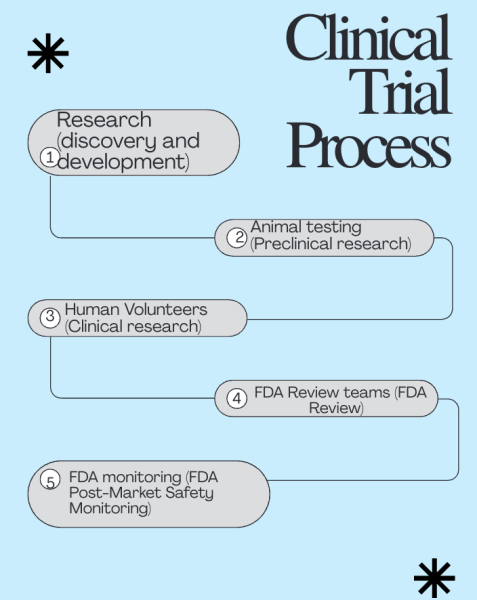
In order for a medicine to be sold at pharmacies, according to the Food and Drug Administration must go through an intensive process from the discovery of the drug to being publicly sold. From 1977 to 1993, there was a ban prohibiting women from participating in clinical trials. In that time period, most medicines developed were not precise for women’s health, according to AAMC.
Junior Beya Patil hosts a podcast titled “Sexplained,” formerly hosted by Archer alumna Ella Dorfman (’25), where she discusses sexual and reproductive health. Patil believes that women’s quality of life can be impacted because of poor treatment.
“Women live longer lives, but they have more years with poor health,” Patil said. “That has a lot to do with inadequate treatment and poor healthcare outcomes because of less funding, less research and biases.”
A well-known example is the sleep medication Ambien, which was FDA approved in 1992. In 2013 — approximately 22 years after the drug was approved — scientists from Pharmacy Times concluded that women require lower doses than men because they metabolize the drug more slowly.
Senior Alexa Grant is enrolled in Eve’s Odyssey, an evolutionary biology class where students discuss the evolution of the female body by comparing male and female anatomy.
“A lot of people believe that women’s bodies are basically the same as men’s, just with different sex organs,” Grant said. “However, over time, people have learned that their bodies function differently.”
According to Jama Network, clinical trials can cost millions of dollars for the development of one drug. Vechery said that clinical trials are expensive to reevaluate a medicine which is often why old drugs won’t be redeveloped for women.
“With a lot of studies, it’s very expensive to go back and recreate them,” Vechery said. “There’s a lot that we don’t understand about women’s bodies and how they react to all of these new inventions from pharmacology.”
Stigma circulating women’s health
Vechery, Patil, Grant and Leland agreed that there is a clear bias in medical research favoring men’s health. They attribute this disparity to several factors, including limited research on women and higher costs.
“Women don’t talk about it because they may feel disregarded in places like doctor offices and checkups,” Patil said. “There are studies showing that when women go and tell doctors about their symptoms, their healthcare professionals disregard them as emotional.”
According to the Association of American Medical Colleges, women made up 36.3% of medical physicians in 2019. Leland believes a solution for repairing the gender gap in healthcare is to include more women in medicine to ensure that all patients feel supported.
“We can fix the gender gap in health care by including more women in preliminary research, as well as an increase in women going into the [medical] field — doctorate and nursing and anything medical— making sure there’s a safe, supportive workspace,” Leland said.
After learning more on the gender gap in healthcare, Grant said she realizes how little knowledge people have on this issue.
“It’s really opened my eyes to how big the gender gap is and how much it disproportionately affects people,” Grant said. “Having more knowledge about these topics would definitely benefit so many women.”
Research on women’s health continues to evolve, with new studies that explore biological differences and medical outcomes. Vechery said there are still areas where understanding is limited. Continued research is necessary to expand medical knowledge in these areas.
“Women have different organs in their body than men, we still really don’t understand a lot about that process,” Vechery said. “There still is this big gap of medicine — this big gap of research that we need to fill and study.”





Chiara • Apr 20, 2026 at 10:56 am
What an informative and well-researched piece! Simply incredible.
Georgia Lebowitz • Apr 20, 2026 at 10:17 am
so well written! incredible job