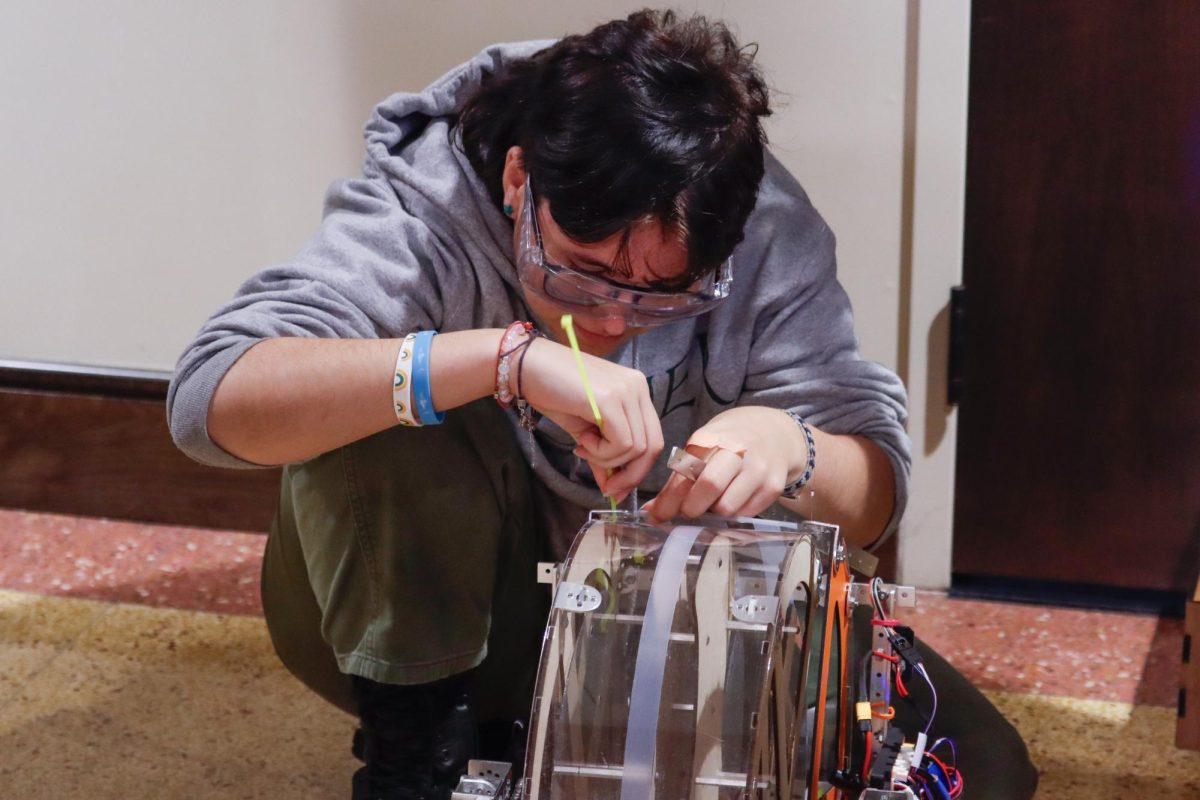
A team rushes around a table filled with robot parts, scrambling to make sure everything is functioning correctly before their first match. Three members surround the field as they try their best to maneuver the robot. What robotics team is facing these pre-competition uncertainties before their first match? The Muses.
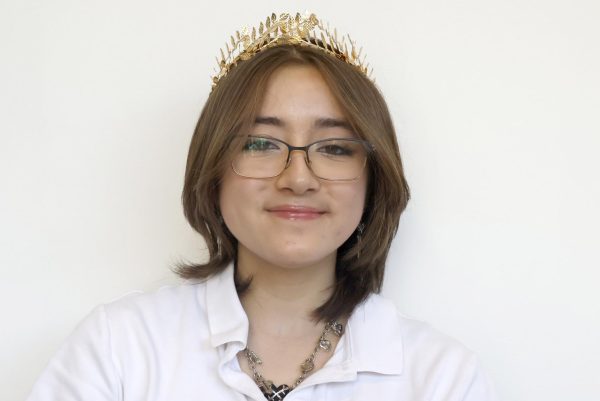
Archer’s robotics team, The Muses, has spent the school year preparing a robot (named Clementine) to participate in annual robotics competitions. The most recent and largest tournament of the year, the InterLeague Tournament, took place Feb. 15 at Notre Dame High School. Five members — Yuri Song, Catalina Good, Max Speck, Saige Queensborough — of The Muses were able to attend, as well as mentors Mike Carter and L Retterer.
Even though The Muses did not advance further, they did end up receiving second place in the Sustain Award for their sustainable practices.
This competition decided which teams from the local Los Angeles leagues — including League D — the league The Muses belong to, would advance to the regional competition or Wildcard competition. The Wildcard competition is for the second-tier teams of the InterLeague Tournament that gives them a chance to play in regionals.
“It’s almost like an F1 race — between laps they have to fix things, change out tires, repair things and such,” Carter said. “They’ve also been working on a presentation for the judges … who look over what they’ve done and will ask them fairly detailed questions about how they created their robot.”
As the robotics mentor, Carter had been helping The Muses create their robot and guiding them during the process. The robot was designed to pick up and throw balls, which was the mission for this year’s competition. Each competition season has a different mission. Carter said the creation of the robot warranted quite a few challenges for the team since members were often busy and could not gather to work on it. However, he has also observed improvement as a group.
“What has been impressive is seeing how the students have grown their skills this year,” Carter said, “and how new students are stepping up in different areas … I think that they have grown technically in those skills.”
While they prepped for the competition, one of the team leaders, junior Catalina Good, helped to direct the team. She has been on the team since her sophomore year and became co-captain alongside senior Lucy Kaplan this year. Good said there were a few problems with the robot in the days near the competition, but the team was trying their best to fix any issues.
“Before, it’s been to work on the robot a lot during the minutes before competition,” Good said. “I’m mainly focusing on getting the robot to actually be able to run first.”
For The Muses, the competition lasted from about 7 a.m to 3:30 p.m, providing a long stretch of time for interaction with other teams and judges. Carter said the competitions are not only a place for the team to showcase their skills, but also a way to learn more from each other and from other teams.
“The more positive that we can be together and support each other, the better we will do the next round,” Carter said. “It’s, in many ways, more of a sort of social-emotional growth challenge than a technical challenge.”
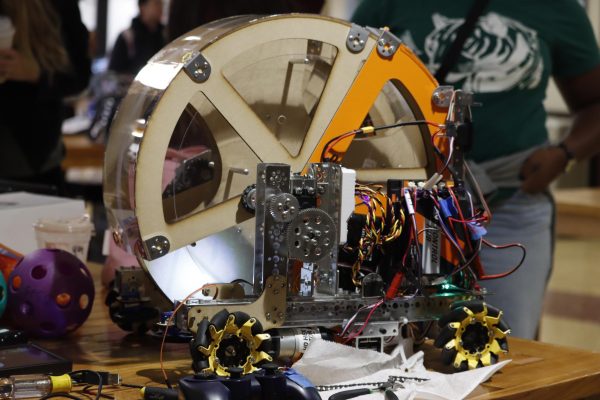
Between the official matches, several judges surveyed the teams and asked questions about their robots to evaluate them. One judge, David M., who declined to share his last name, said his role as a judge was less related to competitive play and more focused on the team and how the robot was built.
“There’s a lot of innovative thinking. There’s a lot of creative thinking,” David M. said. “A lot of well-thought-through designs and stuff like that.”
Out of many participating schools, Compton High School was one that had several teams competing from the same school. Faculty member Leonard Preston, who was coaching one of the Compton teams, said his team faced quite a bit of struggle when prepping for this competition. Similar to The Muses, time management was a challenge.
“We started off really struggling,” Preston said. “We had some robots that didn’t really work … We had a small team, we had some that didn’t show up.”
The Muses also faced an extra obstacle preparing for the competition. In previous years, the team was able to build off of previous designs; however, this year, they were starting from scratch.
“We’ve had a wide range of experiences with the competitions,” Carter said. “But every year, it’s a different challenge, and it’s a different experience.”
The team has been prepping a surprise later this spring for students who are not currently on the team to experience what it’s like to work with robots Carter said, and to provide them a space to learn more about robotics at Archer.
David M. said that after judging for a year, he noticed how the teams grow year to year. From seventh or eighth grade to high school, he saw lots of improvement, especially involving teamwork.
“Even just one season, seeing them come together and figure things out, seeing them go to competition in the ‘Aha’ moments, this is what it’s all about,” David M. said. “To me, it’s a great thing to see that.”
During the tournament, the team was able to accomplish much more than just competing. They met other teams, learned from new people and grew together as a team.
“For me, the biggest success is for them to be having fun and working well together,” Carter said. “Because it’s not about having the best robot, but having the best experience.”