Mexico, Malaysia, Australia and France. Student filmmakers from all of these countries were featured in the 13 films chosen to be premiered in Archer’s 15th annual Film Festival. On April 17, high school directors from across Los Angeles joined Archer students, faculty and families at the Pacific Design Center to celebrate their achievements in filmmaking.
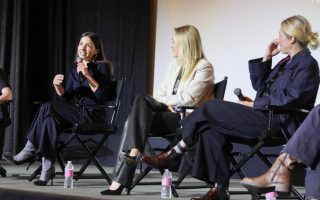
Before the films were screened, attendees heard from three women in the entertainment industry: President of the Academy of Motion Picture Arts and Sciences Lynette Howell Taylor, Academy Award-winning producer of “One Battle After Another” Sara Murphy and Archer alum and writer and director of “Idiotka” Nastasya Popov (’13). All three panelists discussed their work in entertainment as women behind the camera. Howell Taylor gave advice to the crowd about the importance of creating your own power and finding ways to play to your strengths when collaborating with others. Popov said in her experience writing her first feature film, she realized the importance of taking initiative when beginning new projects and not waiting for permission from someone else. Members of the film festival were in charge of organizing the entire event, from inviting the aforementioned panelists to selecting which films were screened to promoting the event.
Junior Bridgett Levy was both a member of the film festival and had her own film chosen for screening. She said being able to both create and select the student art featured was an amazing experience.
“I was on the programming committee, which was basically the preliminary committee that would look over all of the submissions,” Levy said. “We received over 330 to start with, and then it was broken down into different groups, and we all watched a selection of them.”
Only 13 of the 330 submissions were chosen, meaning applicants had around a 4% chance to be selected. Each member of the committee looked for different qualities and aspects in the films, but Levy said watching so many submissions was especially exciting.
“It was really amazing because I got to see films from all over the world. There was one in my first round that was from Croatia,” Levy said. “It was really amazing to get to see high schoolers from all over and see what creative voices they had.”
Films from local Los Angeles student were also featured, including Windward School seniors Aidan Rutman and Eli Mayer. Rutman wrote and directed the short film “Kinesthesia” with support from Mayer as a production designer. The idea for the film came from their final class assignment a year earlier.
“The film stemmed from an idea that I had a really, really long time ago, and I spent a lot of time drafting different versions of the script, and then ultimately settled on the final version,” Rutman said. “The rest of the pre-production and production process was really, really fast compared to that earlier brainstorming timeline. We essentially took that script and Eli helped me detail out exactly all of the things that we wanted to buy and source and fundraise for and figure out exactly what we needed to do to get to bring the vision to life.”
After reading Rutman’s script, Mayer’s role was to find all of the props and tools they would use when shooting the film.
“What I did was I looked up where are there prop houses in LA that could be — that I could source some items from. And I found this one in the middle of West Hollywood, and it was this woman — who I forget her name — but she basically owned this hoarding house of costumes and fake weapons, and it was really awesome,” Mayer said. “So I went in and I scouted it out and I was like, ‘So what do you have here?’ And I sort of looked around for items that we could potentially use and I sent a bunch of pictures to Aiden. And then I came back a second time and got everything we needed.”
Following the preparation, Rutman said it took two days to film and around three months to edit. Both Rutman and Mayer said they were excited to see the film on a bigger screen after watching it so many times on only their laptops.
“It’s always great to see it on a big screen like this because you really get to feel all of the things that you put into it on a much larger scale than you would seeing it coming out of your computer,” Rutman said. “My film teacher was talking to me about this. He was like, ‘You should really take advantage of this opportunity because, in the state of cinema today where theaters are dying, it’s really nice to be able to see your project on a big screen.'”