


In 1930, over 10 million African elephants and 100 thousand Asian elephants roamed the earth. In 2025, there are less than 50,000 living Asian elephants and 415,000 African elephants, according to the World Wildlife Fund and National Geographic. The steep decline of elephants is due to habitat loss, climate change and poaching.
Many large organizations, such as the WWF and the Elephant Crisis Fund, help raise money for projects to help elephants. There are also much smaller and local organizations and sanctuaries that have a big part in helping these creatures. One of these sanctuaries is the Reteti elephant sanctuary.
Ridhima Solanki has been working at the WWF for three years and works in conservation and forestry. She has her bachelor’s degree in zoology, botany and chemistry and her doctorate in forestry. She is based in India and focuses primarily on tigers and Asian elephants. She said the elephant population is declining because of habitat loss.
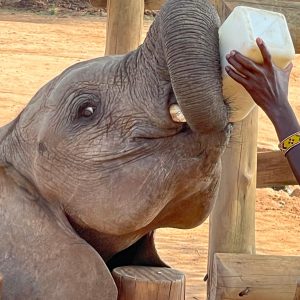
“For elephants, movement is very much required. For a large distance, it’s transboundary as well. So from Myanmar, if the elephants are coming in the northeast India, Bhutan and Nepal, all these borders were supposed to be merged for elephant movement, and that is where we are losing the land because of the roads, railways and townships that are coming in,” Solanki said. “They are losing their habitat. People are staying in that same area, and the conflicts are increasing because of that.”
The main reason why the elephants are vital to the ecosystem is because they are a keystone species, Solanki said. A keystone species is an animal that will uproot the habitat if removed, according to National Geographic. Solanki said elephants moving throughout the day creates healthy grasslands.
“The elephants keep on moving for a really long distance and that is important because they are eating something in one place and then digesting it in their stomach and then dropping their dung is in some other place, so they kind of digest and pollinate, spreading the seeds to far off places. That is an amazing thing,” Solanki said. “That’s their role, moving the seeds far off places, and keeping the forest intact.”
About the Reteti elephant sanctuary
Reteti is Africa’s first elephant sanctuary that is community owned, and it is located in Namunyak Wildlife Conservancy in Samburu County of Northern Kenya. It was opened Aug. 20, 2016, by Samburu County Governor H.E Moses Lenolkulal and was created to rescue and release abandoned or orphaned elephant calves. The elephants are cared for and nurtured by the Samburu community.
Elephant calves are often abandoned or orphaned by “poaching, man made wells, drought, human-wildlife conflict and natural mortality,” according to the Reteti sanctuary. A Samburu warrior will alert Reteti if they see an elephant calf in need of help, and Reteti will bring the elephant in to be cared for. Their goal is not to keep these elephants in captivity for their whole lives, but to release them into the nearby wild herds when they are ready.
“[The rescue-to-release] initiative is part of a community-driven conservation movement in Northern Kenya, which is helping grow new economies, transform lives and conserve natural resources,” a spokesperson for Reteti wrote in an email. “The sanctuary was established in response to local community demands, recognizing wildlife conservation as a means to improve livelihoods.”
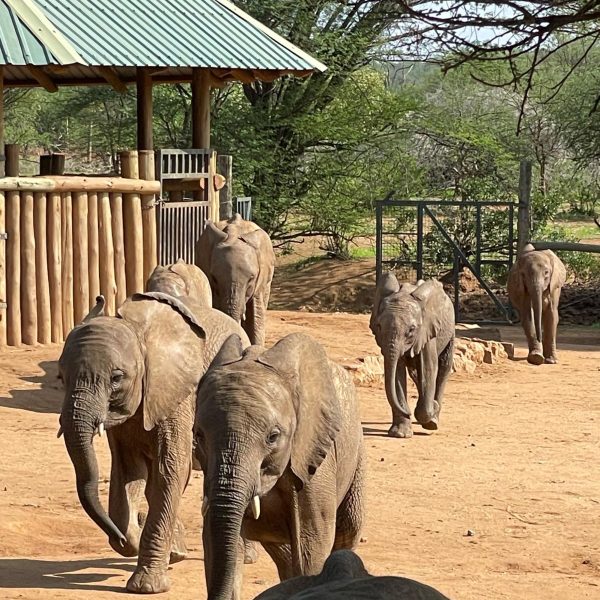
The staff and keepers that care for the elephants are members of the Samburu community. There are no outside volunteers allowed, but people can support the sanctuary through donations.
“The orphans are rescued to be rewilded — and their rehabilitation prepares them to become free-roaming elephants in the wilderness once again,” the spokesperson wrote.“Therefore, their direct interaction with humans is limited to keepers and staff.”
The keepers are trained in elephant care, rehabilitation and release. For safety protocols, keepers have to remain aware that elephants are wild animals, even though they have a bond with the elephants. Reteti also provides opportunities for professional development and growth within their staff.
“Reteti keepers are consistently learning from their experiences and other keepers. Additionally, they receive extensive training upon joining Reteti and carry with them a plethora of knowledge just in being Samburu and understanding the land, animals and contexts that other peoples may not know,” the spokesperson wrote. “We also partner with organizations at times, such as Save the Elephants, during the release preparations in June 2024 to ensure our operations and technology can provide us with what we need as well as other veterinary teams from various zoos around the world.”
To monitor the health and behavior of the elephants, each keeper cares for a specific elephant. This helps keepers immediately notice if there is something wrong. There is also a veterinary team that works to make sure that the rescue elephants are happy and healthy.
“The sanctuary provides individualized care to elephants suffering from past trauma, helping them recover emotionally and physically,” the spokesperson wrote. “This may include spending night and day around the clock with a recently orphaned elephant, ensuring that even if they’re behavior is erratic or scared, a keeper is with them 24/7 to show them that we won’t abandon them and they can trust us.”
Funding needs
Reteti offers many options on what people can do to help their conservatory. This includes making one-time donations or recurring donations, adopting an elephant, gifting a bottle of milk or starting a fundraiser. They said it is very important to be able to keep their sanctuary alive because it takes a lot of time and money to care for the elephants.
Junior Sasha Poole is the leader of Archer’s animal rights club. She said it is crucial for people to support sanctuaries and foundations like Reteti.
“Donating is extremely important because these organizations and sanctuaries use our money for all different types of things, whether that’s buying food for the animals that they already have or buying supplies to be able to rescue more animals,” she said. “It covers a variety of different costs that are very important for them to sustain themselves, as well as covering medical bills that are, of course, very important to any injured animals they may have.”
Some people hesitate to donate to sanctuaries because they are skeptical of what their donation is being used for, Poole said.
“I think you should do your research. First of all, make sure that the organization is legit because there are people who try to create fake organizations and then use your money for other purposes,” Poole said. “So, do your research. If you’re unsure, just you don’t have to donate a lot. Anything can help.”
Next steps
One of the WWF’s main missions is to increase good quality habitats for elephants, Solanki said.
“Our major investment when it comes to elephant conservation is basically to increase the good quality habitat and connectivity, and definitely reducing the human wildlife conflict, because that is also in certain pockets. It’s increasing a lot. [We are implementing] technology usage in the railways to reduce the conflict,” Solanki said. “So our goal is basically to reduce the human wildlife conflict, elephant conflict, and to increase the good quality habitat for elephants.”
Solanki said volunteers can start by not supporting the safaris where you get to ride an elephant because it is animal abuse. She said people need to change the way they view elephants.
“A common man can support first by not posting stupid pictures, like taking selfies while the elephant is charging at them and then talking about ‘Oh my god, it was so exciting.’ No, it’s not exciting. You are causing that particular animal a lot of stress,” Solanki said. “A second thing is not demanding nonsense things like ivory jewelry or flaunting those kinds of things in public. It can send the wrong message.”
When asked what makes her want to work for the WWF and in animal conservation, Solanki said that she loves animals.
“I think for me, having them around is an amazing feeling. It’s just that they are such wonderful animals, even if they make you run for 20 kilometers in heat, at the end of the day, the calmness that they bring to you is something that makes me want to want to protect them for as long as possible,” Solanki said. “They are so wonderful, and elephants are the best thing humans can get.







Bethany mayer • May 7, 2025 at 12:19 pm
What an eye-opening article ; thank you for highlighting the good work being done by conservationists around the world and local handlers!
Izzie Erickson • May 5, 2025 at 8:59 pm
This is amazing Gray!! Loved learning more about these elephants.
Gray Gregory • May 6, 2025 at 11:34 am
Thank you!