


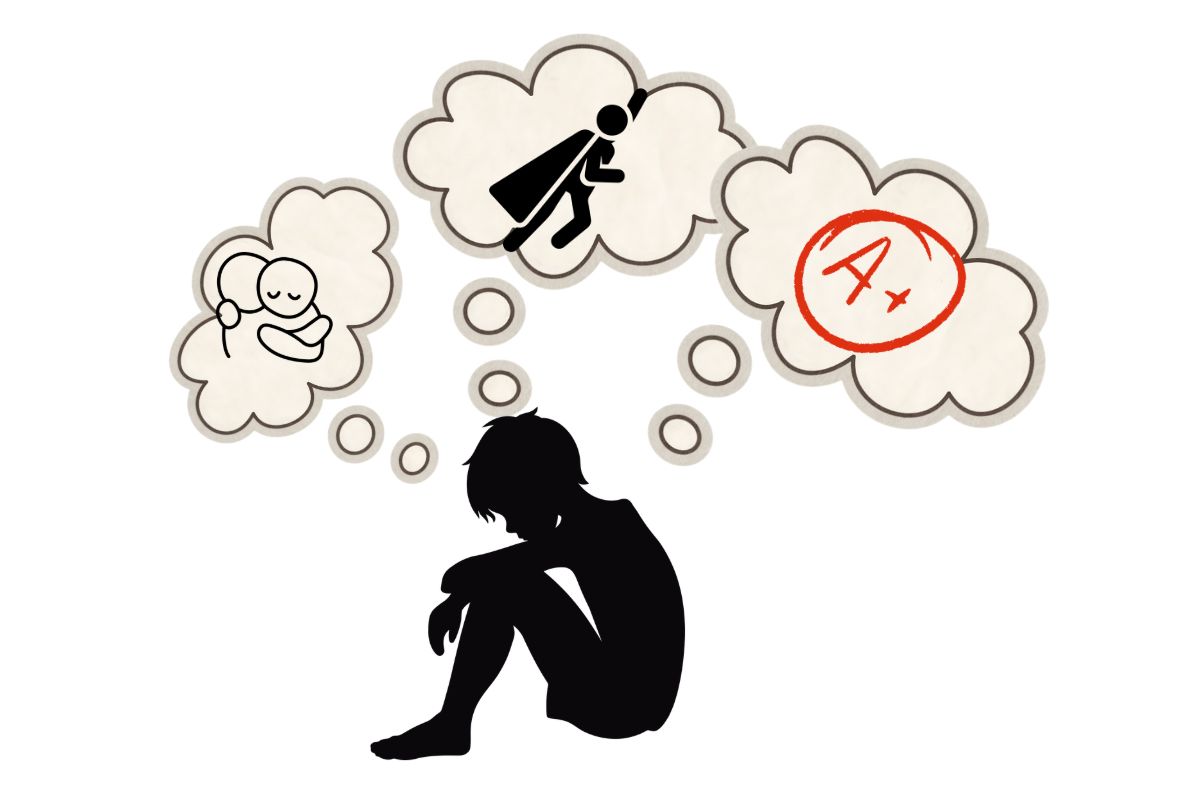
According to Cleveland Clinic, roughly 200 million people globally struggle with a rare mental disorder that causes addictive, intense daydreams — equating to roughly 2% of the population. For those with ADHD, autism or OCD, among other neurodivergent conditions, these rates can rise to 20% or even 25%.
This condition is called maladaptive daydreaming. The name was coined in 2002 by Dr. Eli Somer, an Israeli professor of clinical psychology at the University of Haifa. Maladaptive daydreaming is characterized by vivid, sometimes uncontrollable daydreams that often last hours and can impact social, mental and physical health by inhibiting relationships. Participants may not want to meet up with others or get work done, instead choosing to daydream.
What is maladaptive daydreaming?
The definition of maladaptive daydreaming, according to Somer, is “an excessive form of unwanted daydreaming that produces a rewarding experience based on a created fantasy of a parallel reality associated with a profound sense of presence.” The daydreams are compulsive, almost mirroring an addiction. Some people spend more than half of their day daydreaming. Often, there are complex stories and repeating characters, with common themes of romance, power and control. The main character of these daydreams is usually an enhanced version of the daydreamer themselves.
Human rights attorney and researcher Jayne Bigelsen studies maladaptive daydreaming, and she previously suffered from the condition herself. She now advocates for more recognition and research around the condition. She said a key difference between maladaptive daydreaming and regular daydreaming is the need daydreamers feel to go back.
“First, you have to look at normal daydreaming. It’s usually more about brief daydreams of something you want to happen. ‘I won the lottery, I’m kissing my crush, I’m meeting this favorite celebrity.’ But they’re brief,” Bigelsen said. “If someone interrupts you, you’re like, ‘Okay.’ You go on with your day. With maladaptive daydreaming, when someone interrupts you, you’re often annoyed and you feel this compulsive need to go back to it over and over and over again. So I think the compulsive nature and the interference of real life is what makes it maladaptive.”
Bigelsen emphasized that the line between vivid daydreaming and maladaptive daydreaming can be blurred. Sometimes people have their own fantasy worlds, but they are not compulsive, and they do not take over their lives. Bigelsen said this is the essential difference between the two.
“There are some people who have these rich fantasy worlds where it’s not maladaptive, right? It’s different from normal daydreaming because there’s characters and there’s plots, and they’re doing it all the time. But they use it in a way where it doesn’t interfere with their life, and it’s not compulsive,” Bigelsen said. “You can do those things and have immersive daydreaming, and it would be okay. You need the compulsiveness and the interference with real life to make it maladaptive.”
Maladaptive daydreaming tends to develop alongside other mental health conditions, such as PTSD or anxiety, as a form of escapism from daily life. Bigelsen described it as a gateway to amplifying already existing mental health conditions.
“Maladaptive daydreaming doesn’t usually come on its own. It’s often with — the word is comorbidities, which means there’s other mental health conditions that go along with it. They feed off each other,” Bigelsen said. “So let’s say depression or anxiety is your other condition. The more you daydream, the more likely your depression and anxiety in real life is going to be worse, right? Because if you’re spending all that time daydreaming, you’re not focusing on the things you need to focus on in real life. So that’s going to get you behind academically or at work. That’s going to make it harder to interact with your peers. Often people keep it secret … it’s going to make them feel different from their peers. So it tends to feed the other mental health conditions.”
Why do psychologists and therapists mislabel it?
Jane Kemp is a licensed clinical psychologist and therapist in Chicago, Illinois. She believes most people do not know about maladaptive daydreaming due to a lack of research around the diagnosis, saying we need a more diverse population to study.
“We are probably missing a more robust population in which to study it. I feel like the cases or kind of examples that even I find in my research doing lit reviews are very limited,” Kemp said. “We probably need ideal circumstances, a very well-run trial with people from all kinds of different backgrounds — a diverse sample — so we can really thoroughly study all the different features of it.”
Besides a research gap in maladaptive daydreaming and other mental health conditions, Kemp said scientists are missing a true diagnostic process. A clear process for determining whether someone has it is essential to providing proper care.

“Formally, a diagnosis and having an area that directly targets it would also be incredibly important in terms of appropriate assessment,” Kemp said. “Assessment really directs treatment and is so essential for treatment planning that if we can have more validated assessment measures and a diagnosis, it’s going to increase access to care for a lot of folks.”
Another problem those who study or suffer from maladaptive daydreaming face is the lack of public knowledge regarding the condition. The diagnosis is not in the Diagnostic and Statistical Manual of Mental Disorders. This means most therapists and licensed physicians won’t know what the diagnosis is, since the DSM is where they learn about most of the diagnosable conditions.
Bigelsen said many people have emailed her saying they either have — or believe they may have — maladaptive daydreaming, but when they try to talk about it, even their therapists often don’t recognize the term or acknowledge the condition.
“It’s really hard because I get people who email me from around the world asking for people who specialize in this. And I’m like, ‘Forget someone who specializes in it, you want someone who even has heard of it.'” Bigelsen said. “So I keep hearing stories of people going to doctors and they have no idea what they’re talking about. And that can be very disheartening and damaging to someone.”
In the audio excerpt below, Bigelsen explains how, because the term was coined more recently than other disorders, people struggle to recognize maladaptive daydreaming.
How can those affected get help?
Bigelsen recommended that those suffering from maladaptive daydreaming should try to involve themselves in hobbies and other activities they enjoy.
“It’s hard to be daydreaming when you’re engaged in something you really love,” Bigelsen said. “I always tell people, ‘Don’t focus on just not daydreaming at all. That’s not going to work. Instead, spend your time in real life. So if you spent an hour in real life today, spend an hour-and-a-half tomorrow.'”
Kemp said that she thinks maladaptive daydreaming is a lifelong fight, but we can help those with the condition manage their symptoms and live a normal life.
“It is a management thing more so than a resolution thing. But I do feel like you can get it down to a very manageable level with enough work, and I think appropriate intervention and a lot of love,” Kemp said. “I think it’s a labor of love, whether it’s by a therapist or by family members and friends.”
Not all story-like daydreams are harmful, however. Bigelsen noted that some people experience vivid, immersive daydreams similar to maladaptive daydreaming, but are able to channel them productively — for example, into creative fields like filmmaking.
“What’s really interesting is, I’m now starting to talk to actually some television writers, who did very similar things that I did as a child, but for them it’s not maladaptive because they write it down and make art out of it,” Bigelsen said. “So daydreaming in that fashion is not what makes it maladaptive. It’s whether you can use it in a productive fashion versus whether it starts to overtake your life.”
As for helping someone with the condition, Kemp said people need to normalize the diagnosis and its symptoms. Since many sufferers of maladaptive daydreaming tend to keep their daydreams a secret, it leads to feelings of shame. Those helping them recover have to remove that shame, Kemp said.
“It’s not something that means someone is lazy or there’s something inherently wrong with the person. It’s oftentimes a skill or an adaptation that was made in order to meet an unmet need,” Kemp said. “Really get curious about why is this person engaging with it. ‘What is the content? What might I be able to offer them that’s not being met right now?’ I think reducing the shame around it does a lot of great work too.”









Jean Traxler • May 8, 2026 at 4:12 am
Fascinating article!! In this complicated world of ours, it would be easy for, especially young people, to escape to a fantastical place. But I would bet that even older folks do the same.
Violet • May 5, 2026 at 5:19 pm
AMAZING!!!! THIS ARTICLE IS THE BESTTTTTTT! Also, the photo that you took of me is incredible as always 😀