



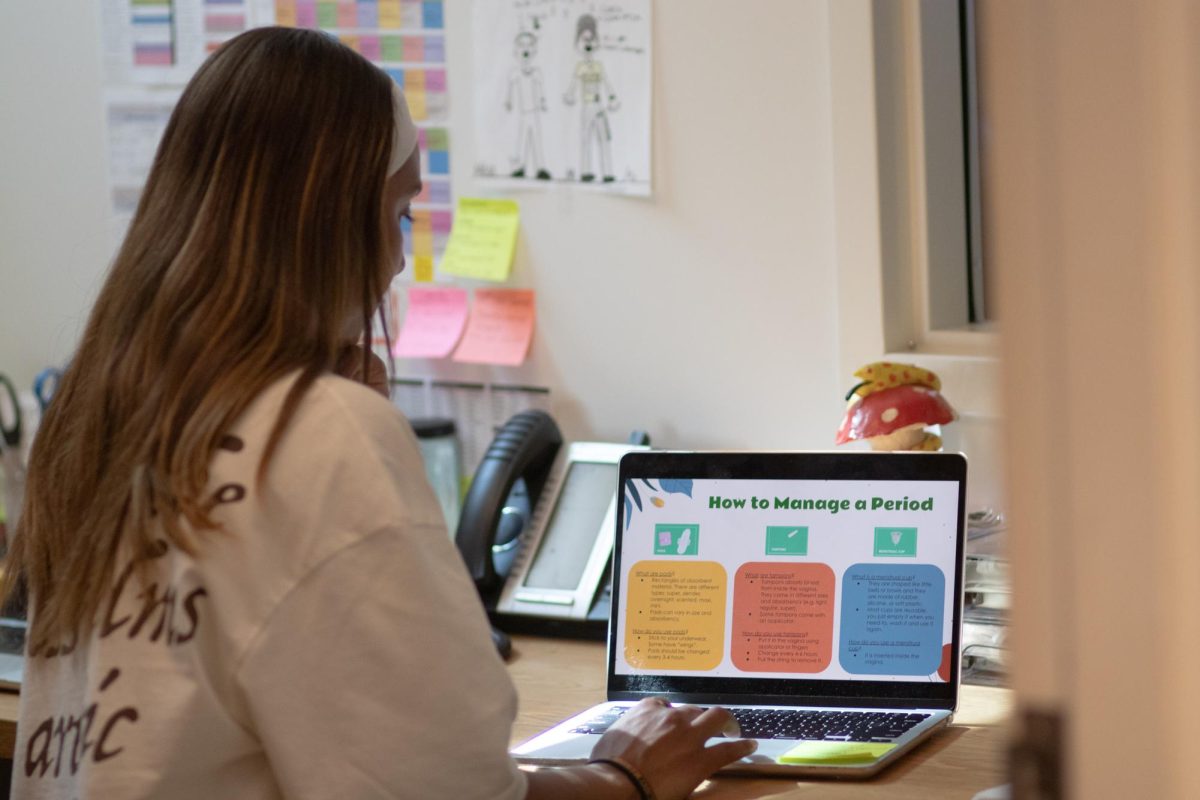
When fitness and wellness teacher Natalie Coleman first got her period, she had no idea what was happening to her body. She said stigma prevented in-depth conversations about menstruation across her different social environments, even within her family.
“I broke down and asked my mom, ‘What’s going on, what’s happening to me?’ And then she had that ‘big girl talk’ with me, and that was it,” Coleman said. “Nothing about our bodies, nothing about awareness, mental and emotional health or anything like that.”
Coleman’s experience is not uncommon among adolescents today. Experts said that although stigma around menstruation has decreased and some legal guidelines for menstrual education have been established, gaps in comprehensive information still remain. However, many advocates, including both adults and students, are working to address these educational deficiencies through their platforms.
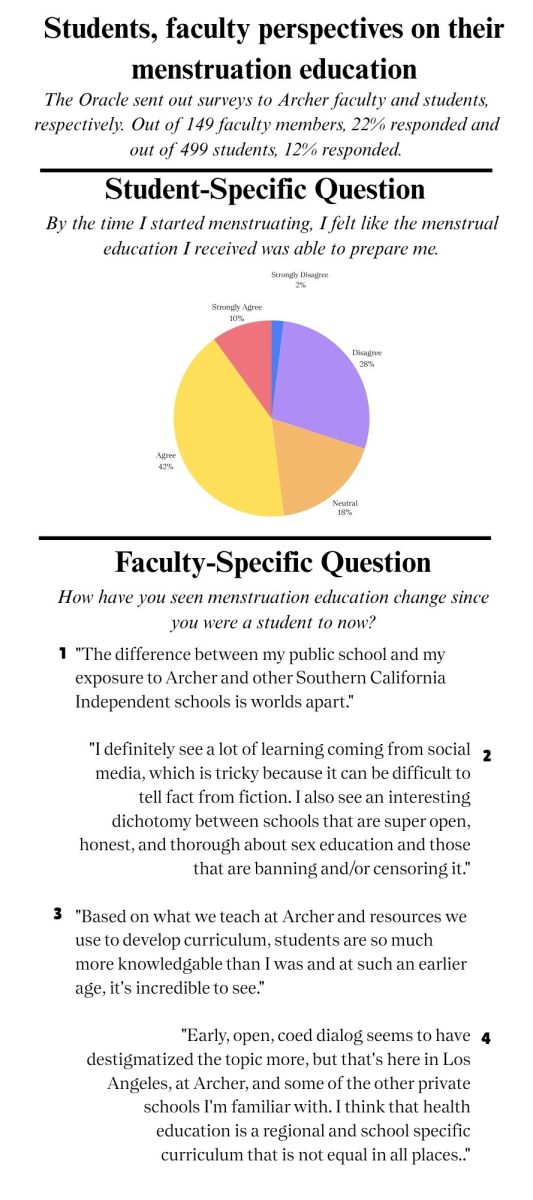
According to two surveys The Oracle sent out to Archer faculty and students regarding their own experiences with menstruation education, two-thirds of faculty wished they had learned more about menstruation growing up. Out of 60 student respondents in grades six-12, 52% want more menstrual education now.
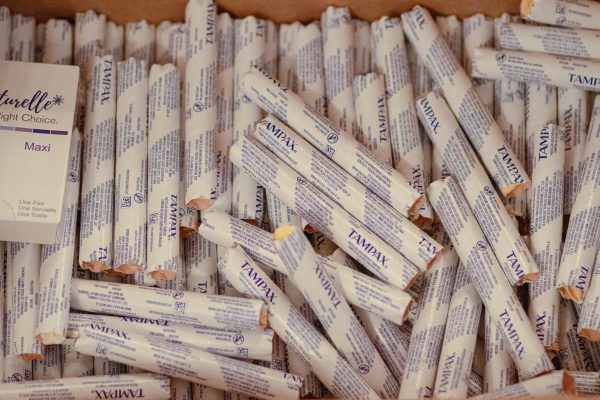
According to the National Library of Medicine, as of 2025, only 13 out of 50 states have educational standards regarding menstruation. California is one state that has adopted legal requirements for menstrual education.
The California Healthy Youth Act (CHYA) is a state law that took effect in 2016 and requires thorough sexual education for public school students in grades seven-12. California’s Bill 2229, also called the “Know Your Period Act,” is an extension of CHYA that was signed into law in 2024. It requires a comprehensive level of menstrual education in California public schools.
Beth Rendeiro is the co-founder of More Than Sex-Ed, a Los Angeles-based nonprofit that has provided sexual health education curricula to over 60 schools across Los Angeles. Rendeiro said even with the numerous mandates for in-depth sexual education, schools often skim through certain parts of the required curriculum. As an example, Rendeiro referred to the California State Auditor’s assessment of CHYA incorporation in several public school districts.
“Within the last 18 months,” Rendeiro said, “some state group went into four different school systems and looked at what curriculum was being used, how the lessons were being taught, what was being left out that was required, what was being glossed over that was required, and found that all four school systems were not implementing CHYA fully.”
Last school year, “Sexplained” podcast host Beyla Patil (‘27) conducted a research project on California private high schools to see if they were aware of Bill 2229 and if they were planning on implementing similar requirements in their health curriculum.
Of the 28 responses from staff members on behalf of schools, 50% were aware of Bill 2229. Of the 24 schools whose health curricula cover women’s health, 28.6% did not cover menstruation. Further investigation made Patil realize there is a loophole that allows even public schools to overlook over these topics, despite legal guidelines.
“Public schools are required to teach menstrual health and teach about the whole reproductive cycle, but a lot of the time it’s just a check mark,” Patil said. “If they do one lecture, one teaching about your period — or about anything — they can just check it off … It’s hard to know if — even though Bill 2229 got passed for public schools — if the schools are actually incorporating it and being consistent.”
Despite these inconsistencies, some schools, such as Archer, do ensure that students receive comprehensive education about a wide range of menstrual topics. These span menarche, which is the first menstrual period one experiences, through menopause, which is the natural cessation of menstruation.
According to Coleman, Archer human development educators are able to provide this comprehensive health curriculum by using consistently updated information in their slideshow lessons and overall coursework.
“Subject matter within human development is constantly changing, so that means constant improvement needs to take place, updating old information, new information, new data versus old data,” Coleman said. “We want to stay current so we know that our students are getting the most current information.”
Dr. Cara Natterson is a pediatrician and the co-founder of Less Awkward, a puberty-focused health education platform, which includes the popular podcast, “This Is So Awkward.” Natterson has authored 10 books, including American Girl’s “The Care and Keeping of You” series — which many Archer student survey respondents highlighted as a resource that helped them feel prepared for menstruation.
“If kids cannot meet the math requirements that they have or meet the reading requirements that they have, the feeling is that there needs to be more time or more energy spent on those things,” Natterson said. “I’m biased, but … at the end of the day, I really do think the skills you learn in health and sex-ed are among the most important skills that you’re ever going to need for the rest of your life.”
In this audio clip, Natterson discusses the various levels of menstrual education teens receive in school.
Natterson said the COVID-19 pandemic had so severely disrupted academic instruction that many schools deprioritized sexual education, including menstrual education. Like Natterson, Rendeiro emphasized the negative impact the COVID-19 pandemic had on sexual education students were able to receive. Rendeiro also said it is important to educate people about menstrual health because of persistent misconceptions about menstruation.
“I have certainly heard, ‘Well, women aren’t fit for that job, because when they’re menstruating, they’re unpredictable, or they’re this or that,’ and I think that that is a gap — that we don’t address the misinformation adequately,” Rendeiro said. “We don’t call out the sexism that is connected to a natural, biological aspect of having a uterus.”
In spite of ongoing challenges, Natterson said society has made significant progress with destigmatizing menstruation, and she described the differences now versus when she was an adolescent.
“If you had told me when I was in ninth grade … that there would be open conversation about all these topics, no one in my generation would have believed it. It was so stigmatized. So we’ve done a really good job of moving from stigma to conversation,” Natterson said. “The problem is we still need good information … let’s have real conversations and give people real and helpful information.”
To fill existing gaps, many people are creating sexual education platforms, including podcasts and curricula companies. Patil took over the “Sexplained” podcast once the original host, Ella Dorfman (‘25), graduated. Patil said her main goal with the sexual health-focused podcast is to provide people with enough knowledge to be able to make well-informed decisions regarding their body.
“I mean, it’s literally half the population that goes through this,” Patil said,“so why not just have it in an open conversation where you can talk about it?”
Rendeiro’s goal with founding More Than Sex-Ed was to provide up-to-date information about both scientific and social aspects of reproductive topics, including menstruation. More Than Sex-Ed presents their curriculum in a formal classroom setting to ensure students receive the information they need.
“We all come from reproduction. There would be no humans without reproduction. It’s a fact of life, a fundamental of life, and I feel like it’s everyone’s right to have accurate information about how they got here and how they can continue the species if they choose to do so,” Rendeiro said. “I want people’s experiences to be fulfilling, enjoyable and well-informed.”
Through her books and the educational resources she provides, Natterson educates both children and adults about adolescent health and wellness by translating research into digestible and entertaining information.
“One thing that I have found to be true for every single family that I’ve ever encountered — and it doesn’t matter if it’s the kids or the parents or other trusted adults — everyone is hungry for really good information,” Natterson said. “True information, but also relatable and understandable information.”
Coleman believes that educating all students about menstruation and sexual health is incredibly impactful. She said providing adolescents with this information helps them understand different aspects of puberty for both themselves and their peers and empowers them to make informed decisions.
“They should know what’s going on with their bodies. Why is this happening? What are the hormones?” Coleman said. “Everyone’s puberty is different and what they’re experiencing. I think it’s important that they’re not scared of what’s happening with their bodies and they’re aware of what’s happening, why it’s happening, and that it’s a good thing that that’s happening.”
Natterson hopes that, one day, our society will be able to overcome the stigma and incorporate a comprehensive level of reproductive education for all students in public and private schools.
“This is not optional stuff. This is the stuff of life. This is what kids need in order to succeed socially, in order to take good care of their bodies, in order to master their emotions. How are we throwing this away?” Natterson said. “I feel really strongly that we got to figure out a way to pack it into the school day instead of keep sidelining it.”






Dan • Apr 25, 2026 at 12:48 pm
Thank you, Hollyn, for writing such an interesting and pertinent article about women’s menstruation cycle education. As a male, this part of the woman’s experience is an oft overlooked topic, but nonetheless important for us to know ab. I believe I speak for many guys in that ending the stigmatizing of a woman’s period becomes more meaningful to us as we grow together with the women we love in our lives. Relating to our immediate female friends and family members helps us see the wonderful emotional impact our sensitivity has on them, and can help us carry that positive effect to women in general.
Alice • Apr 22, 2026 at 3:41 pm
Hollyn, after reading your article, our hearts are filled with both pride and gratitude. You didn’t just write about an important topic—you approached it with insight, compassion, and courage, giving a voice to something that truly matters. This is not an easy subject, yet you handled it with clarity, sensitivity, and quiet strength.
We pray that God will continue to bless you with wisdom and discernment, and that through your writing, you will be a light and a blessing to many. May you keep growing, speaking truth with grace, and walking faithfully in the path He has prepared for you.
Mia • Apr 21, 2026 at 9:43 am
Thank you for this informative and enjoyable look at the state of menstrual education — what has improved, what deficiencies still remain, and the efforts of individuals to fill the gaps. Glad to learn that the Archer human development educators (and “Sexplained” student podcasters) are so attentive to providing high quality, up-to-date information to our community!
J • Apr 20, 2026 at 8:54 pm
Comprehensive sexual education does more than prepare teenagers for physical changes; it helps them understand their bodies and prepares them for adulthood.
A well-guided, informative curriculum is essential to support students’ spiritual, emotional, and physical well-being.