

Many people who have scrolled on social media or shuffled through a Spotify playlist has come across an artist they did not know. Instead of skipping the song or scrolling past the video, what if they listened and found their new favorite artist? According to Rolling Stone, the music industry is always changing, and those listening to new music and attending live shows are the future of it.
Keeping up with the changing music industry
To reach listeners, many labels use a service called playlisting. Playlisting is when labels pay to have an artist added to generated playlists by music streaming companies. Artists of all sizes can be playlisted, and more than 150,000 artists were playlisted for the first time on Spotify in 2020 and 2021. If a listener is shuffling their playlist and they come across a song they do not know, that is because of playlisting.
Although playlisting can boost a song, it creates a disconnect from the artist and their fans. Los Angeles-based singer-songwriter Nicole Han said she felt that same disconnect when first releasing music. Her first song, “aftertaste,” was released in 2021, but Han began rising in the music industry this year.
“The success of it was heavily influenced by playlisting,” Han said. “It’s kind of hard to tell how many real, true fans are listening to my music versus just, algorithmically, how many people just happen to get it on the radio or anything. So I feel the change happened this past year.”
The music industry is constantly evolving and changing, especially with the rise of AI music. TikTok dominates the music industry and music consumption, which leads to many artists creating music specifically to achieve TikTok virality. Han said she has tried her best to stay true to herself in the constantly changing musical landscape. She said this is echoed through her music, which she often produces and writes herself.
“I always feel like I’m trying to keep up with the trends, in a way, but not just writing music for a trend,” Han said. “I definitely stay away entirely from being like ‘I’m going to try and write a song that would do well on TikTok.’ That’s really never my goal.”
When faced with AI and the pressure to keep up with trends, artists often risk a loss of identity and are faced with the feeling of having to conform to social media archetypes. This is where fanbases come in. Having fans who constantly support artists and their music creates a connection that motivates artists to continue making music. Han said she has felt this within her fanbase, and she hopes to keep her sense of voice and showcase that through her music.
“I didn’t really notice the growth in fans until this past year,” Han said. “I hope my creativity develops and I can build my fanbase of amazing people and play more shows.”
Connection through TikTok and Instagram
Isolabella, a singer-songwriter from the U.K., started going live on TikTok singing both original songs and covers. Social media users found her music, and now she has over 7,000 followers on both Instagram and TikTok. Isolabella has gathered a fanbase, mainly made up of teenage girls, that she connects with over social media.
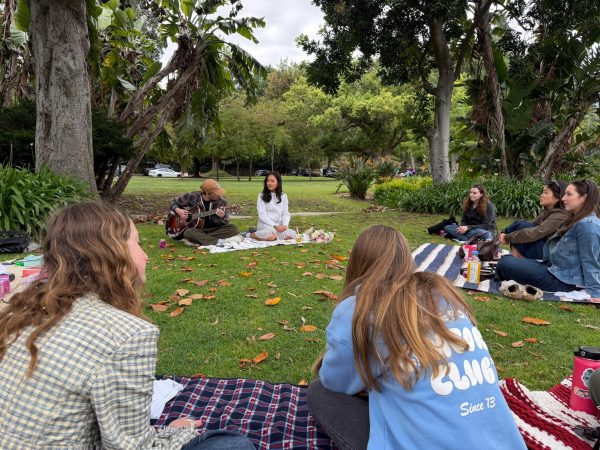
She started interacting with her fans via group chats they made. Now, she runs multiple group chats filled with fans from all over the world. Her fanbase has grown gradually over the past year, and she hosts Zoom concerts that anybody can join. Isolabella said it started as three fans, so it’s been amazing to see how it has evolved.
“They’re the softest but strongest people,” Isolabella said. “I don’t see it so much as a fanbase. It’s kind of just a community that we’ve built together, which I love.”
Another artist who shares this experience is Alexa Kate, a singer-songwriter from New York. Her fanbase has nicknamed themselves the “Lexies,” and created group chats to meet each other. In 2024, Kate released “to my younger self (Roses),” which has surpassed over 200,000 streams on Spotify. In celebration of the song’s release, Kate shared a music video, which included pictures and videos of her fans. She also did this for the release of her most recent song, “Forever.”
“The ‘to my younger self (Roses)’ video was the first time I had the idea to put everybody in the video, and I think people loved it so much,” Kate said. “By the time I did the ‘Forever’ video, there were so many new faces, and I was so excited to include them.”
Kate said that some of her best friends are people that she met through attending concerts and loving music. She said nothing else can create a bond like music, and she hopes her fans agree.
“My hope is that my music is something that makes people feel,” Kate said. “To me, people feel anything but, also, especially feel less alone.”
Marlborough student Ellie Hill, a 13-year-old from Los Angeles, met many of her best friends through attending concerts. She said she had never played any sports but was always into music. Growing up, she would hang out with her friends at school, but her friends would go home and hang out with other friends at sports practices. Hill said this made her feel left out, so she started making friends through her other hobbies, which included concerts.
“It opened a whole new world to me because I could hang out with some of my best friends and we had bonded over concerts,” Hill said. “Meeting these people has meant so much to me, and I just cannot be more thankful to concerts and the music industry.”
Building a fanbase
Through artists and fanbases, people get to build community with one another.
Avery Kotler, a singer-songwriter from New York, credits her success to her fanbase. She said she will always write songs, but getting to also share them with the world is special to her. She said two girls who met at one of her Zoom concerts ended up living a few blocks from each other and are now best friends.
“I think a lot of artists, when they’re starting out, don’t focus on that,” Kotler said. “They focus more on numbers. I have really low numbers but a cult following that I adore.”
Kotler identifies as a “fangirl.” She loves Taylor Swift and Archer alumna Gracie Abrams (’18), and said it has been fantastic to meet fans of hers who also love those artists. As a fan of so many artists, she loves to attend concerts, and she said it was such a special experience to have her own shows. Kotler is unsigned to a label and also works as a babysitter. She had her first show at the Mercury Lounge this past year and said it was really special to have people sing her lyrics back to her.
“Every artist that’s huge has that core community,” Kotler said. “I could write songs about myself all day, but no one cares. It’s how you make them feel.”
In the audio clip below, Avery Kotler talks about her feelings of sharing her music with fans and how that’s different from just making music for herself.