



-
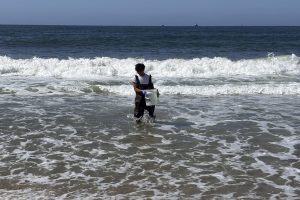
A child stands at the shore of Will Rogers Beach State Park, located in the Pacific Palisades, an area impacted by the Los Angeles Fires. Research reveals that many parts of the ocean were also impacted. However, there are still gaps in the available data, according to Heal The Bay’s Director of Science and Policy Kerry Nickols. “We learned that there actually are … no guidelines about recreational exposure to some of these chemicals in the ocean,” Nickols said. “One of the biggest problems is that people were like, ‘is it safe to swim?’… We had to say, ‘Well, we don’t know if it’s safe to swim because there are no public guidelines.’”
Photo credit: Hollyn Alpert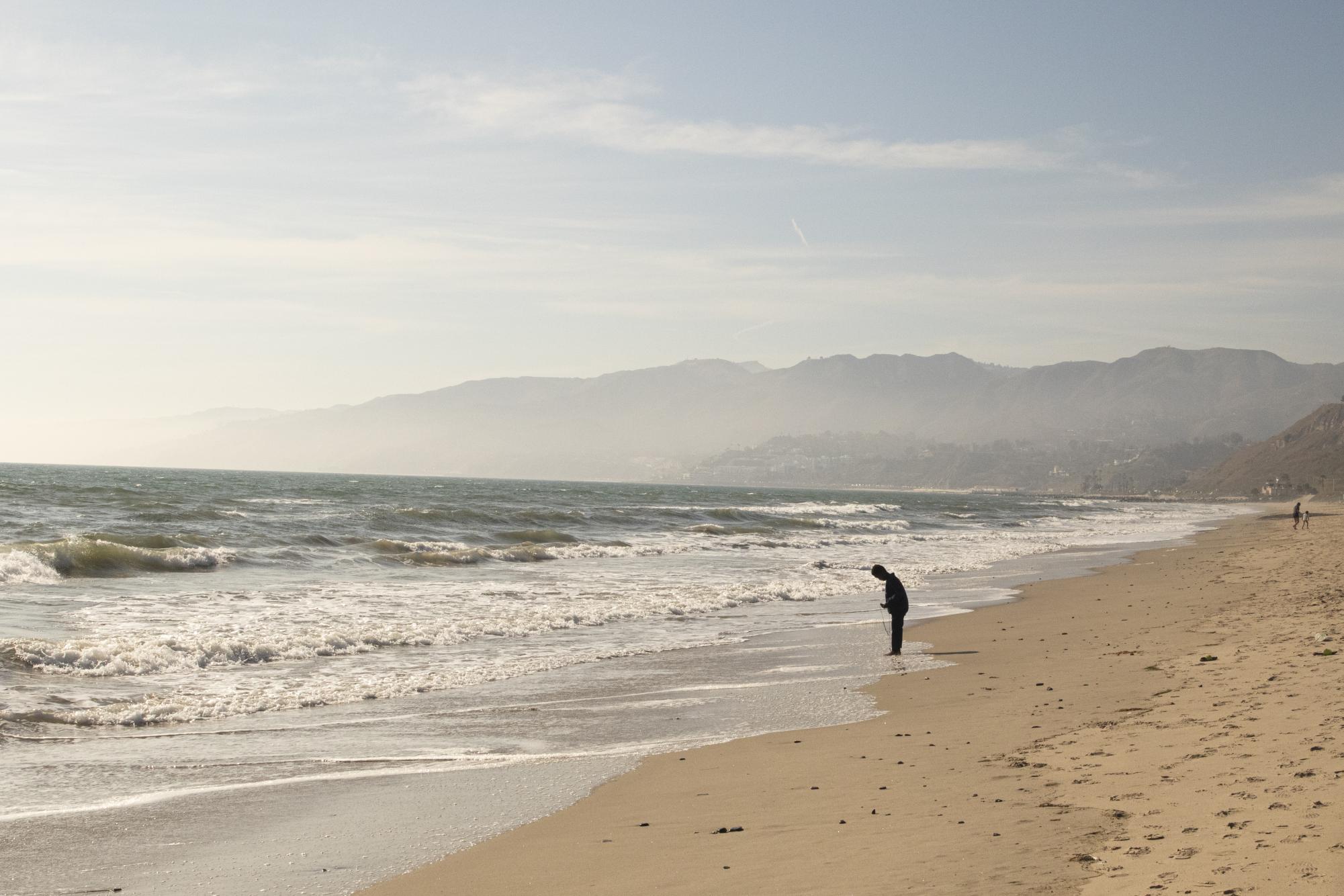
-
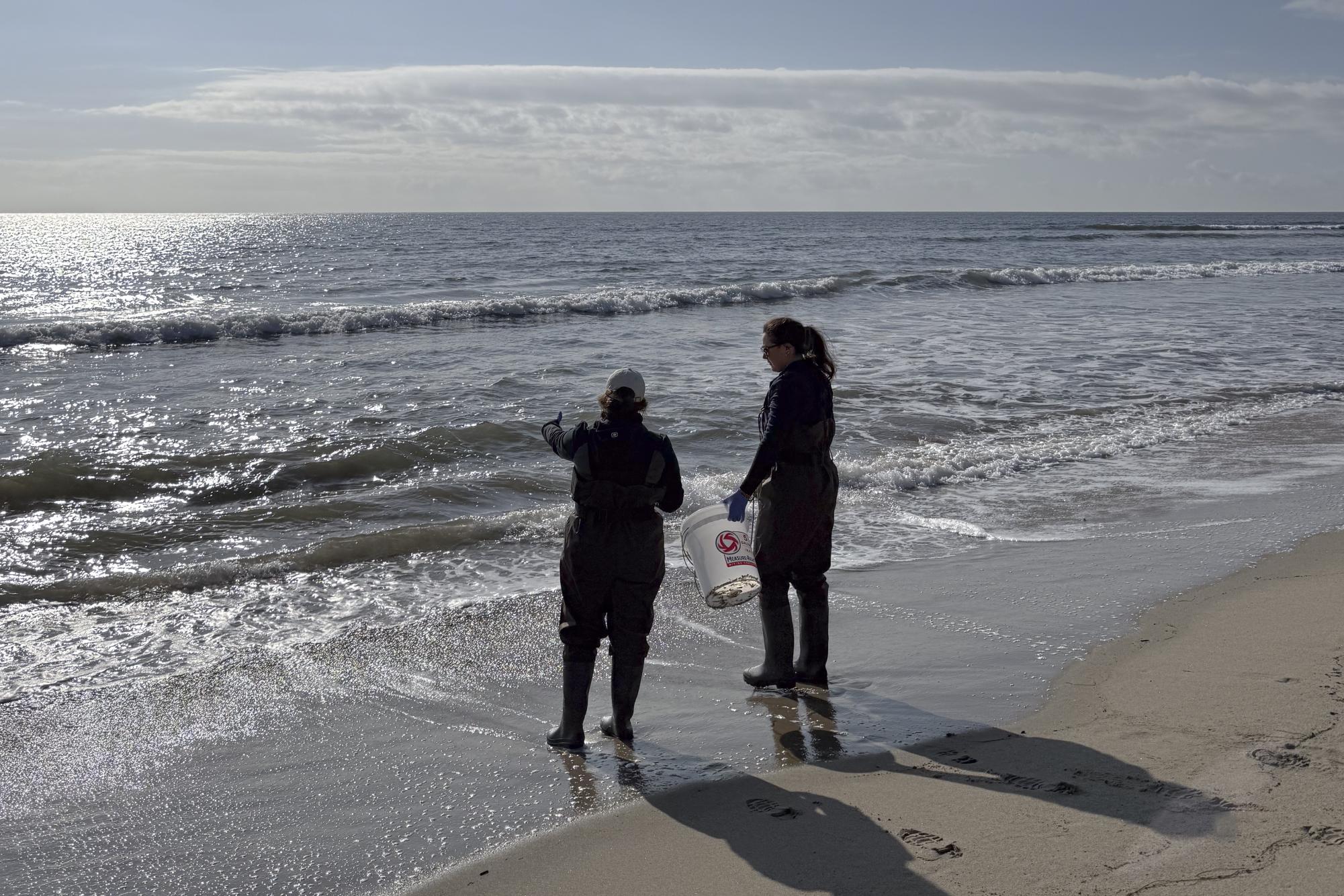
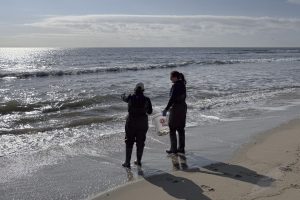
University of Southern California Assistant Professor of Marine and Environmental Biology Noelle Held and PhD Candidate for Ocean Science Mia Franks stand at the shore of the beach during their sample collection period. Franks and Held are both leaders of CLEAN Waters. CLEAN Waters collected seawater samples in different periods in February, June, August and October of 2025. CLEAN Waters used analyzed data to gather information about water quality after the Los Angeles Fires. (Photo Courtesy of Mia Franks)
-
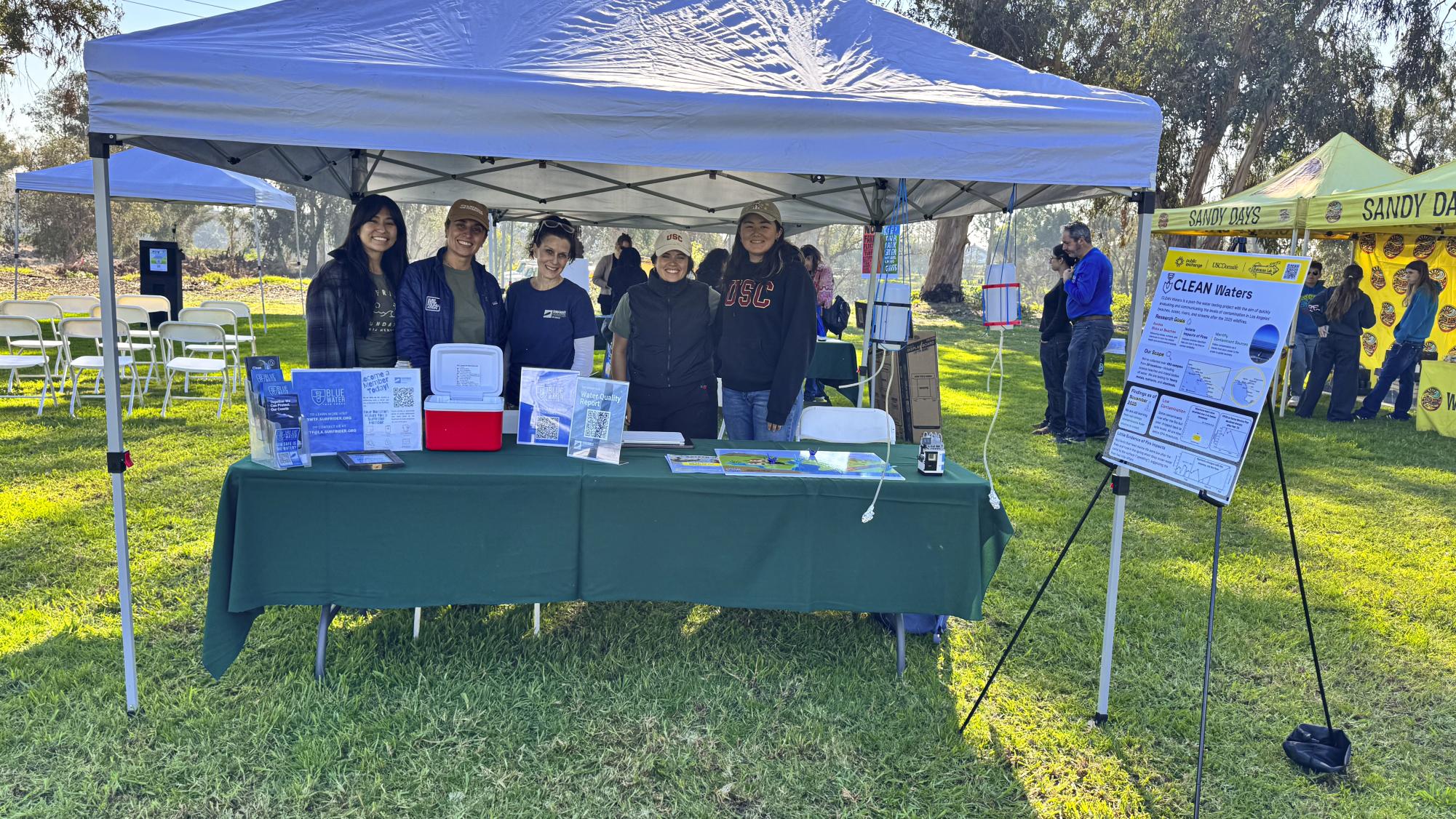
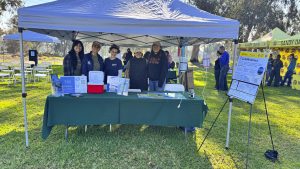
Surfrider Blue Water Task Force Coordinator Edith Leung, Surfrider LA Chapter Manager Eugenia Ermacora, Surfrider Volunteer Coordinator Audrey Gelb, Held and Franks stand at the CLEAN Waters booth at a CLEAN Sampling Event. CLEAN Waters made several connections with environmentalist organizations that have provided information use to CLEAN Waters, according to Franks. “These people have been sampling beaches and testing beaches for years, and so it’s really nice to have their support,” Franks said. “They have a lot of resources that we wouldn’t know about, and so they can tell us a lot more ways of how to do our research more efficiently.” (Photo Courtesy of Mia Franks)
-
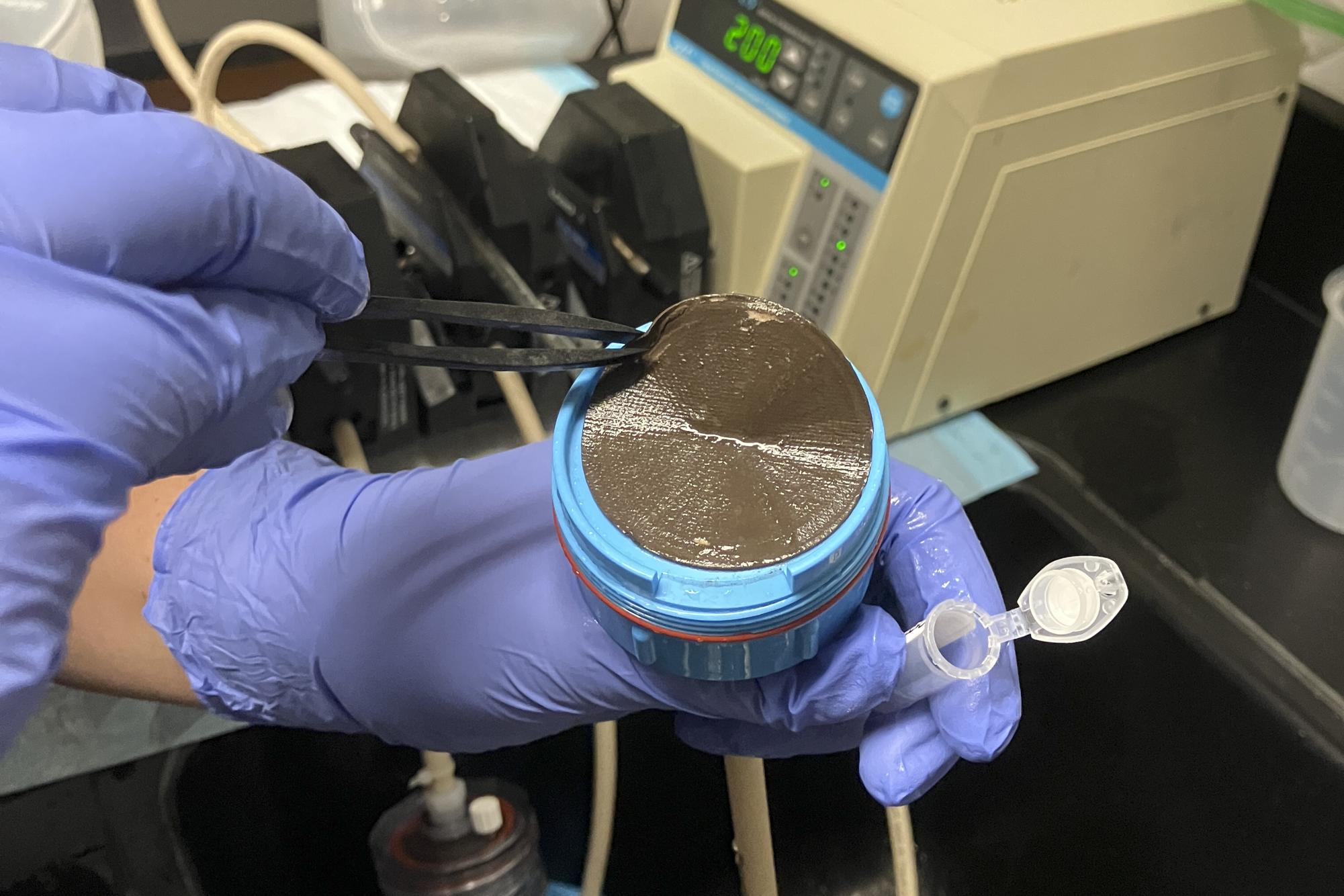
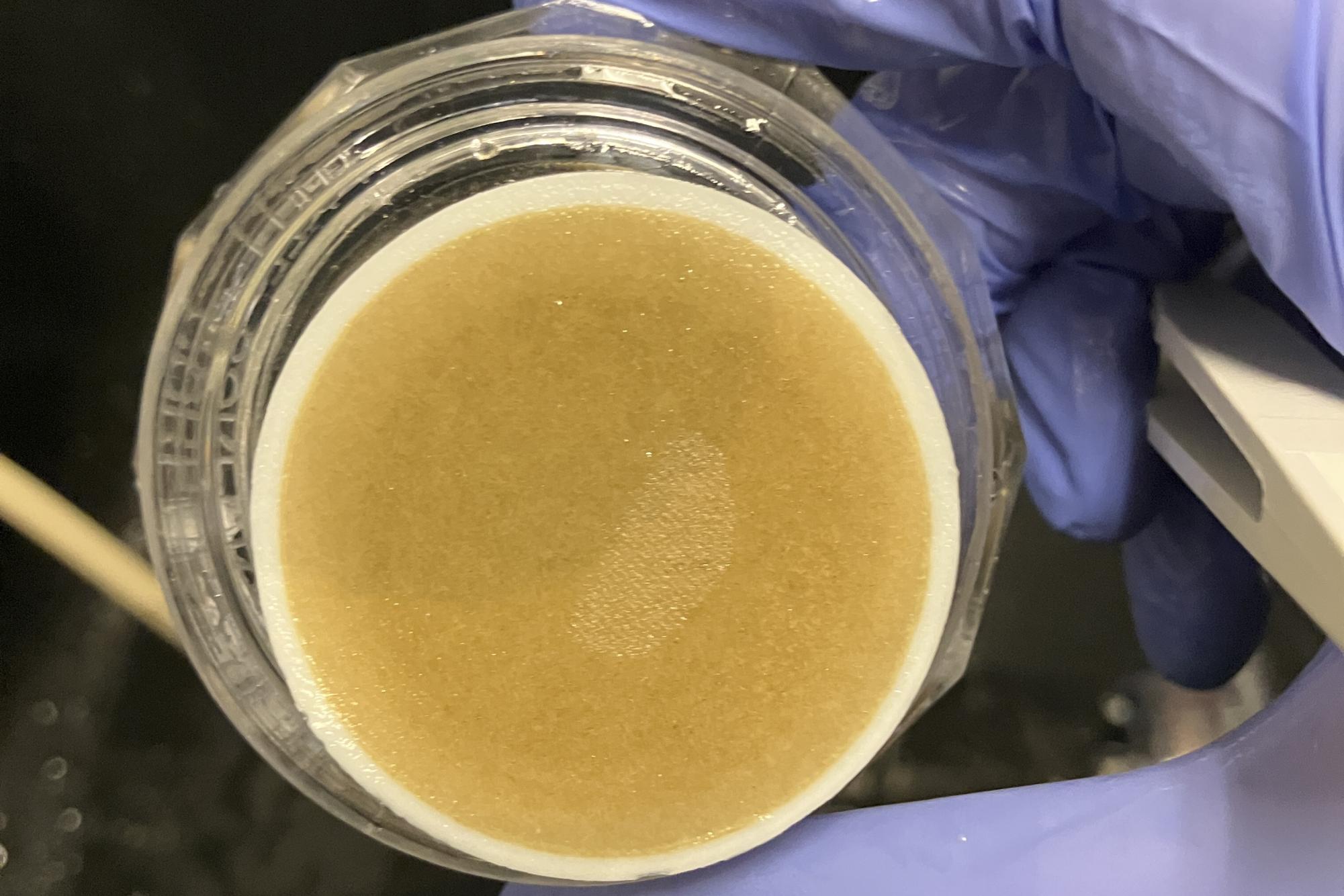
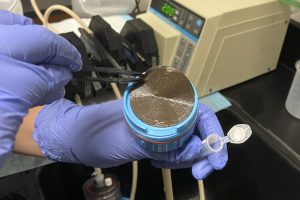
Franks’s micron filters are observed Feb. 15, 2025, after a large rain. These micron filters can catch biomass between 80-100 micrometers. This biomass typically includes larger plankton such as diatoms. (Photo Courtesy of Mia Franks)
-
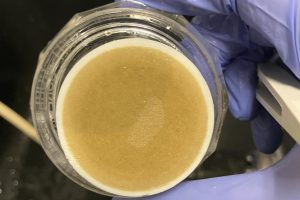
Pictured are Franks’s micron filters June 1, 2025. According to Franks, there is a clear difference in the filters on Feb. 15 and June 1. Franks said that the filters caught more debris in February than in June. (Photo Courtesy of Mia Franks)
-
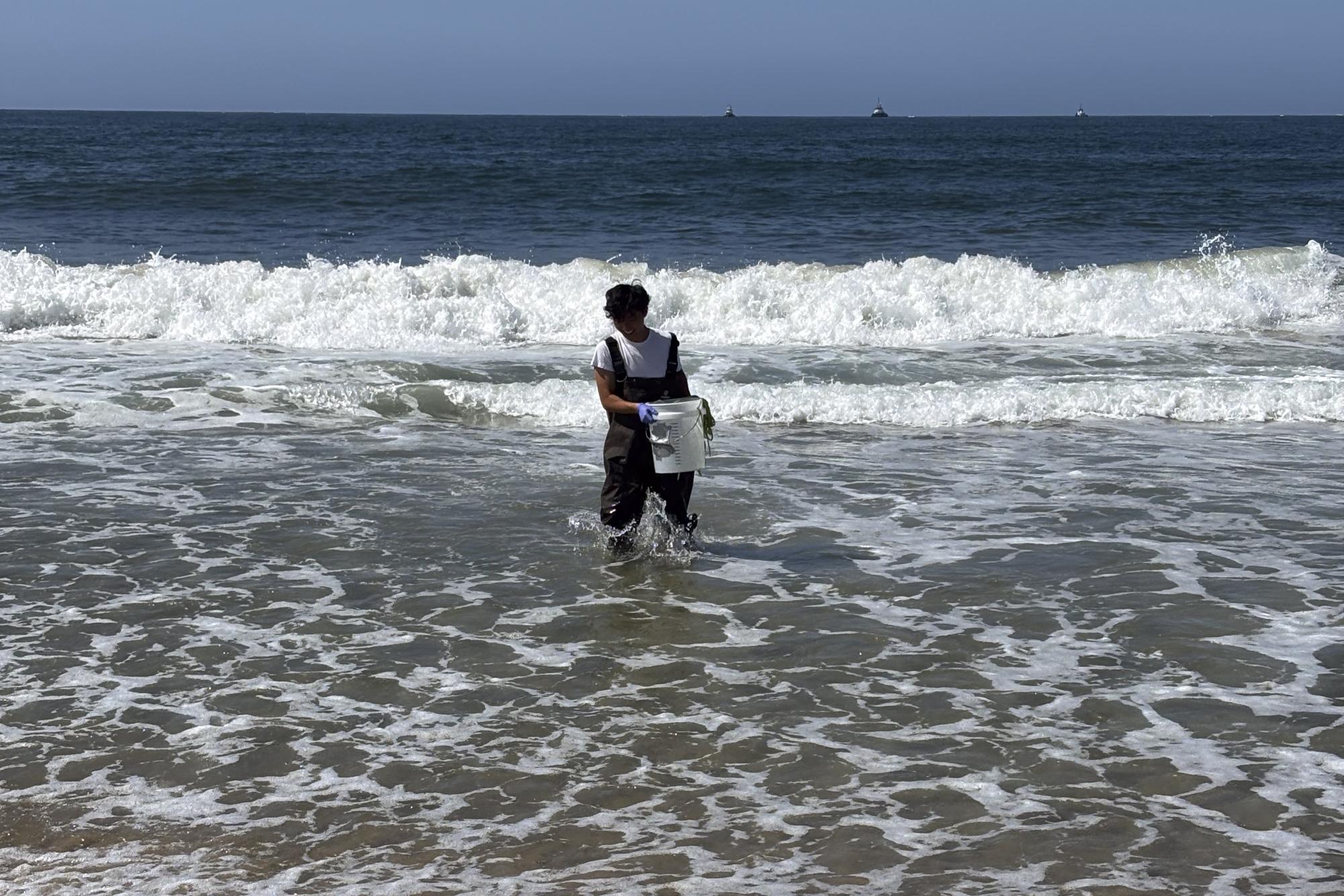
USC Undergraduate Logan Moua (’28) collects samples. Moua works with Franks. CLEAN Waters has collected several samples, which they are using to evaluate the water quality after the Los Angeles Fires. (Photo Courtesy of Mia Franks)
-
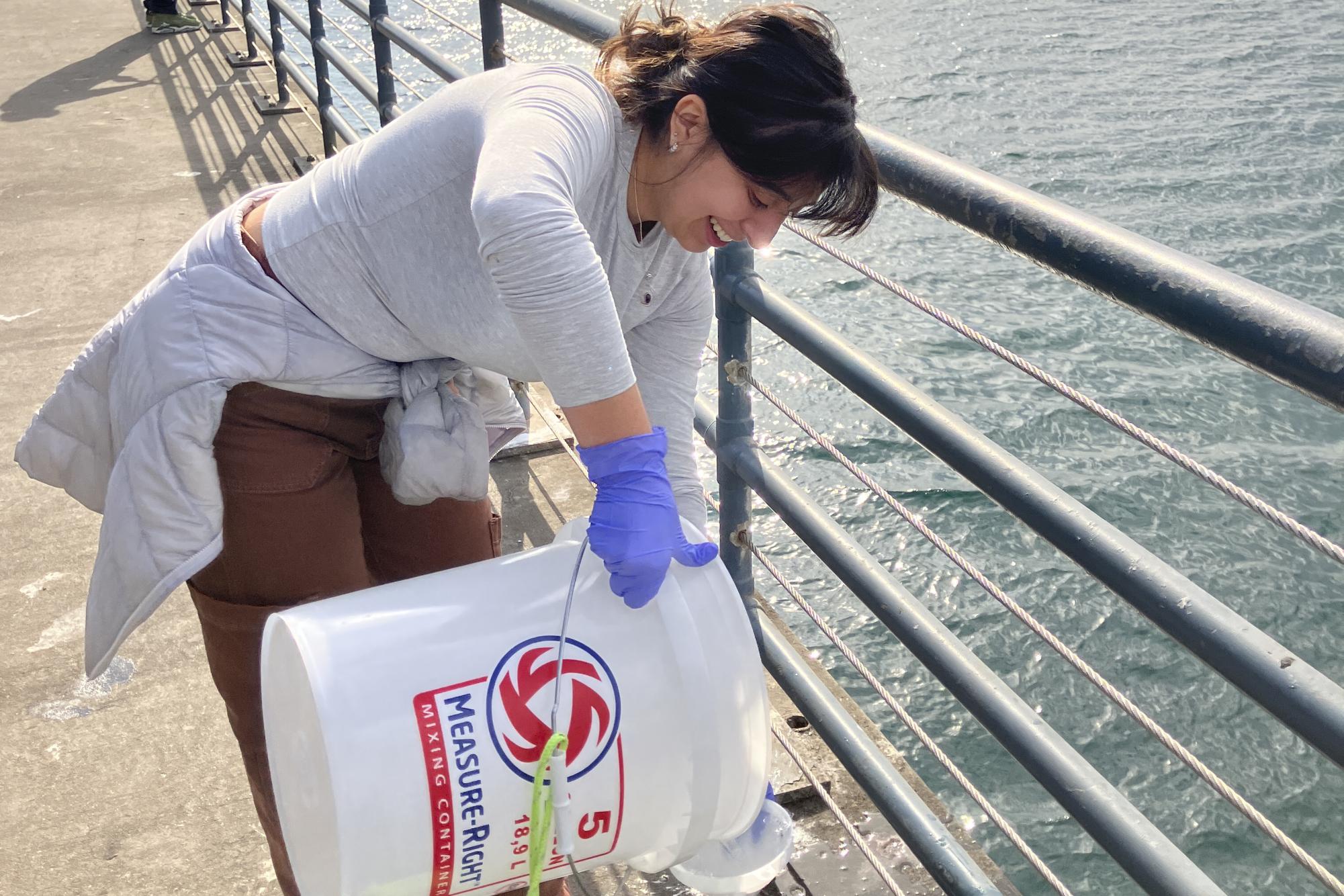
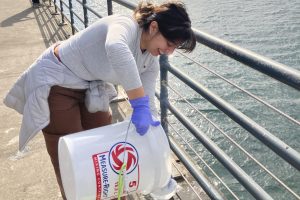
USC Alumna Kelsey Perez (’25) helps collect sea water samples at the Santa Monica Pier. Perez worked with Franks from 2024 to 2025. According to Franks, Perez was a “key player” in obtaining data after the Los Angeles fires. (Photo Courtesy of Mia Franks)
When picturing Los Angeles, many think of a glittering, golden coast with people splashing around in the blue-green ocean. However, for three weeks in January 2025, urban fires in Altadena and the Pacific Palisades incinerated thousands of homes, cars and other objects. This released hazardous substances into the surrounding air, soil and ocean. More than a year later, swimmers, surfers and families have returned to the beach, but the question remains: Are local coastlines safe?
In March 2025, research from Heal the Bay, an environmental nonprofit focused on protecting coastal waters and watersheds in the Los Angeles area, indicated that heavy metals and other toxic materials had leached into oceans after the fires. In the year since then, Heal the Bay has collaborated with CLEAN Waters and the Surfrider Foundation to continue testing local oceans and beaches for pollutants.
Michaela Coats is the Southern California Regional Manager of the Surfrider Foundation, a nonprofit whose mission includes “the protection and enjoyment of the world’s oceans, waves and beaches.” Coats said information gaps made it difficult for Surfrider to gauge the ocean’s water quality.
“The Environmental Protection Agency has thresholds for chemicals in drinking water. So we know if we were to drink water of X amount of lead, for example, we would know what would be healthy and what would be unhealthy,” Coats said. “We don’t know those numbers for recreational water quality.”
According to Coats, the Surfrider Foundation’s different agencies did a lot of behind-the-scenes work to ascertain the recreational threshold for different chemical contaminants.
“It took a few months to figure out the answer as to whether or not it was safe to be at the beach or in the ocean,” Coats said.
CLEAN Waters, based at the University of Southern California, is a disaster response initiative composed of academic scientists. It launched in 2025 and conducts comprehensive research to understand how the Los Angeles fires impacted local water systems. Using data collected in different periods in February, June, August and October of 2025, CLEAN Waters researchers found that there was a rise in contaminants in ocean water directly after the fires; however, over time, the concentration of organic chemicals, which are often pollutants, has decreased.
According to Mia Franks, a doctoral candidate at USC and researcher for CLEAN Waters, this data is based on testing done from February to April 2025 and will be publicly available in May 2026. Franks said her team had been hoping that there would not be harm toward health and that there are many possible explanations for the low amount of organic chemicals and their locality.
“We’re thinking of a very small region compared to the whole ocean. … It could just be that, on the time scale that we’re looking, there’s enough mixing happening that, even if there was a huge input into metal, it’s going to be dispersed into the rest of the bay and then into some of the more oceanic waters around the coast,” Franks said. “There’s a lot of possibilities, and we’re not sure which one it is.”
According to Heal the Bay Director of Science and Policy Kerry Nickols, Heal the Bay is trying to get more funding for research into post-fire water quality impacts, as there are many gaps in the data in regards to contaminant concentration and where the pollutants are currently located.
“One of the things that was flagged in looking and preparing that information is that some of the contaminants … can attach to suspended sediment, and then they will sink out of the water column, potentially, and so you might see a decrease in concentrations of some contaminants because they end up settling on the bottom,” Nickols said. “It’s important that we get out there to try to understand what is on the ocean floor. … That’s an area that really needs some research.”
Despite the rapid dissipation of polluting chemicals, there are still lingering concerns around water quality and marine food web impacts that need to be addressed, Coats said. Animals can be impacted in many different ways including bioaccumulation, when pollutants are built up in an organism, or biomagnification, where contaminants build up in organisms in higher food chain trophic levels.
“The chemicals that were of concern definitely had the potential to move up the food web,” Coats said. “Hopefully we’re not going to be seeing those big impacts because … it sort of dissipated relatively quickly just with the way that the ocean currents and the winds were.”
Heal the Bay is advocating for California to establish public health standards because, Nickols said, there are currently no guidelines about recreational exposure to potentially harmful chemicals in the ocean. In January 2025, the Los Angeles County Department of Public Health released an advisory to avoid ocean contact during the fires, but it was lifted in April 2025. Heal the Bay has used available resources, specifically the Environmental Protection Agency’s risk-screening tool, to estimate health risk for swimmers and surfers based on analysis of over 100 chemicals, including lead, mercury, PAHs, PCBs and PFAS.
Heal the Bay evaluated water quality data from sites along Santa Monica Bay collected by both the Los Angeles Regional Water Quality Control Board and Heal the Bay themselves between Jan. 27 and May 1, 2025. According to Nickols, Heal the Bay found that most chemical levels in the water were below exposure risk thresholds. However, the approximation of risk leaves many questions Heal The Bay cannot readily answer due to the inherent subjectivity of water quality riskiness.
“Those tools weren’t really designed to be used in this way,” Nickols said. “The amount of risk that you might feel is acceptable for you to take might be different from the amount of risk that somebody else is willing to take. It’s just a challenging thing to communicate about in the absence of any kind of guidance from public health agencies.”
Franks said despite various aspects of water quality that still require in-depth data and analysis, people can feel some relief about ocean pollution while continuing to promote a culture of sustainability, though her answer could change when CLEAN Waters gets their biology results back.
“Overall, the ocean is pretty resilient,” Franks said. “Just keep doing the things that we’re doing of being good environmental stewards for the beaches. … I wouldn’t say anything extra needs to be done.”
According to Coats, it is important to spread awareness about how the fires impacted the ocean because coastlines are essential to Los Angeles culture and community. She hopes citizens will support environmental organizations working to restore local ocean health.
“For folks to have not been able to go to the beach or go in the ocean for weeks or months following the fire was really devastating,” Coats said. “The more people that we have on our team and on our side, the more of a positive impact that we can have in the community.”










Ralph Riggin • May 4, 2026 at 9:59 pm
Very well-written summary of this important event and at the environmental and human impact. The scientific narrative is easily readable, thorough and accurate. Quite impressive writing skills and a good grasp of a fairly complex subject.